Author Gabriel García Márquez was born on this day.
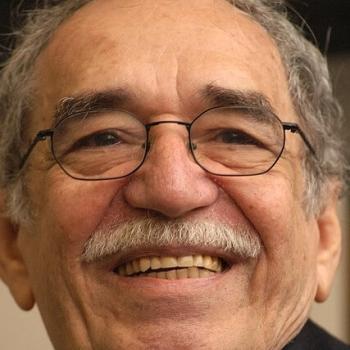
Event Description
One of the most popular Latin American authors, García Márquez was raised by his grandparents in a house in Colombia which was always overflowing with relatives and stories. His grandfather, a retired colonel, told him stories of the brutality of war, while his grandmother told him folk tales filled with ghosts and superstition. This mix may have contributed to the development of his style often called "magical realism," popularized in his novel, One Hundred Years of Solitude. Márquez passed away on April 17, 2014.
Classroom Activity
Before beginning a work by García Márquez, introduce your students to some of the hallmarks of the literary style known as magical realism by exploring what it is not, through comparisons with familiar genres that also use unrealistic elements: fantasy, science fiction, and fairy tales.
- Ask students to form groups to participate in a collaborative creative writing activity. Each group will narrate the same event, but they will do so in different genres: fantasy, science fiction, and fairy tale.
- Read the events/prompt aloud: "A man is killed. His mother finds the body and begins preparations for his burial."
- Encourage students to be creative in their responses, but to follow the conventions of their genre. Then ask students to share their responses. Discuss the genre elements their creative depictions display and talk about what these genres have in common and what they do not.
- Read from One Hundred Years of Solitude the scene in which José Arcadio is shot and his body discovered by Úrsula (Chapter 7, beginning at "One September afternoon" through "with a shell of concrete"). Have students compare the depiction from the novel to the ones they created. How is magical realism similar and different from the genres with which they are already familiar?
Websites
This article from NPR talks about Márquez after his death and how he gave "A Voice To Latin America".
The Nobel Museum creates excellent websites for all of the laureates, and this one contains García Márquez's acceptance speech and links to other resources.
24 Books That Shaped One of Humanity’s Greatest Writers
The digital archive of Colombian-born writer Gabriel García Márquez includes manuscript drafts of published and unpublished works, research material, photographs, scrapbooks, correspondence, clippings, notebooks, screenplays, printed material, ephemera, and an audio recording of García Márquez's acceptance speech for the Nobel Prize in Literature in 1982.