http://www.readwritethink.org/classroom-resources/calendar-activities/jacob-grimm-brothers-grimm-20423.html
Contribute to ReadWriteThink / RSS / FAQs / Site Demonstrations / Contact Us
![]()
![]()
What’s Happening This Week

There is much more to explore in our calendar. Find other important events in literary history, authors' birthdays, and a variety of holidays, each with related lessons and resources.
![]()

Looking for age-appropriate book recommendations, author interviews, and fun activity ideas? Check out our podcasts.
![]()
Home › Classroom Resources › Calendar Activities
January 04
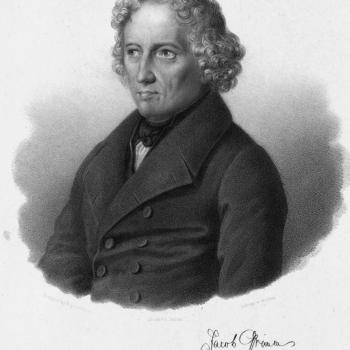
Jacob Grimm, one of the Brothers Grimm, was born today.
![]()
![]()
| Grades | 7 – 12 |
| Calendar Activity Type | Author & Text |
Jacob Grimm was born in Hanau, Germany, on January 4, 1785. With his brother Wilhelm, he began collecting traditional German folk tales, publishing their first volume, Children and Household Tales, in 1812. While many of these stories are still well known today-"Cinderella" and "Little Red Riding Hood" among them-their long-critiqued violence and frankness have been toned down over the years in more familiar versions. After a long career as an academic and librarian, Jacob died in 1863.
Students are always fascinated to learn that the fairy tales associated with the Brothers Grimm to which they have been exposed most of their lives are not, in fact, the original Grimm versions; they have most likely only read or seen softened or "Disney-fied" versions. This activity has students encounter the original versions, so it may not be appropriate for younger students.
Have a student tell the story of Cinderella, starting from after the Ball. Then, have students read the end of the original version of the story and use the ReadWriteThink Venn Diagram interactive to compare and contrast this version with the more familiar retelling they heard from their classmate. Encourage students to discuss why certain changes might have been made and what the effects of those changes are on readers.
Next, print out a copy of a lesser-known Grimm story (see Web Links below) for students to read. Ask students to rewrite this story for an audience of elementary school children. Students should be able to explain what changes they made and the intended effects of those changes. Alternatively, students can use the Fractured Fairy Tales interactive to write alternative versions of fairy tales.
- Grimms' Fairy Tales
This National Geographic site invites students to read and hear stories in their original, unsoftened forms. Students can choose from a menu of options to guide them through the tales.
- Selected Fairy Tales from the Brothers Grimm in RealAudio
This Ohio University website includes audio versions of three Grimm tales.
- The Cinderella Project
This site explores how tales have changed over time. The collection includes texts and images from a dozen English versions of the Cinderella story, with similar collections on "Little Red Riding Hood" and "Jack and the Beanstalk" as well.
Grades K – 2 | Lesson Plan | Unit
Comparing Fiction and Nonfiction with "Little Red Riding Hood Text" Sets
Students discuss and compare differing versions of "Little Red Riding Hood" and other tales about wolves in cumulative read-aloud sessions and text set explorations.
Grades 3 – 5 | Lesson Plan | Unit
Behind the Scenes With Cinderella
Cinderella without castles, coaches, or ball gowns? Students use versions of Cinderella to explore how the setting of a storytime, place, and cultureaffects the characters and plot.
Grades 3 – 5 | Lesson Plan | Standard Lesson
Exploring World Cultures Through Folk Tales
Journey around the world with students as they read a Japanese, African, or Welsh folk tale, create a visual depiction of the tale, research the tale's culture, and present findings.
Grades 3 – 5 | Lesson Plan | Standard Lesson
Once Upon a Time Rethought: Writing Fractured Fairy Tales
Students read and analyze fairy tales, identifying their common elements. They then write their own “fractured” fairy tales by changing one of the literary elements found in the original.
Grades 3 – 6 | Lesson Plan | Standard Lesson
American Folklore: A Jigsaw Character Study
Groups of students read and discuss American folklore stories, each group reading a different story. Using a jigsaw strategy, the groups compare character traits and main plot points of the stories. A diverse selection of American folk tales is used for this lesson, which is adaptable to any text set.
Grades 2 – 4 | Lesson Plan | Standard Lesson
A Recipe for Writing: Fairy Tale Feasts
After examining recipes written based on students’ favorite fairy tales, students research a recipe related to their favorite story, book, or fairy tale and include it in a classroom recipe book.
![]()

