Poet Robert Frost was born in 1874.
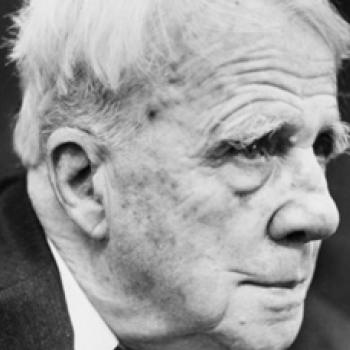
Event Description
Robert Frost is one of the most important American poets of the 20th century. Although he wrote in traditional forms, his language and themes, such as doom or the solitude of humans in nature or society, were very innovative for his time. He was celebrated as an important American poet during his life, winning four Pulitzer Prizes. His poems, many of them focusing on his beloved New England, continue to be studied in classrooms more than 100 years after they were written.
Classroom Activity
Many people consider Robert Frost a traditional poet, largely because of the New England setting of many of his poems and his tendency toward simple, clear language and images. In his own significant ways, however, Frost was an innovator, known for his desire for finding "old ways of being new." Celebrate Frost's birthday and his poetry by leading students in an exploration of his innovation in the sonnet form.
- If your students are unfamiliar with sonnet form, consult the ReadWriteThink lesson Discovering Traditional Sonnet Forms and adapt activities and resources to provide students a brief introduction.
- Provide students with an array of Frost poems that display varying degrees of adherence to and departure from sonnet form. Suggested poems might include "Design," "Putting in the Seed," "Range Finding," "The Vantage Point," and "Acquainted with the Night" (which is actually a hybrid sonnet/terza rima).
- Have groups present their poem to the class. In addition to discussing their impressions and interpretations of the poem, students should indicate how the poem fits into the tradition and innovation of sonnet form.
- Ask students to discuss reasons why Frost may have altered traditional formal elements and what effect his choices have on their appreciation of the poems.
Websites
This site contains an extensive biography, several poems, a selected bibliography of Frost's work, and links to a variety of sites about the author and his writing.
This special collection from the University of Virginia Library provides scanned details from Frost's works, photos of his family, and editions in English and other languages.
This site includes the major themes Frost explored in his writing as well as some questions to use during and after reading Frost's work.