Accountable Book Clubs: Focused Discussions

- Preview |
- Standards |
- Resources & Preparation |
- Instructional Plan |
- Related Resources |
- Comments
Overview
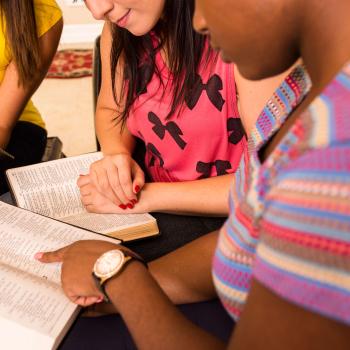
Classroom book clubs traditionally involve student-led discussions about books, but often teachers feel that these clubs need more direction and accountability. In this lesson, students in grades 7 and 8 form literature circle groups and read either Esperanza Rising or Becoming Naomi Leon by Pam Muñoz Ryan. Students read sections of their book and use a Critical Thinking Map to then guide group discussions about prominent social issues. Students complete collaborative homework using a class wiki. Groups join for a culminating discussion evaluated by their classmates.
Featured Resources
Critical Thinking Map: This handout helps students summarize their group’s thoughts on a particular social issues that emerged in the reading of the book.
From Theory to Practice
- By participating in online discussions, students examine literature through more critical lenses, while engaging in new learning technologies.
- The teacher's role is transformed by technology, which enables the scaffolding of instruction through participation in online discussions.
- Literature is the starting place for students' exploration of social issues.
- The content of the curriculum can be restructured to move students toward greater understanding and empathy for others.
Common Core Standards
This resource has been aligned to the Common Core State Standards for states in which they have been adopted. If a state does not appear in the drop-down, CCSS alignments are forthcoming.
State Standards
This lesson has been aligned to standards in the following states. If a state does not appear in the drop-down, standard alignments are not currently available for that state.
NCTE/IRA National Standards for the English Language Arts
- 1. Students read a wide range of print and nonprint texts to build an understanding of texts, of themselves, and of the cultures of the United States and the world; to acquire new information; to respond to the needs and demands of society and the workplace; and for personal fulfillment. Among these texts are fiction and nonfiction, classic and contemporary works.
- 2. Students read a wide range of literature from many periods in many genres to build an understanding of the many dimensions (e.g., philosophical, ethical, aesthetic) of human experience.
- 6. Students apply knowledge of language structure, language conventions (e.g., spelling and punctuation), media techniques, figurative language, and genre to create, critique, and discuss print and nonprint texts.
- 8. Students use a variety of technological and information resources (e.g., libraries, databases, computer networks, video) to gather and synthesize information and to create and communicate knowledge.
- 11. Students participate as knowledgeable, reflective, creative, and critical members of a variety of literacy communities.
- 12. Students use spoken, written, and visual language to accomplish their own purposes (e.g., for learning, enjoyment, persuasion, and the exchange of information).
Materials and Technology
- About 10 copies of Becoming Naomi Leon by Pam Muñoz Ryan (Scholastic, 2005)
- About 10 copies of Esperanza Rising by Pam Muñoz Ryan (Scholastic, 2002)
- Computers with Internet access
Printouts
- Books About Social Issues
- Critical Thinking Map Example
- Critical Thinking Map
- Collaborative Homework Questions
- Rubric for Paired Book Club Discussions
Websites
Preparation
| 1. | Read the two books recommended for the lesson: Esperanza Rising and Becoming Naomi Leon by Pam Muñoz Ryan or choose two other books that deal with a common theme or current social issue. For example, Hoot (Random House Children’s Books, 2004), Flush (Random House Children’s Books, 2007), and Scat (Knopf Books for Young Readers, 2009) all by Carl Hiassen deal with environmental and ethical issues. |
| 2. | Choose several picture books to use as read-alouds to introduce the concept of social issues. The picture books should deal with social issues similar to those in the novels, such as race, class, gender, labor relations, fairness, and power (see Books About Social Issues). Alternatively, complete the ReadWriteThink lesson Breaking Barriers, Building Bridges: Critical Discussion of Social Issues. |
| 3. | The week before the lesson read aloud a picture book each day. Discuss how the social issues are affecting the characters’ lives. For example, in Amelia’s Road by Linda Jacobs Altman (Lee & Low Books, 1995), labor and social class affect Amelia’s feeling of belonging. |
| 4. | Make a chart of the various social issues you have discussed for students to reference. |
| 5. | Determine which students will read each book. One way to do this is to give a short book talk on each book and have students sign up for the one that most interests them. |
| 6. | Set up a wiki for each book group using PBworks.
|
| 7. | Make a copy for each book group of the Critical Thinking Map. Make a copy for each student of the Critical Thinking Map Example, Collaborative Homework Questions, and Rubric for Paired Book Club Discussions. |
| 8. | If students do not all have Internet access at home, schedule times when they can use the lab or classroom computers for homework assignments following Sessions 1–6. |
Student Objectives
Students will
- Apply critical thinking skills in focused discussions
- Identify prominent social issues in literature
- Collaborate with classmates in online discussions
- Synthesize and critique ideas through paired group discussions
Session 1
| 1. | Meet with students to form groups of four to five. Distribute books to each group of students. Set up a schedule of seven meeting dates for book clubs. If you already have a weekly independent reading session or reading workshop scheduled, you might have the book clubs meet at this time. |
| 2. | Have each group agree on a portion of the text to read prior to the next meeting. Explain that they need to divide the book into four sections. Check to make sure students are dividing the sections somewhat evenly. |
| 3. | Distribute copies of the Collaborative Homework Questions and instruct students to keep these in a book club folder or other reading folder. |
| 4. | Briefly introduce the wiki to the class, explaining the layout and showing students how to navigate the site and post comments. Model how to log on with a username and password, and then give students their personal usernames and passwords. Have several students try logging on and posting. Give students the URL for the wiki and suggest that they bookmark the site. |
| 5. | Give students independent reading time in class to begin their books. |
Homework
Before the next session students should
| a) | Read the first section of their chosen book. |
| b) | Record questions they have while reading on sticky notes or in a reading notebook. They should also make note of things they would like to discuss in their book clubs. |
| c) | Explore the class wiki and make sure they can log in with their username and password. |
Session 2
| 1. | Distribute a copy of the Critical Thinking Map to each group. (One person will act as the recorder for the group.) Ask students to think about and discuss the social issues that emerged in the initial section of the book, and to identify one social issue to focus on during the next portion of reading. For example, the issue of gender is very apparent during the first portion of Esperanza Rising. Remind students to refer to the chart of social issues they discussed in connection with the picture book read-alouds. The group should record the social issue they choose on the Critical Thinking Map under Social Issue #1. |
| 2. | Allow book groups about 20 minutes to discuss their books, using the questions students generated while reading the first section. |
Homework
Students should
| a) | Choose a question from the list of Collaborative Homework Questions and post a response (at least one paragraph) on the wiki. (The question chosen should focus on the issue they identified as Social Issue #1.) |
| b) | Respond to one of the ideas posted on the wiki by a classmate or the teacher by adding a comment. (The teacher will also post questions and responses to help scaffold discussions.) Note: Students might need to visit the site several times in order to read the posts and decide which one to respond to. |
| c) | Read the next section of their book. |
Session 3
| 1. | Have students meet in their book groups to discuss Social Issue #1, using the Collaborative Homework Questions to guide the discussion. This conversation should extend the ideas that were posted on the wiki. After their discussion, one student should summarize the groups’ thinking about this issue on the Critical Thinking Map in the box below Social Issue #1. For example, if students choose the issue of gender, they might write about how the characters’ gender affects their opportunities and decisions. (In the case of Esperanza Rising, Esperanza’s mother was not allowed to inherit her husband’s home or money when he died because she was a woman. Therefore, Esperanza and her mother had to leave Mexico for America where they became farm workers.) |
| 2. | Direct students to agree on a different social issue to focus on during the next portion of their reading, and record that issue under Social Issue #2 on the Critical Thinking Map. Remind them to refer to the classroom chart if needed. |
Homework
Students should
| a) | Choose a different question and post a response to the question on the wiki, based on Social Issue #2. |
| b) | Add a comment in response to an idea posted on the wiki by a classmate or the teacher. |
| c) | Read the next section of their book. |
Session 4
| 1. | Have students meet in their groups to discuss Social Issue #2, recording their thinking on the Critical Thinking Map as described above for Session 3. |
| 2. | Direct students to agree on a new social issue to focus on for the next portion of their reading, and record that issue under Social Issue #3 on the Critical Thinking Map. Remind them to refer to the classroom chart if needed. |
Homework
Students should
| a) | Choose a third question to complete on the wiki, based on Social Issue #3. |
| b) | Add a response to an idea posted on the wiki by a classmate or the teacher. |
| c) | Read the next section of their book. |
Session 5
Have students meet in their groups to discuss Social Issue #3, recording their thinking on the Critical Thinking Map as described in Sessions 3 and 4.
Homework
Students should read the final section of their book and talk on the wiki outside of class to discuss the ending and the book as a whole.
Session 6
| 1. | Have students meet in their groups for a discussion to decide what which topic was the big social issue in the book. Encourage students to discuss the difference between including social issues in novels and writing about social issues in newspapers.
|
| 2. | Following the discussion, the recorder in the group should summarize their discussion at the bottom of the Critical Thinking Map. Remind students to support their decision using examples from the novel. |
Session 7
| 1. | Explain that each group will join together with the other group in the class who read the same book and conduct a 15-minute paired book club discussion in front of the class. Explain the goal of the paired discussion—to synthesize ideas across groups, to critique ideas within a larger group, and to identify common themes and social issues. |
| 2. | Distribute a copy of the Rubric for Paired Book Club Discussions to each student. Explain that they will be using it to evaluate a classmate during the presentation of paired discussions. Discuss the criteria that will be used to score their discussion. Either collect the rubrics or direct students to keep them until the next class when the discussions take place. |
| 3. | Have students meet with their partner groups at this time to choose which social issues they will focus on during the paired discussion. Each student should create a list of 4 to 5 possible discussion questions. These questions, along with the Critical Thinking Maps, can be used to guide the paired discussions. |
Session 8
| 1. | Redistribute the Rubric for Paired Book Club Discussions or have students retrieve them from their folders. Briefly review each category. Direct students to each score one member of the discussion group. (You may want to assign assessment partners by writing the name of a student at the top of each rubric.) |
| 2. | Have students in the discussion groups present a paired discussion for the class. |
| 3. | Collect the completed rubrics for assessment. |
Extensions
- Have students write a persuasive essay explaining why the big social issue they identified on the Critical Thinking Map was the most important social issue in the story.
- Have students revisit the wiki after the paired discussion, posting additional responses to the questions and answers previously posted as homework.
- Have book club students switch books and complete the same lesson.
- Repeat the lesson using books on a different theme.
Student Assessment / Reflections
- Review students' Critical Thinking Maps. These should be evaluated based on ideas in the boxes, not spelling and/or grammar. Did students do an adequate job of explaining their thinking about the issue? Did they give at least two ideas/examples in each box? Did they justify the reason they chose the Big Social Issue using examples from the text?
- Review the Paired Book Club Discussion Rubrics completed by the class
- Review the collaborative homework students complete on the wiki. They should write three to four thoughtful sentences to respond to their question. They should also respond to another student’s post in some way, by stating their own opinion or asking for clarification. Thoughtfulness and quality of ideas are more important here than length.
- Observe and take notes on the in-class book club discussions