Behind the Masks: Exploring Culture Through Art and Poetry


- Preview |
- Standards |
- Resources & Preparation |
- Instructional Plan |
- Related Resources |
- Comments
Overview
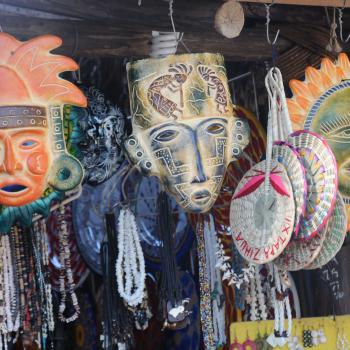
This unit engages high school students in a study of the relationship between masks and cultures. Students research mask-making from various cultures, draw sketches of the masks, and take notes that highlight the connections between the masks and the cultural practices of the people who created them. Using this information, students recreate the cultural masks and compose poetry to reveal their understanding and appreciation of these cultural artifacts. Students then analyze aspects of their own culture and create personal masks and poetry to reflect their culture and themselves.
Featured Resources
Cultural Mask Research Graphic Organizer: Students will use this handout to record notes about the culture of their masks in order to write a poem.
From Theory to Practice
- Preservice and in-service teachers, and by extension K–12 students, can achieve a deeper understanding in the content areas through reading and writing poetry related to curriculum subjects and ideas.
- Students can create verse that celebrates the academic discipline and shows their engagement with the curriculum topic.
- Poetry is about "our capacities for dreaming, remembering, and play" (p. 3).
- Authoring and sharing poetry requires risk-taking because it exposes the poet's emotions.
- Composing poetry can help students enter their own psyches and can build an empathetic learning community.
Common Core Standards
This resource has been aligned to the Common Core State Standards for states in which they have been adopted. If a state does not appear in the drop-down, CCSS alignments are forthcoming.
State Standards
This lesson has been aligned to standards in the following states. If a state does not appear in the drop-down, standard alignments are not currently available for that state.
NCTE/IRA National Standards for the English Language Arts
- 1. Students read a wide range of print and nonprint texts to build an understanding of texts, of themselves, and of the cultures of the United States and the world; to acquire new information; to respond to the needs and demands of society and the workplace; and for personal fulfillment. Among these texts are fiction and nonfiction, classic and contemporary works.
- 4. Students adjust their use of spoken, written, and visual language (e.g., conventions, style, vocabulary) to communicate effectively with a variety of audiences and for different purposes.
- 5. Students employ a wide range of strategies as they write and use different writing process elements appropriately to communicate with different audiences for a variety of purposes.
- 6. Students apply knowledge of language structure, language conventions (e.g., spelling and punctuation), media techniques, figurative language, and genre to create, critique, and discuss print and nonprint texts.
- 8. Students use a variety of technological and information resources (e.g., libraries, databases, computer networks, video) to gather and synthesize information and to create and communicate knowledge.
Printouts
Websites
Preparation
| 1. | If possible, coordinate with the art teacher and teacher–librarian to teach this unit collaboratively. Decide who will be responsible for each component of the study and when sessions will be scheduled. If collaboration is possible, four weeks should suffice for teaching the unit. If you will be working alone, two additional weeks may be required to allow students sufficient time to make both the cultural and personal masks. If time is limited, you can adapt this lesson by eliminating the mask making activities or by having students draw masks instead of reproducing them. |
| 2. | Review the Cultural Masks Resources Pathfinder. Notice which cultures are well represented on the Web and which cultures will present challenges for students seeking online resources. If students search the Web independently of this pathfinder, they will discover a great many commercial mask sites (.com sites), which for the most part lack background information about the cultures from which the masks originated. The Venetian mask site, which is included on this pathfinder, is a notable exception. |
| 3. | Use the Suggested Booklist for Cultural Mask Research to gather print resources on a wide variety of cultural masks. |
| 4. | Pair images of cultural masks with selected published mask-themed poetry, paying careful attention to the relationship between the image and the mask. For example, "Aztec Mask" by Carl Sandburg can easily be paired with a photograph of an Aztec mask, which can be found in Masks and the Art of Expression (Mack, 1994). "We Wear the Mask" by Paul Laurence Dunbar can be most appropriately paired with a photograph of an African mask, which can be found in The Art of African Masks: Exploring Cultural Traditions (Finley, 1999). Both of these books are on the Suggested Booklist for Cultural Mask Research. |
| 5. | Review the Poetic Devices webpage, which includes terms, definitions, and examples of poetic devices. Note that the examples given were taken from students' mask poems. Note also the hyperlinks at the end of the page, which provide examples of published mask-themed poems. |
| 6. | Review the sample web and poem. Students will create similar webs to generate ideas for their own cultural and personal mask poems. In the web, ideas for the poem can be organized in a number of different ways. In this sample, ideas are organized by mood or tone (shown on the left), unique observations (shown at the top), physical attributes (shown on the right), and cultural uses of the mask (shown at the bottom). The mask for which this sample web and poem is based can be seen on the Mask and Poetry Museum PowerPoint slide show. |
| 7. | Review the Poems Behind the Mask: A Mask and Poetry Museum to see examples of personal masks and poems created by high school students. |
| 8. | Select a photograph of a cultural mask from the print or electronic resources provided in this lesson to use as a prompt for the shared writing of a class cultural mask poem. Make sure to also research the cultural origin of the mask and how it was originally used. |
Student Objectives
Students will
- Develop a research strategy to find accurate, relevant, and appropriate information using electronic and print sources
- Maintain notes and information completely and accurately using note-taking strategies and graphic organizers
- Analyze and interpret how elements of culture influence the visual characteristics, purpose, and message of works of art
- Gain a deeper understanding of and appreciation for various cultures through research, examination of cultural masks, and writing of poetry
- Synthesize research information for a defined purpose of reproducing a mask from the culture studied and composing a poem to express the meaning behind the mask
- Identify poetic devices in poetry and apply those devices when composing original poetry
- Make personal connections by reflecting on their individual culture, designing a personal mask, and expressing the meaning behind their mask through poetry
Researching Masks from Various Cultures
Coordinate with the teacher–librarian during this segment to assist students in researching masks from various cultures. The teacher–librarian can be responsible for gathering print and electronic resources on cultural masks. He or she may also teach online research strategies, help facilitate students' note-taking, and share in the evaluation of students' work.
| 1. | Initiate the unit of study by posing the question: How do people's artifacts (or hand-made objects) reflect their culture? |
| 2. | Facilitate a brief discussion of cultural features including spiritual practices and beliefs, symbolism, gender roles and responsibilities, and access to natural resources and raw materials. |
| 3. | Review the Cultural Mask Research Graphic Organizer with students, paying special attention to the cultural information questions included. Review also the Cultural Mask Research Rubric, which will be used to evaluate students' proficiency in the research process and completion of the graphic organizer. |
| 4. | Direct students to the Cultural Masks Resources Pathfinder, and assist them in locating examples of masks on the Web. This site provides a list of related websites about various cultural masks for quick access. Searching instructions are also provided. |
| 5. | Ask each student to search independently and choose one mask for which he or she can find related cultural information. [Depending on your involvement, you may want to approve the students' selected masks before having them proceed.] |
| 6. | Have each student complete the Cultural Mask Research Graphic Organizer based on the mask he or she selected. This involves citing the online source, taking notes on the culture of the mask, sketching the mask, and answering the cultural information questions on the handout. The student will also need to locate the continent and/or country from which his or her mask originated on the map on the second page. |
| 7. | Encourage students to also consult print resources on their cultural masks to gather additional information (see Suggested Booklist for Cultural Mask Research). Students should make sure to take notes and cite their sources properly. |
| 8. | While research is in progress, review some of the students' notes and graphic organizers, paying particular attention to the criteria on the Cultural Mask Research Rubric. Collect examples to show students how you qualify a rubric score of 6 points versus 0 points. Provide also examples of exemplary, effective, adequate, insufficient, inadequate, and incomplete work. Challenge students to stretch their thinking and revise their answers to reach for the exemplary level. |
| 9. | Provide time for students to assess their completed graphic organizers and notes using the Cultural Mask Research Rubric. Students will need to justify their scores by circling specific examples from their work. All materials should then be turned in for teacher assessment. [The rubric outlines a total of 60 points, 30 from the student's self-evaluation and 30 from the teacher assessment.] |
| 10. | Coordinate with the art teacher upon completion of research to facilitate the creation of cultural masks. Students can use their notes and sketches to create accurate reproductions (except for the materials used) of the cultural masks they researched. Depending on the resources available in your art program, you may suggest clay masks, papier-mâché masks, or paper or cardboard masks. If time is limited, students can simply draw their cultural masks in detail. |
Exploring Mask-Themed Poetry and Poetic Devices
While students are creating their cultural masks in art class, they can be reading and responding to mask-themed poetry and reviewing literary elements in language arts class.
| 1. | Have students read several of the following poems about masks, while sharing corresponding mask artwork (see Preparation, 4):
|
| 2. | Have students review the Poetic Devices webpage. Discuss poetic devices as tools poets use to achieve meaning with just a few carefully selected words. |
| 3. | Divide the class into four groups with each group assigned to one of the published poems linked at the bottom of the Poetic Devices page. Have students work in their groups to identify the poetic devices used in the poem they were assigned. |
| 4. | Provide time for each group to report their findings to the class by providing specific examples of the poetic devices used in their assigned poem. Use this opportunity to evaluate whether students understand the poetic devices and can recognize examples of them in poetry. |
Writing Cultural Mask Poems
Creation of cultural masks should be completed before beginning this segment of the lesson.
| 1. | Present a photograph of a cultural mask and provide some background information about its use and the culture from which it originated (see Preparation, 8). |
| 2. | Have students use the photograph and the cultural information you provided to brainstorm poetic words and connections that relate to the mask. Model for students how they can group similar words and ideas in a web (see sample web and poem and Preparation, 6). |
| 3. | Use the web and a shared writing experience to compose a class poem related to the cultural mask. As you are writing, make sure to point out how students are incorporating different poetic devices into the poem. The following guidelines are recommended:
|
| 4. | Have students work in pairs to assess the class poem using the Mask Poem Rubric. Discuss the strengths of the poem and have students make suggestions for improvement. Note: If you are teaching this unit to different classes at the same time, use the same mask photograph and share the class poems with each class to provide students with an experience of the diversity of responses to art. |
| 5. | Have students use the cultural masks they created in art class to follow the same process independently and write poems related to their masks. Students should make sure to consult their Cultural Mask Research Graphic Organizer and any other notes they have about the culture from which the mask originated. Remind students to brainstorm words and phrases that relate to the mask and organize their ideas into a web. Students should also consult the Mask Poem Rubric and make sure that their poem incorporates the required elements. |
| 6. | Have each student evaluate his or her poem using the Mask Poem Rubric. Students should use the middle column labeled as "self-evaluation," and will need to provide examples of each of the criterion in order to earn credit. |
| 7. | Evaluate each student's work using the right-hand column of the same rubric. If your assessment differs from the student's self-evaluation, explain the discrepancy as a note on the rubric or schedule a conference to discuss the rubric with the student. |
Writing Personal Mask Poems
During this segment, students will couple their understanding of the cultural meanings behind masks with their creativity to create personal masks reflecting their own cultures. The art teacher can facilitate mask making while the language arts teacher guides the composition and assessment of students' personal mask poems.
| 1. | Prompt students to think about and brainstorm aspects of their personal cultures. As a starting point, you might first model aspects of your own culture by recording information about your ethnicity, religious beliefs, family configuration and traditions, celebrated holidays, hobbies, and lifestyle. |
| 2. | Then select aspects of your culture that are most representative of your persona and can be expressed most visually in a mask. Sketch a personal mask and decide when it would be used, such as for a holiday, religious celebration, sporting event, or family activity. |
| 3. | Invite students to explore the Mask and Poetry Museum slide show to see examples of personal masks created by other high school students. |
| 4. | Have students brainstorm aspects of their cultures and sketch masks that are reflective of their individual personas. Have students decide when or for what purpose their masks would be most appropriately used. |
| 5. | Coordinate with the art teacher again, and give students an opportunity to create personal masks that reflect aspects of their individual cultures, using either the same materials used when making cultural masks or materials related to the event for which the mask would be used. Again, if time is limited, students can simply draw their masks. |
| 6. | Using their created masks and the notes and information about their personal cultures, students can then brainstorm poetic words and connections for their masks and organize their ideas in a web. |
| 7. | Then, have students write personal poems, using their masks and webs as inspiration, to explain how their masks reflect their individual cultures and themselves. The same guidelines apply as was used when writing the cultural mask poem. |
| 8. | Have each student self-evaluate his or her personal mask poem using the Mask Poem Rubric. Note that students must again give examples of each criterion in order to earn full credit. |
| 9. | Use the same rubric to assess students' work, and conference with those students who had difficulty providing examples in their poems for each criterion on the rubric. |
Extensions
- Display students' personal masks and poetry in the library so that other students in the school can share in their work.
- Hold a reception for other students, teachers, and parents. Advertise the event with posters, flyers, a newsletter, or a notice in the school newspaper. Plan for a few students to read their poems aloud at the reception while a classmate wears or holds the corresponding masks.
- Create a PowerPoint slide show to be linked to the school's website using selected masks and poems from each class period. (See the Mask and Poetry Museum slide show as an example from a high school class.)
Student Assessment / Reflections
- Cultural Mask Research Rubric. This rubric is used to assess how well students were able to locate and record accurate, relevant, and appropriate electronic and print information. The rubric evaluates both the form (type of notes taken) and the content (ideas and citations) of students' notes. It also evaluates their completion of the Cultural Mask Research Graphic Organizer, and in particular their responses to the cultural questions included.
- Mask Poem Rubric. This rubric is used to assess student's composition of cultural and personal mask poems. The main criteria include:
- Prewriting web. The student brainstorms poetic words and connections related to the cultural or personal mask and organizes his or her ideas in a web.
- Cultural relationship. The student's poem reflects the cultural context of the mask. In particular, the poem makes use of sensory images (i.e., sight, touch, taste, smell, and sound) to describe the mask and mimics the tone or mood of the mask's original purpose. The poem also demonstrates the student's understanding of the meaning behind the mask.
- Poetic devices. The poem includes at least three poetic devices and shows the student's understanding of these literary elements.
Students use the Mask Poem Rubric for self-evaluation, and must also justify their scores by citing specific examples from their poems. Teachers use the same rubric to assess students' understanding of the concepts and completion of the assignments. - Prewriting web. The student brainstorms poetic words and connections related to the cultural or personal mask and organizes his or her ideas in a web.
Add new comment