e-Book Reading and Response: Innovative Ways to Engage with Texts


- Preview |
- Standards |
- Resources & Preparation |
- Instructional Plan |
- Related Resources |
- Comments
Overview
Electronic books, or e-books, provide readers with the opportunity to engage with texts in new and innovative ways. In this multisession lesson, students use computers or digital readers to read and respond to e-books. Students learn how to use e-book tools and features to support their reading processes. In particular, they insert digital notes into a book to record their thoughts and ideas in response to the text. Whole-class and small-group discussions about different types of responses encourage students to broaden their response repertoire. At the end of the lesson, students review their digital notes and fill out handouts that help them reflect on the value of the e-book reading experience and the subsequent response process.
Featured Resources
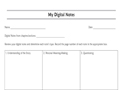
My Digital Notes: Students use this handout to review and reflect on their own response notes.
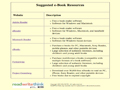
Suggested e-Book Resources: This collection of online resources will help teachers locate and learn more about e-books and reader software.
From Theory to Practice
- Readers make sense of reading experiences as they interact and transact with texts.
- e-Books extend connections between readers and texts as engagement with and manipulation of texts is made possible through electronic tools and features.
- e-Books provide new opportunities and extended possibilities for personal interpretation of and engagement with texts.
- Digital note-taking features engage students in the reading experience as they participate in spontaneous and ongoing literature response.
Common Core Standards
This resource has been aligned to the Common Core State Standards for states in which they have been adopted. If a state does not appear in the drop-down, CCSS alignments are forthcoming.
State Standards
This lesson has been aligned to standards in the following states. If a state does not appear in the drop-down, standard alignments are not currently available for that state.
NCTE/IRA National Standards for the English Language Arts
- 1. Students read a wide range of print and nonprint texts to build an understanding of texts, of themselves, and of the cultures of the United States and the world; to acquire new information; to respond to the needs and demands of society and the workplace; and for personal fulfillment. Among these texts are fiction and nonfiction, classic and contemporary works.
- 3. Students apply a wide range of strategies to comprehend, interpret, evaluate, and appreciate texts. They draw on their prior experience, their interactions with other readers and writers, their knowledge of word meaning and of other texts, their word identification strategies, and their understanding of textual features (e.g., sound-letter correspondence, sentence structure, context, graphics).
- 4. Students adjust their use of spoken, written, and visual language (e.g., conventions, style, vocabulary) to communicate effectively with a variety of audiences and for different purposes.
- 8. Students use a variety of technological and information resources (e.g., libraries, databases, computer networks, video) to gather and synthesize information and to create and communicate knowledge.
- 11. Students participate as knowledgeable, reflective, creative, and critical members of a variety of literacy communities.
- 12. Students use spoken, written, and visual language to accomplish their own purposes (e.g., for learning, enjoyment, persuasion, and the exchange of information).
Materials and Technology
- Laptop computers, desktop computers, or digital readers (such as Amazon Kindles or Sony Readers) for student use
- LCD projector and classroom computer for demonstration if using laptops or desktops
- LCD projector and visual presenter for demonstration if using digital readers
- e-Books (downloaded onto computers or digital readers)
- Large sheets of paper or poster board (one per group of 3–4 students) and markers
Printouts
Websites
Preparation
- Identify and download an appropriate e-book. Familiarize yourself with the e-book’s digital features and required reader software (i.e., Adobe Reader or Microsoft Reader). Review Suggested e-Book Resources for additional support. Remember that, in this lesson plan, note-taking capabilities are a necessary digital feature, and all students read the same book.
Note: To better meet students’ unique needs, reading levels, interests, and prior knowledge, you may want to divide the class into small groups in which all group members read the same title. - Review your district’s technology policy and guidelines. Work closely with your district’s technology staff and administrators to prevent well-intended firewalls from interfering with the process of downloading e-books.
- Divide the book into five sections. Note that the number of sections may be adjusted depending on the length and complexity of the selected title.
- Schedule the six lesson sessions, allowing 1–3 days between lessons for individual reading and responding. The number of sessions may be adjusted depending on the length and complexity of the selected title.
Student Objectives
Students will
- Support their reading processes by using e-book tools and features
- Expand their individual reader response potential as they explore different response types and evaluate their own responses
- Participate as reflective members of literacy communities by contributing to small-group and whole-class discussions
Session 1 (45 minutes)
- Explain to your students that they are going to read and respond to an e-book.
- Using an LCD projector and a classroom computer, project a copy of the e-book on a wall screen. If you are using digital readers, place a digital reader on the visual presenter and zoom in so that the device screen is visible on the wall screen.
- Demonstrate some basic e-book features, including note-taking capabilities. Explain to your students that rather than writing in literature response journals, they should insert digital notes directly into the text to record their thoughts, questions, and ideas while reading. Model this process, and tell students that this is similar to adding sticky notes to the pages of a regular book.
Note: To learn more about e-book features, please review "Going Digital: Using e-Book Readers to Enhance the Reading Experience." - Establish minimum expectations for note taking (for example, three notes per chapter). At this point, emphasize the frequency of notes rather than the quality, length, or contents.
- Explain that students are welcome to explore additional e-book features such as changing font size, page orientation and layout, inserting voice recordings, highlighting text, and so on, which can be shared and discussed during subsequent lessons.
- Ask students to read and respond to the first section of the book by inserting notes before Session 2 begins.
Session 2 (45 minutes)
- Briefly review the plot and characters of the first section of the book. Emphasize the importance of keeping up with the assigned readings so that everyone can participate in the class discussions.
- As a class, discuss the e-book reading experience. Guiding questions may include the following:
- How does reading an e-book compare to reading a print book?
- What frustrations or challenges have you encountered so far?
- What do you like about reading an e-book?
- Does the e-book experience change the way you read? How and why?
- Besides the note-taking features, which other e-book features did you use? How did these tools or features support you as a reader? Using the classroom computer and projector, would you like to demonstrate your use of e-book features?
- How does reading an e-book compare to reading a print book?
- As a class, discuss the note-taking process. Guiding questions may include the following:
- How are the digital notes similar to or different from a literature response journal?
- How did you decide when to insert a note?
- How did you decide what to write in your notes?
- What kinds of notes did you write?
Note: The goal is for students to realize that there are many different types of notes and various ways to respond to texts. Asking student volunteers to share their notes with the class will likely spark a broader variety of responses among their peers. - How are the digital notes similar to or different from a literature response journal?
- Review your expectations for number of notes, and encourage students to write different types of notes as they read and respond to the second section of the book before Session 3 begins.
- Divide the class into small discussion groups of three or four students for Sessions 3–5.
Note: If you are using more than one book, make sure all students within each group are reading the same title.
Session 3 (45 minutes)
- Briefly review the plot and characters of the second section of the book.
- Discuss the use of e-book tools and features. Demonstrate a new feature, or ask students to demonstrate features not previously discussed. Emphasize how such tools and features can support individual readers as they work their way through the text.
- Tell students that each reader is unique so it is only natural that individuals respond differently to what they have read. Remind students of the discussion during Session 2 and the many different types of responses that were shared in class. Tell them, “Today, we are going to take an even closer look at different types of responses.”
- Distribute the handout Response Categories. Explain to students that there are different types of responses, including (1) understanding of the story, (2) personal meaning-making, (3) questioning, (4) conversations with the author or characters, and (5) literary evaluations.
- Divide the class into groups of three or four students. (Remember that all students within each group should be reading the same title.) Provide each student with a large sheet of paper and markers. Instruct students to divide their sheet into six equal boxes and label each box Category 1 through Category 6.
- Tell students to review and discuss their digital notes from section 2 of the book. Using the handout Response Categories as a guide, ask them to identify an example of each type of response and to record this example in the corresponding box on their large sheet of paper.
- Ask each group to report briefly back to the class. Discuss common trends and patterns. Encourage students to challenge themselves to write different types of notes as they continue to read over the next few days. Also, emphasize that students’ note taking should be ongoing and spontaneous while reading, rather than summaries at the end of each chapter. Collect the sheets of paper from each group.
- Assign the third section of the book. Ask students to read and respond to this section prior to Session 4.
Session 4 (45 minutes)
- Briefly review the plot and characters of the third section of the book.
- Discuss again the use of e-book tools and features. Demonstrate a new feature, or ask students to demonstrate a feature not previously discussed. Discuss how such tools and features can support individual readers as they work their way through the text.
- As a class, discuss why it is important to insert a variety of note types. Explain that readers who interact with the text in different ways tend to have a greater understanding of and appreciation for the story. Different types of notes also support lively and engaging group discussions about the book because they elicit different perspectives and opinions.
- Provide each student with copies of the handouts My Digital Notes and e-Book Reflection Questions.
- Explain that students should review their own digital notes from the last two sections of the book (sections 2 and 3). For each note, ask them to identify the type of note and record its page number (or “location number” if using digital readers) in the corresponding box on the My Digital Notes handout.
Note: Rather than just recording page numbers, you may ask students to transcribe their entire note under each category heading. However, if students’ notes are lengthy and frequent, this may be a tedious process. - Ask students to fill out the e-Book Reflection Questions handout.
- Within the small groups, have students share and discuss their handouts and examples of different types of notes. Instruct group members to offer feedback and suggestions for how to expand the types of response options over time. Collect handouts.
- Assign the fourth section of the book. Students should read and respond to this section prior to Session 5.
Note: Prior to Session 5, review all handouts and provide encouraging feedback to help individual students fulfill their unique response potential.
Session 5 (20 minutes)
- Briefly review the plot and characters of the fourth section of the book.
- Discuss again the use of e-book tools and features. Demonstrate a new feature, or ask students to demonstrate a feature not previously discussed. Emphasize how such tools and features can support individual readers as they work their way through the text.
- Ask students if they have any questions or concerns regarding the note-taking process. Encourage students to continue to explore different types of note options.
- Return handouts from the previous session with your written feedback.
- Assign the fifth section of the book. Students should read and respond to this section prior to Session 6.
Session 6 (60 minutes)
- Briefly review the plot and characters of the final (fifth) section of the book.
- Provide each student with a clean copy of the My Digital Notes handout.
- Explain to students that they need to repeat the process from Session 4 and review their digital notes from the last two sections of the book (sections 4 and 5). For each note, ask them to identify the type of note and record its page number (or “location number” if using digital readers) in the corresponding box on the My Digital Notes handout.
- Ask student to compare their two My Digital Notes handouts from Session 4 and Session 6. What do they notice? Are they using the same types of responses?
- Distribute the e-Book Final Reflection handout and ask students to complete it.
- As a class, discuss the note-taking experience. Guiding questions may include the following:
- How did your response behaviors change? Did you write different types of notes at the end of the book? Why or why not?
- How can notes support readers in comprehending and making sense of the story?
- How did you decide when to insert a note?
- How did you decide what to write?
- How did your response behaviors change? Did you write different types of notes at the end of the book? Why or why not?
- As a class, discuss the overall e-book reading experience. Guiding questions may include the following:
- How has your opinion of reading an e-book changed throughout this experience?
- What are some advantages and disadvantages of e-books?
- Which e-book features did you use? How did these tools support you as a reader?
- In the future, would you prefer to read e-books or print texts? Explain.
- How has your opinion of reading an e-book changed throughout this experience?
- Collect handouts. Review and provide written feedback.
Extensions
- Encourage students to explore websites that offer e-books and search for desirable titles for future reading experiences. In addition to selecting books that meet their unique needs as readers (reading levels, interests, etc.), ask students to consider reader software and available e-book features.
- Next time students read a print book, ask them to use sticky notes to respond to the text. Discuss how this process is similar to and different from inserting digital notes.
- Ask students to choose a piece of their own writing to convert into e-book format using Microsoft Word, Publisher, PowerPoint, or other publishing software. Encourage students to insert hyperlinks, illustrations, and media files such as music and video.
Student Assessment / Reflections
- During whole-class discussions, pay close attention to students’ comments and questions and address any misconceptions or queries immediately. Keep informal anecdotal records of conversation topics that you may want to revisit during a later session.
- At the end of Session 4, collect My Digital Notes and e-Book Reflection Questions. Assess students’ responses and types of digital notes. Through suggestive but not demanding comments, encourage individual students to explore different types of responses during future reading and responding sessions.
- At the end of Session 6, collect My Digital Notes and e-Book Final Reflection. Review individual goals from Session 4 and note the progress toward achieving these goals. Review the types of responses used by individual students and compare them to those reported in Session 4. Offer feedback to individual students.
Add new comment