Book Report Alternative: Glog That Book!
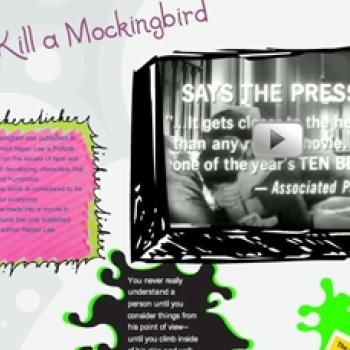

- Preview |
- Standards |
- Resources & Preparation |
- Instructional Plan |
- Related Resources |
- Comments
Overview
In this lesson, students review the elements of fiction. They identify and share these components by creating unique glogs, which are interactive multimedia posters, through Glogster EDU. This activity offers an alternative to the traditional book report as well as an opportunity for students to share their glogs with their classmates, who will have suggestions of what they might enjoy reading next from viewing each other's glogs.
Featured Resources
- Book Report Glog: Students use this planning sheet to think through the elements of their glog before they work on computers.
- Glogster EDU: Students' glogs will be created on this website.
From Theory to Practice
Without a doubt, all students should be able to read and communicate effectively with others what they have read. Nolan explains that using technology in the classroom offers opportunities for developing necessary skills such as reading, writing, communicating, and questioning. She writes, “technology creates opportunities for students to explore, try different tactics, and exercise increments of freedom.”
In this lesson, technology meshes with the book report to provide students a creative opportunity. It addresses the problem that Mitchell identifies: “Students tire of responding to novels in the same ways. They want new ways to think about a piece of literature and new ways to dig into it.”
Further Reading
Nolan, Sara. “How Technology Fuels Learning.” MindShift Blog, KQED.org. September 16,2011.
Common Core Standards
This resource has been aligned to the Common Core State Standards for states in which they have been adopted. If a state does not appear in the drop-down, CCSS alignments are forthcoming.
State Standards
This lesson has been aligned to standards in the following states. If a state does not appear in the drop-down, standard alignments are not currently available for that state.
NCTE/IRA National Standards for the English Language Arts
- 1. Students read a wide range of print and nonprint texts to build an understanding of texts, of themselves, and of the cultures of the United States and the world; to acquire new information; to respond to the needs and demands of society and the workplace; and for personal fulfillment. Among these texts are fiction and nonfiction, classic and contemporary works.
- 2. Students read a wide range of literature from many periods in many genres to build an understanding of the many dimensions (e.g., philosophical, ethical, aesthetic) of human experience.
- 3. Students apply a wide range of strategies to comprehend, interpret, evaluate, and appreciate texts. They draw on their prior experience, their interactions with other readers and writers, their knowledge of word meaning and of other texts, their word identification strategies, and their understanding of textual features (e.g., sound-letter correspondence, sentence structure, context, graphics).
- 6. Students apply knowledge of language structure, language conventions (e.g., spelling and punctuation), media techniques, figurative language, and genre to create, critique, and discuss print and nonprint texts.
- 8. Students use a variety of technological and information resources (e.g., libraries, databases, computer networks, video) to gather and synthesize information and to create and communicate knowledge.
- 11. Students participate as knowledgeable, reflective, creative, and critical members of a variety of literacy communities.
- 12. Students use spoken, written, and visual language to accomplish their own purposes (e.g., for learning, enjoyment, persuasion, and the exchange of information).
Materials and Technology
- Computers with Internet capabilities
- LCD projector, overhead projector, and/or interactive whiteboard
Printouts
Websites
This website provides educators the software to create glogs. For a small yearly charge, a teacher can receive fifty accounts. Additionally, it offers educators two yearly schoolwide subscription levels that allows for extra features that are not used in this project but would be useful in other projects.
This site offers several sound effects that can be downloaded without cost.
Preparation
- Before this lesson, have students read a fiction book independently.
- Ask students to bring copies of their books that will be the focus of their glogs to class for reference.
- Review the definitions of the literary terms used in the glog: protagonist setting, conflict, resolution, theme, climax, point of view, characterization, and genre.
- Using examples from stories students have previously read together, apply the literary terms.
- Reserve time in your school’s computer lab for use while students are creating their glogs.
- Sign up for an account at Glogster EDU and request the number of student accounts you need. You can have up to fifty accounts. Glogster will generate user names and passwords for your student accounts. Assign each student an account.
- Make copies of Glog It!, Book Report Glog, and Book Report Glog Rubric (one for each student).
- Become familiar with Glogster. Practice the steps of making a glog using Glog It!. Create a sample glog using a story that students have read together previously. You can find samples of other book report glogs under Categories at Glogster EDU under English and Language Arts or Reading.
- Find sources for sound and video that are appropriate for your class.
Student Objectives
Students will:
- identify elements of fiction.
- analyze a fiction book.
- communicate literary terms in visual and written form by producing a glog.
- celebrate reading by sharing their glogs with their classmates.
Session One: Introducing the Project
- Show the sample glog of the story that students have previously read together.
- Go through the rubric and grade the sample glog as a class. Discuss how the two quotes reflect the essence of the story. Discuss how the hyperlinks expand topics that are in the book, for example, links to author’s homepage or topics covered in the book.
- Give each student the printout Book Report Glog.
- Assign students to complete the printout before the next session.
Sessions Two through Four: Creating the Glog
- Check the students have completed the Book Report Glog.
- Model each step of creating a glog using the printout Glog It!.
- Provide each student with his/her username and password. When the student signs in for the first time, the student will be asked to type in his/her name. Instruct the students to do so because then you will be able to see on your teacher dashboard the students by name and username.
- Allow students time to work on their glogs. While students work, work with students individually on some or all of the following.
- Check on their accuracy of use of literary terms and help students revise where needed.
- Question students about which quotes they have selected from their books and why these quotes reflect the essence of the book.
- Ask students what hyperlinks they have selected and why their links are good, credible websites.
- Also, ask students how the sounds, images, and videos they have chosen relate to their books so that the students make the glogs truly reflect their books.
- Encourage students to work on their glogs from any computer (home or public library, for example) since this is an Internet-based program.
Session Five: Celebrating and Sharing
- Celebrate the joy of reading by having each student share his/her glog with the class. From the teacher’s dashboard in Glogster, each student’s glog can be easily accessed so that each student does not have to log-in before each presentation.
- As students present their glogs, students can use the rubric to assess their peers and/or the teacher can use this time to assess the glog using the rubric.
Extensions
- Establish a class wiki and post links to the glogs to the wiki. Publish your classroom wiki to the community, so the audience for your student is larger.
- Add other literary terms to the glog, such as plot, antagonist, foreshadowing, etc.
Student Assessment / Reflections
- Before students work on their glogs, review each student’s completed Book Report Glog checklist.
- During each session, observe and note the students’ time on task as this is one of the categories on the rubric. Using the Book Report Glog Rubric, evaluate each student’s completed glog. Offer feed back to the students on their glogs.
- Have students present their glogs to the class. Question students about their choices of quotes, pictures, videos, and sounds to show the essence of their books. Use the rubric to assess students' final projects.
Add new comment