Developing Story Structure With Paper-Bag Skits


- Preview |
- Standards |
- Resources & Preparation |
- Instructional Plan |
- Related Resources |
- Comments
Overview
In this lesson, students will engage in an interactive activity that will enhance their understanding of story structure and story elements. After the teacher models the process of developing a plot, students work in cooperative groups to create semi-impromptu skits. Paper bags containing five unique props are distributed to each group; these props provide the impetus for the development of creative skits. Students then use online tools to outline the story elements in their skits. The lesson also promotes listening skills and critical thinking as students view other groups' performances and determine the conflict and resolution of each.
Featured Resources
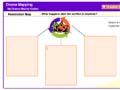 |
Drama Map: This feature helps students map out and label specific parts of the text as character, conflict, resolution, and setting. |
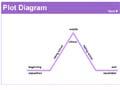 |
Plot Diagram: This feature allows students to place events in a story in a plot diagram to help them analyze the story. |
From Theory to Practice
- Process drama performances are unscripted and spontaneous.
- The mental processes in process drama are similar to those required for reading.
- Process drama provides an opportunity for students to write for various purposes and from different perspectives.
Common Core Standards
This resource has been aligned to the Common Core State Standards for states in which they have been adopted. If a state does not appear in the drop-down, CCSS alignments are forthcoming.
State Standards
This lesson has been aligned to standards in the following states. If a state does not appear in the drop-down, standard alignments are not currently available for that state.
NCTE/IRA National Standards for the English Language Arts
- 4. Students adjust their use of spoken, written, and visual language (e.g., conventions, style, vocabulary) to communicate effectively with a variety of audiences and for different purposes.
- 5. Students employ a wide range of strategies as they write and use different writing process elements appropriately to communicate with different audiences for a variety of purposes.
- 11. Students participate as knowledgeable, reflective, creative, and critical members of a variety of literacy communities.
- 12. Students use spoken, written, and visual language to accomplish their own purposes (e.g., for learning, enjoyment, persuasion, and the exchange of information).
Materials and Technology
- Computers with Internet access
- Overhead projector and transparencies
- LCD projector for website modeling
Printouts
Preparation
| 1. | Before this lesson, make sure students understand the importance of character, setting, and plot as elements of a story.
|
| 2. | Plan heterogeneous cooperative groups with three to four students per group. |
| 3. | Prepare paper bags. One bag is needed per cooperative group plus one bag for teacher modeling. The size of the bags will depend on the size of the items selected for the bags. In some cases, lunch-size bags will be sufficient; gift bags work well too. Place five seemingly random items in each bag. (To simplify the modeling process, your bag can contain three items.) These items will be used as props in the skits. The following objects are examples:
|
| 4. | Print and make a copy of the Story Elements Web, Guidelines for Creating and Performing Skits, Cooperative Group Roles, Grading Rubric, and the Conflict–Resolution Audience Guide for each student in your class. Make a transparency of the Story Elements Web. |
| 5. | Print a copy of the Story Elements Web: Teacher Copy, the Drama Map Example: Teacher Resource, and the Plot Diagram Example: Teacher Resource for your reference. |
| 6. | If you do not have classroom computers with Internet access, reserve a 50-minute block of time in your school’s computer lab for Session 2. Visit and familiarize yourself with the interactive Drama Map and Plot Diagram tools. Add both tools to the Favorites list on the computers your students will be using. |
| 7. | Make arrangements to move your class to an area with extra space for Session 3, so students can practice their skits. |
Student Objectives
Students will
- Demonstrate knowledge of story elements by constructing an outline of a group skit using an online drama map
- Develop a story plot with sequential events using an online plot diagram
- Develop listening, speaking, and performing skills by working cooperatively to create and perform a group skit
- Recognize conflict and resolution in a story by analyzing each other's skits
Session 1
| 1. | Review story elements (character, setting, plot, conflict, and resolution) using the Story Elements Web. Students will fill in the blank sections on the web during the discussion. Refer to the Story Elements Web: Teacher Copy for possible responses. |
| 2. | Tell students that they will be working in cooperative groups to create paper-bag skits. Each group will receive a paper bag with five items that group members must use as props in their skit. While they create their skit, they will need to consider the story elements (character, setting, and plot) and will use online tools to guide them. Tell them that you will model the process for them. |
| 3. | Display the sample skit bag and remove each of the items from the bag. For demonstration purposes, consider that this teacher sample skit bag contains a magnifying glass, a map of the Washington DC Mall area, and an envelope addressed to Ms. Mary Smith, 123 Winding Way, Anytown, NY. |
| 4. | Ask students to think of a story plot that would involve these items, and give them a minute or two to think quietly. Then tell students to turn to a neighbor and share their ideas for story plots. |
| 5. | Ask a volunteer to share his or her partner’s idea with the class. Then ask several more volunteers to share ideas. Write these ideas on an overhead transparency or chart paper so you may refer to them during Session 2. |
Session 2
| 1. | Display and discuss the story ideas from Session 1. As you discuss each idea, remind students how it connects to the props that are contained in the sample skit bag. |
| 2. | Choose one of the story ideas to use as a model or use the example provided in the Drama Map Example. |
| 3. | Using an LCD projector or large monitor, display the interactive Drama Map. |
| 4. | Using the story idea chosen in Step 2, complete the Drama Map, having students suggest entries as you fill in each item (see Drama Map Example). Begin with the Setting Map. |
| 5. | Remind students that the props must be used in the skit, so planning should include ways to incorporate them. |
| 6. | Tell students that they must complete a Character Map for each character in the skit. The Drama Map tool will allow them to map one character at a time. To create multiple Character Maps, they will need to print each one separately. Model how to do this by printing the first set of maps (character, conflict, resolution, and setting) and then clicking on “Edit” to change the information on the Character Map. They will continue editing and printing until they have printed each Character Map. |
| 7. | Show students how to use the interactive Plot Diagram (choose the Exposition, Climax, Resolution option) to sequence the events of their skits (see Plot Diagram Example). |
| 8. | Tell students that they will begin work on their skits during the next session. |
Session 3
Note: If you do not have classroom computers with Internet access, this session should take place in your school’s computer lab.
| 1. | Review story elements. |
| 2. | Discuss the Guidelines for Creating and Performing Skits, Cooperative Group Roles, and the Grading Rubric. |
| 3. | Tell students that the skits will not be plays with elaborate scripts, assigned parts, and multiple rehearsals. Instead, they will create a rough outline of the skit (using the interactive Drama Map and Plot Diagram tools) and perform it in a spontaneous manner. |
| 4. | Assign students to their cooperative groups (see Preparation, Step 2). Distribute the Cooperative Group Roles handout, and have students follow the directions on the handout to determine their roles. |
| 5. | Give each group their prop bag (see Preparation, Step 3). Tell students not to open their bags until you instruct them to do so. |
| 6. | Remind students of the process they used in Session 1 to brainstorm ideas for story plots. (They generated ideas using the props in the sample bag.) Ideas can be based on any topic as long as they incorporate all of the props. Point out that the plots should also meet the Guidelines for Creating and Performing Skits. |
| 7. | Tell students that once you give the signal, they can open their bags, take out the props, and work in their cooperative groups to brainstorm possible story lines for their skits. |
| 8. | Tell them to begin. During this activity and others in the session, circulate around the class monitoring progress and prompting individuals and groups to stay on task as they plan their skits. |
| 9. | Have groups use the interactive Drama Map tool to determine the story elements—character, setting, conflict, and resolution—of their skits. Remind them that they will need to print out separate Character Maps for each character in their skit. |
| 10. | Ask groups to use the interactive Plot Diagram tool to determine the sequence of events in their skit. |
| 11. | Tell students that if they finish early, their group can briefly rehearse their skit. Remind students that the scripts will be loosely created; much of the skit will be impromptu. |
Session 4
Note: For this session, consider moving your class to the gymnasium, cafeteria, or outside for skit practice. It would be helpful to provide extra space for each group to practice its skit without interfering with other groups.
| 1. | Review story elements. Discuss progress from Session 3 and review the Guidelines for Creating and Performing Skits, Cooperative Group Roles, and Grading Rubric. Remind students that the five items in their paper bags must be used as props in their skit. |
| 2. | Tell students to meet with their groups to review their printed Drama Map and Plot Diagram. Once again, remind them that the scripts will be loosely created; much of the skit will be impromptu. |
| 3. | Have groups practice their skits. |
Session 5
Note: Depending on the number of groups and length of skits, this may need to be two or three sessions.
| 1. | Review the Guidelines for Creating and Performing Skits and Grading Rubric. |
| 2. | Distribute the Conflict–Resolution Audience Guide handout. The purpose of this handout is to promote active listening; when students are given a purpose they are more likely to listen carefully and politely to each skit as it is performed. Tell students that they should pay close attention to each skit. In particular, they should try to determine the conflict and resolution of each. Tell them that they should not write during the performance, but after each one you will give them time to fill in their Conflict–Resolution Audience Guide handout. |
| 3. | Have a group perform its skit for the class. |
| 4. | After the group finishes, have students independently record the conflict and resolution on their handouts. Have students write their initial response in pen. |
| 5. | Discuss the conflict and resolution of the skit. Using pencil, students may adjust their answers on the handout. By permitting these adjustments in responses, you will promote more active listening. Since students use different media, you can assess initial versus follow-up responses. |
| 6. | If time permits, discuss the setting (and its effect on the plot) and character development. |
| 7. | Repeat Steps 3 through 6 until each group has performed. |
| 8. | Collect the printed Drama Maps, Plot Diagrams, and Conflict–Resolution Audience Guide handouts. Each group will turn in one set of the Drama Maps and Plot Diagrams. Each student will turn in an individual Conflict–Resolution Audience Guide. |
Extensions
Extensions
- Groups can trade paper bags and create new skits, altering the setting and conflict from the prior group’s skit.
- Create new paper-bag skits in different genres. Mystery stories work especially well and students could use the online Mystery Cube to plan their skits.
- Each student can assume the role of a movie critic and write a review of the skit that he or she liked best.
Student Assessment / Reflections
A rubric is provided for assessment purposes, and it addresses the skit, written work (Drama Map and Plot Diagram), on-task behaviors (Conflict–Resolution Audience Guide and individual effort), and adherence to Guidelines for Creating and Performing Skits. You will encourage students to stay on task and meet expectations by discussing this rubric before you assign cooperative groups.
To use this assessment tool, consider each trait and your expectations of what would constitute average performance. Students who meet that minimal expectation would earn a score of 2. Students who exceed your expectations would earn a score of 3, and students who do not meet your baseline for average would earn a 1. For example, in “Ability to work together,” an average performance would be earned by group members who work cooperatively without arguments or excessive teacher management. An exceptional rating may be earned by group members who go beyond this minimal expectation.
When scoring the Conflict–Resolution Audience Guide, remember that one of its purposes is to promote active listening. Students who independently identify the correct conflict and resolution in all of the skits may qualify for the exceptional rating. Those who change answers to earn correct responses during the review of each skit’s conflict and resolution would qualify as acceptable. When evaluating students’ responses on this guide, be sure to consider the clarity of each skit; if it is difficult to determine these elements in a particular skit, consider more flexibility when scoring.
Add new comment