History Comes Alive: Developing Fluency and Comprehension Using Social Studies

- Preview |
- Standards |
- Resources & Preparation |
- Instructional Plan |
- Related Resources |
- Comments
Overview
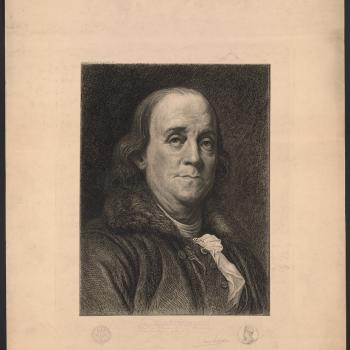
"Hide not your talents. They for use were made. What's a sundial in the shade?" (Benjamin Franklin, Poor Richard's Almanack.) Shine a light on all your students' diverse talents in the course of this unit on Benjamin Franklin. Students research Franklin's life and times, focusing on his contributions to science and technology, and compile a list of differences between life in the 1700s and life today. This list shapes the dialogue as they create an original drama portraying a modern-day encounter with Franklin. After editing, students use the script to develop fluency through Readers Theater practice, and audition for their favorite parts. As the actors memorize their lines, their classmates plan props, costumes, and sound effects. Finally, students perform their play before an audience.
Print and online resources are provided for a unit on Benjamin Franklin, but the lesson could be adapted for the study of any historical figure.
From Theory to Practice
- Dramatic interpretation through role-play engages students with history in a memorable learning experience that enhances comprehension and helps them connect what they are studying to their own lives.
- Working collaboratively throughout this project allows students to learn historical facts and develop literacy skills, while also promoting other essential skills such as problem solving and learning to work in teams.
Common Core Standards
This resource has been aligned to the Common Core State Standards for states in which they have been adopted. If a state does not appear in the drop-down, CCSS alignments are forthcoming.
State Standards
This lesson has been aligned to standards in the following states. If a state does not appear in the drop-down, standard alignments are not currently available for that state.
NCTE/IRA National Standards for the English Language Arts
- 1. Students read a wide range of print and nonprint texts to build an understanding of texts, of themselves, and of the cultures of the United States and the world; to acquire new information; to respond to the needs and demands of society and the workplace; and for personal fulfillment. Among these texts are fiction and nonfiction, classic and contemporary works.
- 4. Students adjust their use of spoken, written, and visual language (e.g., conventions, style, vocabulary) to communicate effectively with a variety of audiences and for different purposes.
- 5. Students employ a wide range of strategies as they write and use different writing process elements appropriately to communicate with different audiences for a variety of purposes.
- 7. Students conduct research on issues and interests by generating ideas and questions, and by posing problems. They gather, evaluate, and synthesize data from a variety of sources (e.g., print and nonprint texts, artifacts, people) to communicate their discoveries in ways that suit their purpose and audience.
- 8. Students use a variety of technological and information resources (e.g., libraries, databases, computer networks, video) to gather and synthesize information and to create and communicate knowledge.
- 11. Students participate as knowledgeable, reflective, creative, and critical members of a variety of literacy communities.
- 12. Students use spoken, written, and visual language to accomplish their own purposes (e.g., for learning, enjoyment, persuasion, and the exchange of information).
Materials and Technology
- Computers with Internet access
- Overhead projector and transparencies
- Nonfiction books about Benjamin Franklin and other inventors
- Chart paper and markers
- Sticky notes
- Materials for play props and sets
- Performance programs (optional)
Printouts
Preparation
| 1. | Make plans to integrate this unit into your classroom activities. The entire project spans a period of about five weeks and is divided up as follows:
|
| 2. | Choose a topic for the unit from your social studies curriculum; this lesson uses Benjamin Franklin as an example. Gather books about the topic, in this case Benjamin Franklin's life and his contributions to science and technology and other inventors and their inventions. You can assemble these texts from your classroom library, school library, and public library. Place them in a basket or book tub for students to browse. You should also choose three as read-aloud texts (see Part 1, Sessions 1, 2, and 4). Some suggested books include:
|
| 3. | If you do not have classroom computers with Internet access, reserve one session in your school's computer lab (see Part 1, Session 3). |
| 4. | Visit and familiarize yourself with the websites listed in the Resources section. Select articles or pages from each site that talk about Franklins' inventions or scientific contributions for students to read. Students will be reading these articles in groups of two or three; try to find enough different pages so that each group has its own article. (If you have chosen a different topic, you will want to locate appropriate Internet resources). Bookmark these webpages on your classroom or lab computers. |
| 5. | Adapt the Initial Letter to Parents and the Follow-Up Letter to Parents as necessary. Make one copy of each of the following for each student in your class: the Conventions Self-Check Sheet, the Read-Aloud Rubric, the Read-Aloud Checklist, and the Audition Sheet. Copy the Organizer for Inferring onto a piece of chart paper; make one copy for every two or three students. |
| 6. | Prepare for the student performance at the end of this lesson by locating and reserving an appropriate place in your school (e.g., the auditorium or cafeteria) and beginning to collect materials for props, costumes, and sets. |
| 7. | If possible, collect some sample programs to share with students (see Part 4, Session 6). You can also print out the Sample Program to share with them. |
| 8. | Throughout the project students will work with partners or in small groups. For some activities the same group of students will work together on an assigned task. At other times, students will be placed in different groups. This provides students with an opportunity to interact with other classmates and appreciate other students' points of view. |
Student Objectives
Students will
- Gain knowledge by listening to and reading multiple texts about a nonfiction topic
- Infer information from the texts using a graphic organizer
- Apply the information from their reading and graphic organizers to the creation of a script
- Work collaboratively both to write and perform a play
- Develop reading fluency by using their script for Readers Theater practice
- Perform a dramatic interpretation of the play using adequate expression, volume, body language, fluency, and accuracy of delivery
Part 1: Reading for Information
Session 1
| 1. | Explain to students that they will be learning about Benjamin Franklin's contributions to science and technology. Tell them that once they have learned about Benjamin Franklin's inventions they will use that information to write a play. |
| 2. | Introduce the first read-aloud book you have selected. Show students the cover and ask them to make predictions, ask questions, or make connections to information they already know about Benjamin Franklin and his inventions. |
| 3. | Pause after reading a few pages aloud to allow students to verify or modify their predictions, ask questions during reading, and make more connections. |
| 4. | After you finish the book, ask students to sit with a partner of their choice and tell an interesting fact they learned from the read- aloud. If students are having a hard time finding a partner, you may assign pairs of students to work together. Before students break into pairs, write a few prompts on chart paper to guide their conversations. For example, "I didn't know that...," "I was surprised by...," or "The most interesting fact I learned was...." Model sitting with a partner and making a comment based on the information from the book that you just read. For example, say "I didn't know that Benjamin Franklin had two pairs of glasses: one for seeing far and one for reading. And that he got tired of constantly having to take one pair off and put the other pair on, so he got the two pairs of glasses cut in half and put half of each lens in a single frame. And that's how he invented bifocals. I can tell he was an amazing problem solver!" Turn to your partner and ask, "What fact did you find interesting?" |
| 5. | Allow students time to share their thoughts with their partners. After about five minutes, ask a few volunteers to share their comments with the rest of the class. |
Note: At the end of this session, place the basket of books where students can browse it during their independent reading time. Send home the Initial Letter to Parents.
Session 2
| 1. | Ask a volunteer to tell the class of some of the most interesting facts he or she remembers from the read-aloud in Session 1. |
| 2. | Show students the second book you have chosen. Ask them to notice things that look different in the book's pictures as compared to our modern surroundings. Read the book aloud using the same strategy as in Part 1, Session 1. |
| 3. | After you finish the book, tell students to fold a piece of paper in half. They should label one half Then and the other half Now. Ask students to list or draw a few items that have changed over time. This graphic organizer will reinforce the differences between the two time periods. |
| 4. | Break students into small groups (four to five students per group) and provide each group with chart paper. Tell each group to use the information from their Then/Now organizers to create a single organizer combining their information. Tell students to make sure they are not duplicating information. Display the organizers created by each group around the classroom for everyone to see. |
Session 3
Note: If you do not have classroom computers, this session will take place in the computer lab.
| 1. | Ask a volunteer to name one item that we have today that did not exist in the 1700s or early 1800s. Ask another volunteer to talk about how people lived without that item (e.g., how their lives were harder or easier, what they did to accomplish what the item accomplished). |
| 2. | Tell students that you want them to read a few articles about Benjamin Franklin and other inventors on the computer. If you are in the computer lab, have each student sit at a computer for this activity. If working in your classroom, assign three or four students to each of the computers, and have each one visit the article or webpage you have selected. Allow students about 10 minutes to browse through the article. If there are not enough computers in your classroom and the computer lab is unavailable, students can take turns at the computers. Those who are not reading the articles on the computer can read books from the basket. |
| 3. | Give each group of students a copy of the Organizer for Inferring. Ask a volunteer to share a fact about Franklin they have learned from the article they just read. Model how to fill out the organizer, using the chart you have created (see Preparation, Step 5). Here are a couple of examples of how you might do this: Fact: Benjamin Franklin invented the lightning rod. Inference: Before the invention of the lightning rod many buildings must have caught fire during thunderstorms. Reason: Because the lightning rod directs the electricity straight to the ground so it won't burn up buildings. Fact: People didn't use electricity in the 1700s. Inference: Their lives must have been very different from ours. Reason: Because they didn't have televisions, computers, microwaves, etc. |
| 4. | Have each student choose one fact they learned about Benjamin Franklin from the websites. The fact can refer to one of Benjamin Franklin's inventions or point out a difference between our time period and his. Ask students to share their facts with their group and to discuss what they can infer from that fact and what makes them think so. One student for each group should record ideas in the organizer. Students should continue until everyone's fact is recorded. Collect the organizers. |
Note: At the end of this session, you may choose to print off the online articles students have read and place them in the basket with the books.
Session 4
| 1. | Display the Organizers for Inferring from Session 3 on the board. Ask one or two groups to share their inferences with the rest of the class and talk about their reasoning. |
| 2. | Ask a few volunteers to share some of the most important facts they have learned so far about Benjamin Franklin's inventions and about life in the 1700s. Record these on the board or a piece of chart paper and ask students to explain why the fact seems important to them. |
| 3. | Read aloud the third book you picked. Encourage students to ask questions before, during, and after reading. Pause during the reading to allow students to make, verify, and correct predictions and to make relevant connections with the facts you have been discussing in Steps 1 and 2. |
| 4. | After finishing the book, tell students to imagine they are people from the 1700s who have been transported from their time to the beginning of the 21st century. Ask them to talk in their groups about what technological or scientific innovation they believe would surprise them the most and why. |
| 5. | Invite students to sit in a circle and share their responses with the rest of the class. Record the responses on chart paper. |
Part 2: Writing a Script
Session 1
| 1. | Display the chart paper with students' responses from Part 1, Session 4. This will be used as a resource during the writing activity. Discuss responses as a whole class. Add any new responses or ideas to the chart. |
| 2. | Ask students the following question: "If you were Benjamin Franklin and you traveled to our time, what would you say or ask about these technological and scientific developments?" You might give them an idea of what you mean. For example, model acting out the part of Benjamin Franklin as he discovers a computer: What is this apparatus? What do you use it for? How does it work? When was it created? Could you show me how it works? That is fascinating! How ingenious! |
| 3. | Ask students to look at the list of responses on chart paper. Tell them to pick one item from the list and think of what they would say if they were Benjamin Franklin and had never seen that item before. |
| 4. | Students should share their responses with the classmates they are sitting next to. |
Session 2
| 1. | Divide the class into small groups (three to four students per group). Make sure each group has at least one high-performing student in language arts; distribute the rest of the class evenly. Tell students that you want each team to write a short conversation between Benjamin Franklin and a person from the present. In the conversation, Benjamin Franklin marvels at all the scientific and technological innovations he sees and the person from the present explains what they are, what they are used for, who invented them, what they are made for, and who uses them. |
||||||||
| 2. | Explain that before they write their short conversations, they need to discuss them as a team and agree on what they will write. The team also needs to agree on who will be in charge of recording their conversation. Allow students to come up with their own plans for distributing roles and responsibilities in each team. Tell students it is important that not all teams write about the same thing, so when they have chosen an item from the list, they need to let you know so you can mark it off. |
||||||||
| 3. | Before students begin working, use an overhead projector to model writing in dialogue form as they will need to do for their scripts. Write a few entries so students can visualize the format. Show them how to write the name of the character who is speaking on the left, followed by a colon, and then the character's words. Tell them that they also need to include other information such as the setting or directions about how characters are to look, sound, and move. Model adding this information to the dialogue on the transparency. For example:
|
||||||||
| 4. | Walk around the room listening in, encouraging participation of all members in each team, supporting groups that may be struggling, offering suggestions, and making notes. |
||||||||
| 5. | At the end of the session, ask several groups to share their work with the rest of the class. Provide feedback on their work, talking about the content, clarity, choice of words, and voice. |
Note: After listening to students' work, you may decide to teach a minilesson about presenting ideas clearly, using language to make the characters' feelings and moods come through to the audience, and selecting colorful and interesting words. Throughout this project, you should stress to students that they are writing for an audience.
Session 3
| 1. | Highlight some of the good writing skills and teamwork you observed during Part 2, Session 2. Encourage each team to reread their work to add more details, expand ideas, and replace common words with more interesting ones. For example, the student's text might originally say: "It is why we don't use candles. Thomas Edison invented the light bulb in 1882." Encourage them to elaborate by adding text such as: "It is surrounded by glass so it doesn't burn us like a candle does." |
| 2. | Ask one student in each group to read their writing aloud to the rest of the group to see if it is complete and if it sounds right. Invite students to make additional modifications to make their writing better. |
| 3. | Allow students time to work on their writing. When a team completes their assignment, encourage them to pick another item from the list. Tell them they need to follow the same procedures as they did when writing the first conversation. |
| 4. | About 15 minutes before the end of the session, distribute sticky notes to all students. Each team should read their writing to the rest of the class. As students listen to the different dialogue exchanges, they should jot down ideas or suggestions for each group. Students need to write their names on the sticky notes so they can be identified in case there are questions regarding their comments. Each team collects all the sticky notes with suggestions for them and places them together with their work. |
Session 4
| 1. | Students should look at the sticky notes from Part 2, Session 3. Encourage them to modify their work based on the suggestions on the sticky notes, if they think it will make their writing better. If they have questions about any of the suggestions, they need to ask the person who wrote the note. |
| 2. | Give students a copy of the Conventions Self-Check Sheet and review it. In addition, you should remind them of the conventions of scriptwriting (see Part 2, Session 2), and ask them to see if they can make their writing better by adding more information or details and by replacing common words with more interesting words. |
| 3. | Students should work on revising and editing their writing, checking for accurate use of spelling, punctuation, and capitalization, and making sure their scripts are formatted properly. Invite teams to read each other's work to further assist with the revision and editing process. |
| 4. | Have each group write their dialogue on an 8.5 x 11 sheet of paper. When all teams are ready with their writing, collect their work and tell them it is now time to put all their work together into a single piece. Explain that the class needs to come up with a storyline where all their individual dialogues can fit together like pieces in a puzzle. The plot needs to have a beginning, middle, and end. |
| 5. | Read aloud the dialogues that the different groups have written. Place a long piece of yarn on the floor to represent the storyline. Have a class discussion to decide where each conversation fits. Place each sheet on the yarn in its corresponding place. Move the sheets up and down the yarn until everyone agrees on the best order for the conversations within the storyline. Note: You may find that your students are unable to decide this by themselves; in that case, make a few suggestions or hints to help them determine where each dialogue topic belongs. |
| 6. | Divide the class into small groups, using the same differentiated strategy as you did in Part 2, Session 2. Assign each group to write different parts that will be used to link all the conversations together. If the class chooses to have a narrator, have a team write lines for a narrator who advances the storyline and helps provide smooth transitions between the conversations previously written by the different teams. Have one team write an engaging beginning, and another team write an appropriate ending. |
Note: For the sake of efficiency, you may want to take all the writing and type it out in play format so that students can do their final revising and editing on a clean typewritten copy. You might also make this decision based on the age and ability level of your class; for example, students in the fourth grade may be able to handle this step independently.
Session 5
| 1. | Divide the class into new groups (three to four students per group). As before, make sure each group has at least one high-performing student in language arts; distribute the rest of the class evenly. Give each group a copy of the play. |
| 2. | Ask students to read the script carefully and make any modifications they believe would make the play better. The purpose of this final revising and editing activity is to make sure the text flows fluently, and that the script is complete and clear. It is also the last opportunity to add details, clarify ideas, and replace common words with more interesting ones. |
| 3. | Allow time for students to read the script and make the changes they consider necessary. While students are working, walk around the room observing and offering help as needed. |
Note: Type out the final version of the script and makes copies so that each student has one to read from for the next session.
Part 3: Reading for Fluency
Session 1
| 1. | Model how to read the script with expression and fluency. Talk about what a difference it makes when you are addressing an audience if you face them while you speak and how much better it sounds if you speak slowly, loudly, and clearly; if you speak with feeling, thinking about how your character would sound; and if your body language and motions match what you are saying. Tell students that you will read part of the script following all these guidelines. Do so, and then read the same part of the script in a low monotonous voice, without expression, and no body language or movements to go with the script. After both readings, ask students to tell which one they thought was more effective and why. |
| 2. | Give each student a copy of the script. Divide the class into groups. Each group should have enough students so that each one reads a different character or part in the script. Students who lack the reading skills to read a part independently should be paired up with strong readers. |
| 3. | Assign groups to different areas of the room so all students can practice reading the script aloud simultaneously. You may choose to assign parts within each group or to allow students to choose themselves who will read what part. |
| 4. | Students should read through the script once while you walk around the room providing feedback and making notes of students' reading performance. |
Session 2
| 1. | Students should get their scripts and go to the area of the room they were assigned during the previous session. Tell students to select another character from the script to read during this session. |
| 2. | Students should practice reading the script aloud in their groups. |
| 3. | Walk around the room listening to the different groups. Encourage students to read with fluency, expression, and an adequate volume. |
| 4. | If time allows, have students reread the script. |
Note: Before Session 3, make time to have groups read the script in front of the rest of the class to give students a chance to practice reading in front of an audience. After each reading, encourage students to critique the reader's performance using the points on the Read-Aloud Checklist.
Session 3
Note: Before this session, you should choose a date and a procedure for auditions.
| 1. | Ask students if they know what an audition is. Tell them it is when actors read lines for a play they would like to have a part in. Share the date you have chosen for auditions and explain that they will help you to determine who gets each part for the performance. Each student should prepare by choosing a favorite character and practicing reading the lines with expression, fluency, adequate volume, and some body movement, such as walking, pointing, or using gestures (as determined by the script). Explain that after the parts have been assigned, each student will be responsible for memorizing the assigned lines. Students who are not selected to perform will be assigned understudy parts, which they will be responsible for memorizing, as well. Students who do not get a part will be assigned other important tasks such as costume designer, prop designer, prop builder, sound effects specialist, prompter, or director. |
| 2. | Pass out the Audition Sheet and review it with students, answering any questions they may have. |
| 3. | Give students time to practice reading their lines aloud; they can work in their groups or with a partner. |
Note: By this time, many students will have already memorized almost all their lines. However, if you feel they need more time to learn to read their part with fluency and expression, extend Part 3: Reading for Fluency by allowing students to continue reading the script with a group, focusing on practicing their own lines.
Part 4: Reading and Visual Arts
Session 1
| 1. | Before students audition for their preferred parts, allow them time to practice reading their lines aloud. |
| 2. | Hold auditions in front of the whole class. Use the Audition Sheet to record each student's performance. Assign students to read each of the parts in the script. Repeat this procedure until all students have auditioned for their favorite part. There may be some roles that are uncontested. In that case, students who choose those parts are guaranteed that role in the play.Note: Assigning roles may be a hard task. In some cases, the results are obvious or only one student auditioned for a role, and the assignment does not come as a surprise to anyone. It becomes challenging when a few students want the same role, and their performances during auditions are equally good. For this reason, it is best not to assign roles the same day auditions are held. As soon as auditions are over, create a chart listing all the other jobs to be filled: director, costume designer, sound effects specialist, prop designer, prop builder, stage decorator, painter, etc. Before you announce the assignment of roles, explain each of these jobs to students, making sure they understand how important (and fun!) it is to be in charge of these tasks.When you announce who got each of the acting parts, let students know how impressed you were with all of their performances and how hard it was for you to make the final decision. If there are any ties, ask the students involved if any one of them is willing to trade the acting part for one of the jobs on the chart. When you announce who gets each part, make sure to assign an understudy for each role, just in case your actors are unable to perform on the day of your presentation. Once all acting parts are assigned, you can choose to draw names to fill the other tasks or ask students to volunteer. Make sure you assign a fluent reader who is a reliable student the role of prompter. This person will be on the stage hidden behind one of the props, following a written copy of the script, and providing support to students who forget their lines. At the end of this session, send home the Follow-Up Letter to Parents. |
Session 2
| 1. | Ask students with assigned parts to practice reading the script standing before the rest of the class. Have them read the whole script uninterruptedly. Use the Read-Aloud Rubric to assess their progress and offer them feedback. |
| 2. | After students have read through the script once, model moving around or using gestures to accompany the text. Allow students to practice reading their parts incorporating movement independently. |
| 3. | While students are working on their lines, meet with the rest of the group to talk about their roles. Help prop designers make a list of all necessary props. Brainstorm materials that could be used for that purpose. For example, the play might require a time machine, a TV, a computer, a microwave, a cell phone, and a wall with a window through which Benjamin Franklin would see a helicopter, a plane, and a car. Parents might loan the electronic appliances, while students can cover a big box with aluminum foil for a time machine and draw the helicopter, plane, and car on poster board. The wall with a window might be made out of a large piece of cardboard painted to look like it is made of red bricks. |
Sessions 3-5
These are practice sessions. Actors should get their scripts and practice reading their parts. Observe their performance and provide feedback or make suggestions when necessary. Encourage students to memorize their parts. Insist on fluency, expression, and volume of delivery, as well as movement and use of gestures.
Other students will work on preparing the props and costumes. Assign a group of students to create posters announcing the date and time of the performance. They should have a specific date by which the poster should be completed. Allow students to help each other accomplish their duties if they need support. For example, the sound effects specialist might help paint a cardboard wall or the costume designer might assist students in charge of creating posters announcing the play. Walk around the room observing the work of students who have diverse responsibilities. Scaffold as needed.
Session 6
| 1. | Ask students if they know what a play program is. Show them the sample programs you have collected or the Sample Program (see Preparation, Step 7) and talk about the different aspects that appear on them (for example, the cast list, the acts and scenes, the setting). Tell students that they need to create a program for their play. Ask students to help you list the information that will need to be included in the program. Write this information on the board or chart paper. |
| 2. | Pass out art supplies and have students draw a scene from the play. Collect these and tell them you will select a picture to be the illustration for the program cover. The program will contain the information you have recorded as a class. |
| 3. | Talk about the date you have chosen for the play. Have each student write a card inviting parents or other family members to the presentation. Collect these at the end of the session. |
Note: Before beginning Part 5: Dramatic Interpretation Through Role-Play, it is imperative that all actors and understudies know their parts from memory and deliver them proficiently, with fluency and expression. It is just as important to have all necessary props ready before moving on to Part 5. If students need more time, extend Part 4 by allowing students to continue rehearsing the script and or working on unfinished tasks.
You should also send out invitations to parents and to other teachers and staff. Finally, choose a student drawing and create a program that you copy onto card stock.
Part 5: Dramatic Interpretation Through Role-Play
Sessions 1 and 2
| 1. | Have students practice performing the play on the stage (or whatever location has been selected for the performance). Use all of the sets and costumes students have created. |
| 2. | Students who do not have an acting role will be the audience during the dress rehearsals. Ask them to sit in different parts of the room to verify if actors' voices can be heard well. |
| 3. | Have the whole class practice standing on the stage and take a bow. |
Session 3
| 1. | Students should perform the play in front of an audience. Depending on how many people will be attending, you may schedule multiple performances, giving understudies a chance to perform the parts. |
| 2. | After the play is over, it is time to celebrate! Invite students and parents to a reception in the classroom, where you serve some refreshments. Hand out certificates to each student in the class. This is a great opportunity to celebrate students' success. Once the visitors have left, ask students to think about the day's events and record their reflections in their journals. Ask a few students to share their reflections. |
Extensions
Student Assessment / Reflections
- Take anecdotal notes throughout the project to help you determine which students need help with various aspects. Use your observations of students’ performances to guide your instruction. If you notice a student or a group of students struggling with a certain skill, meet with them separately and teach them a minilesson or ask peers who have mastered the skill to help them.
- During Part 1, take notes of students’ abilities to comprehend nonfiction texts: their capacity to make predictions, gather and synthesize information, make connections, and make inferences from the text. Collect the Organizers for Inferring and review them. Provide support to students who appear to be struggling with these skills.
- During Part 2, observe students’ writing performance, especially their skill in the use of the Writing: 6 + 1 Writing Traits. If you are not familiar with this model, visit Writing: 6 + 1 Writing Traits or use the assessment instruments you are familiar with. Work one-on-one or meet with small groups to provide the necessary support to students who are struggling with their writing skills. Collect the Conventions Self-Check Sheets and look at students’ abilities to correct spelling, punctuation, and capitalization.
- During Parts 3 and 4, assess students’ performance and improvement. Check for reading of the script with expression, volume, accuracy, fluency, body movement, and use of gestures. Scaffold students as needed to help them overcome difficulties. Use the Audition Sheet and the Read-Aloud Rubric to measure improvement. For students who are not performing in the play, assess how well they complete the responsibilities they have been assigned—do they complete their assigned tasks creatively and on time?
Add new comment