Seuss and Silverstein: Posing Questions, Presenting Points


- Preview |
- Standards |
- Resources & Preparation |
- Instructional Plan |
- Related Resources |
- Comments
Overview
In this lesson, classic stories from children's authors Dr. Seuss and Shel Silverstein provide the ideal springboard for struggling readers to discuss relevant social issues. Working in small groups, students select and read books or short stories from the provided list of relevant texts. Students may use the interactive Literary Elements Map to explore the conflict in their selected texts. The group then prepares critical thinking questions and leads a class discussion about the issues raised in the story. As a class, students can discuss how these issues relate to the conflicts and social issues in their own lives.
Featured Resources
 |
Literary Elements Map: Use this online tool to help your students identify and analyze conflict in "The Zax." |
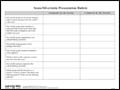 |
Seuss/Silverstein Presentation Rubric: This rubric provides guiding questions to help you assess a group’s presentation, and includes room for notes about the materials presented. |
From Theory to Practice
Texts addressing issues such as discrimination, greed, or jealousy are appropriate for teenage students to read and discuss. Stories by Dr. Seuss and Shel Silverstein are written on an elementary level; and yet, they raise questions concerning many social issues. These stories can enable older struggling students to read a text, apply their background knowledge of social situations, and discuss issues with their peers.
Common Core Standards
This resource has been aligned to the Common Core State Standards for states in which they have been adopted. If a state does not appear in the drop-down, CCSS alignments are forthcoming.
State Standards
This lesson has been aligned to standards in the following states. If a state does not appear in the drop-down, standard alignments are not currently available for that state.
NCTE/IRA National Standards for the English Language Arts
- 1. Students read a wide range of print and nonprint texts to build an understanding of texts, of themselves, and of the cultures of the United States and the world; to acquire new information; to respond to the needs and demands of society and the workplace; and for personal fulfillment. Among these texts are fiction and nonfiction, classic and contemporary works.
- 11. Students participate as knowledgeable, reflective, creative, and critical members of a variety of literacy communities.
- 12. Students use spoken, written, and visual language to accomplish their own purposes (e.g., for learning, enjoyment, persuasion, and the exchange of information).
Materials and Technology
- Computer with Internet access
- "The Zax" by Dr. Seuss (In The Sneetches and Other Stories, Random House, 1961)
- Books and Short Stories by Dr. Seuss and Shel Silverstein
Printouts
Websites
Preparation
| 1. | Use the following websites to find biographies of Dr. Seuss and Shel Silverstein that you can share with your students.
|
| 2. | Gather a selection of books and short stories by Dr. Seuss and Shel Silverstein. Suggested titles for high school students are listed in the Books and Short Stories by Dr. Seuss and Shel Silverstein. |
| 3. | Prepare to gather students into groups of four to five, and print out a Seuss/Silverstein Presentation Rubric for each group. |
Student Objectives
Students will
- Relate situations in books and short stories by Dr. Seuss and Shel Silverstein to situations and events in their own lives
- Prepare critical thinking questions and lead class discussions
- Classify questions as critical thinking questions or literal questions
- Identify the conflict presented in texts by Dr. Seuss and Shel Silverstein
- Assess their own work using a rubric
Session 1
| 1. | Begin your study of Seuss and Silverstein with the short story "The Zax" by Dr. Seuss. Before introducing the story, tell the class that terms such as stubborn, rigid, inflexible, flexible, and open-minded are often used to describe people's actions in certain situations. Write the terms on the board, and ask students to think about situations where they have encountered people who acted in these ways. Ask them to also think about situations where they have acted in these ways. Initiate a class discussion on the advantages and disadvantages of stubbornness versus flexibility. |
| 2. | Tell the class that you will be reading a story that teaches a lesson about stubbornness and flexibility. Ask students if they remember reading the stories of Dr. Seuss as children. What do they remember about his stories? Explain that even though Dr. Seuss writes children's books, his stories usually have a deeper message that makes them appropriate for older people too. |
| 3. | Read "The Zax" aloud to your students. By reading aloud, you can give students a model of fluent oral reading that they can emulate when they are asked to read stories aloud later in this lesson. |
| 4. | After reading the story, invite the class to identify the message of the story. Why did Dr. Seuss write this story? What lesson was he trying to teach? Do you agree with the actions of the Zax? |
| 5. | Model the Literary Elements Map to help the class identify and map the conflict found in "The Zax." |
| 6. | Remind your students of the differences between a literal question and a critical thinking question. Many students can give satisfactory answers to literal questions, but have difficulty raising and responding to critical thinking questions. Critical thinking questions ask students to consider and respond to elements of a text based on their values and experiences. Unlike literal questions, there is usually no one correct answer to a critical thinking question. When responding to a critical thinking question, a student must justify the answer by providing examples from the text or from his or her life experiences. |
| 7. | As you discuss "The Zax," invite your students to raise and respond to critical thinking questions about the story. Help your students move from yes/no questions (literal questions) to raising questions that require a more thoughtful response (critical thinking questions). The "Can We Talk?" activity can help your students understand the difference between these two types of questions. |
Can We Talk?: An Activity to Encourage Critical Thinking Questions
| Critical Thinking Questions | Literal Questions |
| Rather than refusing to move, what tricks could the North-Going Zax have used to outsmart the South-Going Zax? |
In which directions were the Zax traveling? |
| What would have happened if one of the Zax had moved? |
What structures were built while the Zax argued? |
| The South-Going Zax said that when he was in school, he was taught not to budge. Do you think his teachers would be proud of his refusal to move for the North-Going Zax? |
What did the South-Going Zax learn in school? |
| Which of the Zax should move? |
How long did the Zax say they could stand without budging? |
| What did the Zax gain by refusing to budge? What did the Zax lose by refusing to budge? |
How did the landscape change while the Zax argued? |
- After reading and discussing "The Zax" with your students, ask each student to form two questions based on the story—one literal question and one critical thinking question. Give examples of both question types:
- An example of a literal question might be, "In which directions were the Zax traveling?" (Answer: North and South)
- Examples of critical thinking questions might be, "How did the stubbornness of the Zax keep them from making progress in their own lives?" and "Rather than refusing to move, what tricks could the North-Going Zax have used to outsmart the South-Going Zax?"
- An example of a literal question might be, "In which directions were the Zax traveling?" (Answer: North and South)
- Give students slips of paper and ask them to write their questions anonymously on the paper.
- Put the slips of paper into a coffee can. Draw slips from the can and read the questions to the class. Challenge students to answer each question and determine whether it is a literal question or a critical thinking question. Make a chart on the chalkboard to classify each question written by students. Your chart may look something like this:
- As students answer the questions, they should see that they are able to talk a great deal more about the critical thinking questions because there may not be a single correct answer. The literal questions can be answered quickly by checking events in the text.
Session 2
| 1. | Remind students that, in addition to "The Zax," there are many other Dr. Seuss stories that are appropriate for older students and adults to read and discuss. Display and discuss a selection of Dr. Seuss titles, specifically those on the list of Books and Short Stories by Dr. Seuss and Shel Silverstein. |
| 2. | Introduce the second picture book author, Shel Silverstein, and a few of his works, such as The Giving Tree, The Missing Piece, and "Ladies First." Suggest to the class that many of Shel Silverstein's stories are also appropriate for readers of all ages. |
| 3. | Divide the class into groups of four to five students each. Ask each group to select a story by either Dr. Seuss or Shel Silverstein from the books you have displayed. |
| 4. | Provide time for each group to read and discuss the story they selected. When discussing the story, the group should address the following questions:
|
| 5. | In addition to answering these general questions, encourage students to form their own critical thinking questions for the story. |
| 6. | Ask each group to go to the interactive Literary Elements Map. Students should click on the Conflict Map to answer questions about the story and prepare a basic outline. Remind the groups to print their work. |
Session 3
| 1. | Ask students to meet in their groups to prepare a class presentation in which they read aloud the story they selected and lead a discussion on that story. For their presentations students must:
|
| 2. | Distribute and discuss the Seuss/Silverstein Presentation Rubric accompanying this lesson so that students know the expectations as they plan their presentations. |
Session 4
| 1. | Provide time for the groups to give their presentations and lead discussions on their selected titles. Observe how well the other students in class are able to respond to the critical thinking questions and engage in the discussion. |
| 2. | After giving their presentations, have students in the group complete the rubric to reflect upon their work. |
Extensions
| Story and Author | Related Title |
Social Issue Presented |
| "The Zax" by Dr. Seuss |
The House Without a Christmas Tree by Gail Rock |
Stubbornness; Refusal to change |
| Horton Hears a Who by Dr. Seuss |
Prairie Whispers by Frances Arrington |
Respect for life |
| "The Sneetches" by Dr. Seuss |
Maniac Magee by Jerry Spinelli |
Prejudice |
| Oh, The Places You'll Go by Dr. Seuss |
Finding Zola by Marianne Mitchell |
Overcoming obstacles |
| "Ladies First" by Shel Silverstein |
Emily Upham's Revenge by Avi |
Equality |
| The Missing Piece by Shel Silverstein |
Pictures of Hollis Woods by Patricia Reilly Giff |
Building relationships |
| The Giving Tree by Shel Silverstein |
"The Fat Girl" by Andre Dubus (In Selected Stories, 1995) |
Maintaining relationships |
- Groups can use the websites listed below to create their own animated stories or comic strips in the style of Dr. Seuss and Shel Silverstein. Encourage the groups to present their stories to their classmates.
- Use Seuss and Silverstein titles to prepare students for higher-level texts. After discussing the social issues found in works by Seuss and Silverstein, struggling readers may be motivated to read the more complex, related texts listed in this chart:
Student Assessment / Reflections
Ask each group to complete the "Comments by the Group" column in the Seuss/Silverstein Presentation Rubric after giving the presentation. Then add your own comments in the teacher column and share your thoughts with the group.
Add new comment