Teaching Plot Structure through Short Stories

- Preview |
- Standards |
- Resources & Preparation |
- Instructional Plan |
- Related Resources |
- Comments
Overview
There's more to plot than identifying the series of events in a story. After viewing a PowerPoint presentation on plot structure, students identify the significant events that shape the structure of a familiar fairy tale, "Jack and the Beanstalk," using an online graphic organizer. Students then read short stories as a whole class, in small groups, and, finally, individually, analyzing the plot of three different short stories using an online graphic organizer to diagram the structures.
Featured Resources
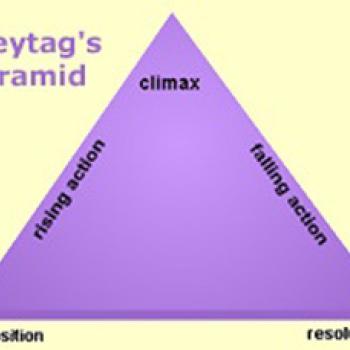
Elements of Plot PowerPoint Presentation: This PowerPoint presentation introduces the basic elements of plot structure.
Plot Diagram Interactive: Students can use this open-ended online tool to graph the plot of any story.
From Theory to Practice
As Carol Jago explains, "It's easy to ‘teach' literary terminology and devise quizzes on the terms, but to make the language of literature useful to readers, students need to practice using academic vocabulary in ways that deepen their understanding of how stories work" (51). Emphasizing the connection between reading and writing, this lesson combines collaborative, small-group, and individual learning activities using literature circles and group investigations, as suggested by Harvey Daniels and Marilyn Bizar, to give students the opportunity to apply the literary terminology related to plot structures to short stories that they read together and individually.
Further Reading
Common Core Standards
This resource has been aligned to the Common Core State Standards for states in which they have been adopted. If a state does not appear in the drop-down, CCSS alignments are forthcoming.
State Standards
This lesson has been aligned to standards in the following states. If a state does not appear in the drop-down, standard alignments are not currently available for that state.
NCTE/IRA National Standards for the English Language Arts
- 3. Students apply a wide range of strategies to comprehend, interpret, evaluate, and appreciate texts. They draw on their prior experience, their interactions with other readers and writers, their knowledge of word meaning and of other texts, their word identification strategies, and their understanding of textual features (e.g., sound-letter correspondence, sentence structure, context, graphics).
- 6. Students apply knowledge of language structure, language conventions (e.g., spelling and punctuation), media techniques, figurative language, and genre to create, critique, and discuss print and nonprint texts.
- 8. Students use a variety of technological and information resources (e.g., libraries, databases, computer networks, video) to gather and synthesize information and to create and communicate knowledge.
- 11. Students participate as knowledgeable, reflective, creative, and critical members of a variety of literacy communities.
- 12. Students use spoken, written, and visual language to accomplish their own purposes (e.g., for learning, enjoyment, persuasion, and the exchange of information).
Materials and Technology
- Copies of short stories either on paper or online
- Computers for students with Internet access
- Projector for PowerPoint, and first uses of Plot Diagram interactive
Printouts
Websites
Preparation
- Arrange for computers and projector.
- Preview the PowerPoint presentation and download a copy to your machine if desired to share with your class.
- Make copies or overhead transparencies of the Reader's Guide to Understanding Plot Development, the Reflective Journal Instructions, and the Writing Rubric.
- Choose short stories for your students. This lesson plan uses "The Flowers" by Alice Walker and "Marigolds" by Eugenia Collier as examples; however, any stories that you're reading will work for this lesson plan. If desired, groups in Session Two can all read different short stories, or they can all read the same story.
- Test the Plot Diagram interactive and "Jack and the Beanstalk" Plot Diagram on your computers to familiarize yourself with the tools and ensure that you have the Flash plug-in installed. You can download the plug-in from the technical support page.
Student Objectives
Students will
- review the characteristics of plot.
- work in whole class, cooperative groups, and individually to read short stories.
- demonstrate an understanding of plot structure by analyzing a several short stories.
- use Plot Diagram interactive as prewriting activity for essay tracing plot structure in a short story.
Session One
- Introduce students to plot structure, using the Elements of Plot PowerPoint Presentation (see notes on the slides).
- View together the "Jack and the Beanstalk" Plot Diagram. Record each of the elements using the Plot Diaram Interactive Tool. While this may seem elementary, fairy tales are frequently used at the secondary level to help students more easily see plot structure. Students can also work in small groups in the computer lab. If Internet access is limited, the teacher can read aloud the tale, students can brainstorm events, and the class can diagram the plot on the board or on paper.
- As a class, read "The Flowers" by Alice Walker (or short story of choice).
- Ask students to brainstorm the significant events in the story. As students make suggestions, write the events on the board.
- When students finish making suggestions, review the list. Ask students to look for any items which have been omitted or items which should be combined.
- Discuss the difference between significant events and the other events in the story. Remind students of the information from the Elements of Plot PowerPoint Presentation, particularly the connections between the plot and the conflict in the story.
- Display the Reader's Guide to Understanding Plot Development and work as a group to structure the events into the specific plot structures.
- As a class, arrange the events of the plot, using the Plot Diagram student interactive, and discussing the literary terms of exposition, rising action, climax, falling action, and resolution.
Session Two
- Review the literary terms from the previous session, including plot, exposition, rising action, climax, falling action, and resolution.
- Answer any questions that students have regarding the elements.
- Divide students into groups of three each. In small groups ask students to read "Marigolds" by Eugenia Collier.
- When groups have finished exploring the story, ask them to work through the story, identifying the significant events using the Reader's Guide to Understanding Plot Development.
- Next, have groups arrange the significant events as they relate to the plot structures of exposition and so forth by completing the Plot Diagram student interactive.
- Ask groups to print the plot diagram and share with class.
- Compare the diagrams completed by the groups, looking for similarities and differences. Ask students to explain the decisions that they made as they completed the diagram.
- If there are significant differences among groups' diagrams, ask students to account for the differences-are the differences supportable? Can the story have more than one climax, depending upon the reader's perspective?
- For homework or in the time remaining, ask students to assess and reflect upon their group work by completing a reflective journal entry in response to the Reflective Journal Instructions.
Session Three
- Ask students to refer to their Reflective Journal responses and share any observations or questions that they recorded as they reflected on their group exploration.
- Review the literary terms from the previous session, including plot, exposition, rising action, climax, falling action, and resolution.
- Answer any questions that students have regarding the elements.
- Individually, ask students to each choose and read a short story.
- After they finish reading, ask students to work through the story, identifying the significant events using the Reader's Guide to Understanding Plot Development.
- Next, have students arrange the significant events of the plot structures by completing the Plot Diagram student interactive.
- Students print plot diagram, share with class, and post on bulletin boards.
- Again, compare the diagrams completed by the groups, looking for similarities and differences.
- Look for plots that show significant differences. For instance, some stories have a long rising action and then a very short, fast falling action after the climax. Other plots may follow Aristotle's unified structure with rising and falling actions of similar length.
- Discuss the differences among the structures, asking students to consider how the differences in the structure relate to the kind of story and its theme.
Session Four
- Using the printouts from the Plot Diagram student interactive created in the previous session, ask students to write a paper that analyzes the plot of the story that they chose and read.
- Share the Writing Rubric with students and discuss the requirements for the paper.
- Discuss the difference between a paper that analyzes plot and one that summarizes the story. The plot is composed of the cause-and-effect events that explain why the story happens. Summary includes all the events without any attention to how the story events lead to the story's conclusion or support the story's theme.
- If students need reinforcement of the difference, remind students that plot focuses on the significant events in the story.
- During the remainder of the session, students can begin work on their essays, sharing with peers as desired. Circulate among students providing support as they work.
- Collect assignments at the end of the session, or if desired, allow students additional time to work on the papers and collect them during a later session.
Extensions
Student Assessment / Reflections
Review the reflective journal entries that students write in response to the Reflective Journal Instructions to gauge their understanding of plot structures during Session Two. Ideally, review these entries before Session Three so that you can identify any concepts that need more exploration. Read both for specific details that indicate that students understand and can define the literary terms covered in the first session and for students’ tone as an indication of their confidence in their knowledge.
Assess the final essay students compose using the Writing Rubric. Focus your attention on evidence that students understand the difference between summarizing the story and its analyzing plot. Additionally ensure that students understand the key literary terms introduced during the lesson (exposition, rising action, climax, falling action, resolution).