Writing Poetry with Rebus and Rhyme

- Preview |
- Standards |
- Resources & Preparation |
- Instructional Plan |
- Related Resources |
- Comments
Overview
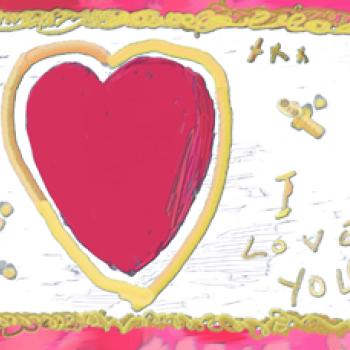
If you've ever drawn a heart for the word "love," you've written a rebus. Rebus, writing which substitutes images for words in the text, is used by authors to write books for young readers able to identify only a limited number of words, so why not use this same technique to teach writing?
Students are first introduced to a variety of books using rebus writing. They then brainstorm lists of rhyming words that they could use in their own rebus poems. Finally, students create their own rebus poems and share them with an audience. This lesson uses Jean Marzollo's book I Love You: A Rebus Poem as a model for using rebus writing to create wonderful poetry; however, any of the rebus books included on the accompanying book list would be appropriate for this activity. This makes a wonderful Valentine activity, although it is certainly not limited to that holiday.
Featured Resources
- Rhyming Picture Cards: These printable cards can be used for a variety of picture-rhyming activities. Included are nine rhyming words sets.
- Rebus Book List: This sheet provides a list of rebus books that can be used as models before students create their own rebus poetry or stories.
From Theory to Practice
Rebus books have long been used by teachers and parents to help young children learn to read. Rebus books substitute pictures for the harder words that young students cannot yet identify or decode. Many children are also familiar with electronic interactive play-a-sound books that allow them to match and touch the rebus pictures and hear the characters speak, laugh, or make sounds.
In this lesson, students use rebus writing to create their own poetry by drawing pictures of the words they need to complete a rhyming pattern. Karen daSilva explains, "Crayons and markers are such important tools in [students'] literacy. Children read pictures to understand, they make pictures to tell what they mean." This connection is strengthened in rebus poems, which specifically connect drawing and writing. As daSilva continues, "When drawing is part of the writing and reading process, it can help give ideas for writing and teach skills of observation, skills that encourage reading the world and reading the image" (p. 2).
Further Reading
Common Core Standards
This resource has been aligned to the Common Core State Standards for states in which they have been adopted. If a state does not appear in the drop-down, CCSS alignments are forthcoming.
State Standards
This lesson has been aligned to standards in the following states. If a state does not appear in the drop-down, standard alignments are not currently available for that state.
NCTE/IRA National Standards for the English Language Arts
- 1. Students read a wide range of print and nonprint texts to build an understanding of texts, of themselves, and of the cultures of the United States and the world; to acquire new information; to respond to the needs and demands of society and the workplace; and for personal fulfillment. Among these texts are fiction and nonfiction, classic and contemporary works.
- 3. Students apply a wide range of strategies to comprehend, interpret, evaluate, and appreciate texts. They draw on their prior experience, their interactions with other readers and writers, their knowledge of word meaning and of other texts, their word identification strategies, and their understanding of textual features (e.g., sound-letter correspondence, sentence structure, context, graphics).
- 4. Students adjust their use of spoken, written, and visual language (e.g., conventions, style, vocabulary) to communicate effectively with a variety of audiences and for different purposes.
- 5. Students employ a wide range of strategies as they write and use different writing process elements appropriately to communicate with different audiences for a variety of purposes.
- 6. Students apply knowledge of language structure, language conventions (e.g., spelling and punctuation), media techniques, figurative language, and genre to create, critique, and discuss print and nonprint texts.
- 12. Students use spoken, written, and visual language to accomplish their own purposes (e.g., for learning, enjoyment, persuasion, and the exchange of information).
Materials and Technology
- I Love You: A Rebus Poem by Jean Marzollo, and/or another rebus book (See Rebus Book List).
- Crayons and drawing materials
Printouts
- Rhyming Picture Cards, or similar rhyming aids which may include Match-a-Sound! Phonemic Awareness Box–Rhyming Sounds (Lakeshore), Rhyming Match Me Cards (Trend), Word Family Sliders (Lakeshore), Word Family Cubes (Learning Resources), Phonics manipulatives (Scholastic) or other rhyming materials
- Every______ Loves a _________ handout
- I Love You: A Rebus Book Cover
Websites
Preparation
- Assemble a collection of rebus books including I Love You: A Rebus Poem by Jean Marzollo (See Rebus Book List).
- Bookmark several of the rebus nursery rhymes from the Reggie the Rhyming Rhino game.
- Print Rhyming Picture Cards (or choose and prepare another rhyming aid) to help students focus on specific phonograms while choosing their rhyming words to plug into the frame of the poem.
- Make a copy of the Every______ Loves a _________ handout for each group of three students, and one copy of the book cover.
- (Optional) If your students need more work on rhyming words, use one of the additional ReadWriteThink lesson plans on rhyming to explore the concept more before students write their own poems. Lessons include the following:
Student Objectives
Students will:
- explore the connections between words and images using rebus books.
- compose original rebus poems, based on a model.
- define and explore rhyme by identifying rhyming words.
- reflect on their writing process.
Session One: Discovering Rebus Writing
- Introduce the students to a variety of books using rebus writing. Help them discover how pictures can take the place of words in a variety of books by showing them several examples.
- Read the book I Love You: A Rebus Poem by Jean Marzollo to your students.
- As you introduce this book and read it aloud to your students, encourage them to just enjoy the rhythm and rhyme of the poem on the first reading.
- On repeated readings, help students join you in reading the rebus pictures as a shared reading experience.
- Have your students identify the rhyming words of the poem.
- Help students identify the pattern/structure of the book:
Every _______ loves a ________ (rhyming word),
Every _______ loves a ________ (rhyming word),
Every _______ loves a ________ (rhyming word),
And I love you!
- As you introduce this book and read it aloud to your students, encourage them to just enjoy the rhythm and rhyme of the poem on the first reading.
Sessions Two and Three: Exploring Rebus and Rhyme
- Revisit the book I Love You: A Rebus Poem by Jean Marzollo. Tell students that they are going to get the opportunity to write their own poem modeled on this book.
- Form students into small groups of three and help them brainstorm some rhyming words that could fit into the poem.
- For kindergarten and first grade students, it is helpful to use Rhyming Picture Cards or another of the rhyming aids listed in the Resources section. Help students generate sets of three rhyming words.
- Once your rhyming words are chosen, help the students work together to complete the second part of the pattern: For example, if the group has chosen "skate, plate, gate," they might complete the pattern with: Every skater loves a skate, Every eater loves a plate, Every fence loves a gate, and I love you!
- Then help the students choose what part of the rhyme each will illustrate. Hand out the poem frame, drawing materials, and let them complete their drawings.
- Continue with the other groups of three until each group has completed their verses of the poem. (This process could also be done with older students acting as buddies to the younger students by helping them choose their rhymes and complete the pattern of the poem.)
- Students waiting their turn to compose can use the Reggie the Rhyming Rhino site from Scholastic to practice rhyming.
- Put the parts of the poem together and gather the students to hear and celebrate their completed rebus poem.
- Provide time for students to reflect on what they learned about rebus writing and the rhythm and rhyme of their poem.
Session Four: Time to Share
- Share your poem with a selected audience:
- Have a poetry reading and invite parents or other classes to come and celebrate your rebus poem.
- Make copies of the poem for each student to take home as a special gift or Valentine for his/her family.
- Display your poem on a hallway bulletin board and invite other classes to view it.
- Include a poetry reading as part of Grandparents Day activities.
- Invite Business and Education Partners for a poetry reading and give them a copy of the poem to display at their work site.
- Have a poetry reading and invite parents or other classes to come and celebrate your rebus poem.
Extensions
- Ask students to create a book cover or dust jacket for the class book using the Book Cover Creator. The tool does not include an option to save the work, so be sure that students do enough planning that they will be able to complete their covers in one session.
Student Assessment / Reflections
- During your class discussion after sharing the finished poem, encourage students to reflect on the process of writing the poem. Help them to share what they have learned. Encourage them to reflect on the process of rebus writing, choosing rhymes, completing the pattern of the poem, and sharing their poem with an audience.
- Encourage students to assess their own participation in the writing process using the following scale:
Star: Yes! I tried my best, and I did great!
Happy Face: I did a good job most of the time.
OK: I could have tried harder, but I'll do better next time.
Students can rate themselves on each of the following:
- I shared my ideas in my group.
- I was a good listener when others shared their ideas.
- I did my best when I made my pictures for the poem.
- I shared my ideas in my group.
Add new comment