Flip Book
About this Interactive
Overview
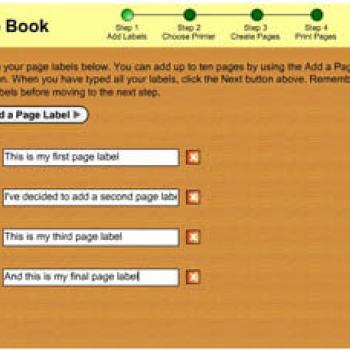
The Flip Book is designed to allow users to type and illustrate tabbed flip books up to ten pages long. Students and teachers can use the flip book for taking notes while reading, making picture books, collecting facts, or creating question and answer booklets. Students can choose from nine different layouts for the pages of their books (shown left). A blank flip book is available for demonstration and planning.
Related Resources
- Student Interactives |
- Strategy Guides |
- Calendar Activities |
- Lesson Plans
The Stapleless Book can be used for taking notes while reading, making picture books, collecting facts, or creating vocabulary booklets . . . the possibilities are endless!
The interactive Printing Press is designed to assist students in creating newspapers, brochures, and flyers.
This strategy guide explains the writing process and offers practical methods for applying it in your classroom to help students become proficient writers.
Inspired by the book It Begins with an A, kindergarten students are invited to turn their curiosity and guesswork into a class book, complete with illustrated objects and descriptive language
Students deepen and refine their understanding of prepositions by reading Ruth Heller's Behind the Mask. They write preposition poetry and create a study guide using an online tool.