Book
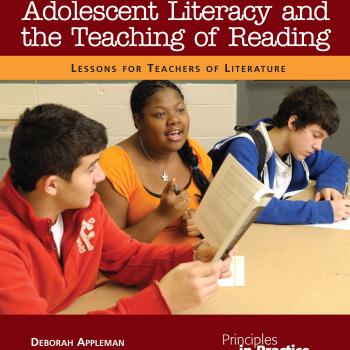
Adolescent Literacy and the Teaching of Reading: Lessons for Teachers of Literature
Grades
9 - 12
Type
Book
Pages
117
Published
January 2011
Publisher
NCTE
Get this book
Description
In Adolescent Literacy and the Teaching of Reading: Lessons for Teachers of Literature, Deborah Appleman dismantles the traditional divide between secondary teachers of literature and teachers of reading and offers a variety of practical ways to teach reading within the context of literature classrooms.
As part of NCTE's Principles in Practice imprint, the book draws on research-based understandings emerging from Adolescent Literacy: An NCTE Policy Research Brief, woven together with practical lessons that will enrich the reading experiences of all students.
Using real-world examples from diverse secondary classrooms, Appleman helps literature teachers find answers to the questions they have about teaching reading:
- How can I help students negotiate the complex texts that they will encounter both in and out of the classroom?
- What are the best ways to engage whole classes in a variety of texts: both literary and nonliterary?
- What does it mean to be a struggling reader and how can I support these students?
- How can I inspire and motivate the male readers in my classes?