http://www.readwritethink.org/professional-development/professional-library/raymond-carver-classroom-small-30371.html
Contribute to ReadWriteThink / RSS / FAQs / Site Demonstrations / Contact Us
![]()
![]()
Find the latest in professional publications, learn new techniques and strategies, and find out how you can connect with other literacy professionals.
![]()
Check out our collection of strategy guides to find effective literacy teaching and learning strategies to use in your classroom.
![]()
Home › Professional Development › Professional Library
Book
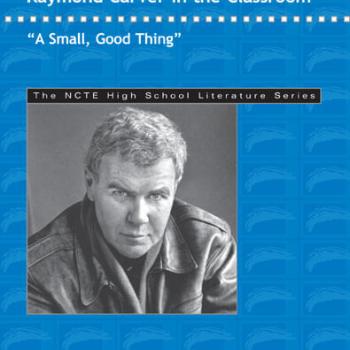
Raymond Carver in the Classroom: “A Small, Good Thing”
by Susanne Rubenstein
![]()
| Grade | |
| Type | Book |
| Pages | 119 |
| Published | July 2005 |
| Publisher |
Purchase this book now from the NCTE Online Store ![]()
Become an NCTE member and get a discount on this book ![]()
| Description |
Rubenstein offers specific, classroom-tested strategies for teaching Raymond Carver's short stories and poems in the high school English classroom.
Rubenstein, Susanne. 2005. Raymond Carver in the Classroom "A Small, Good Thing." Urbana, IL: NCTE.
Grades 9 – 12 | Lesson Plan | Standard Lesson
Put That on the List: Independently Writing a Catalog Poem
In this follow-up to writing collaborative catalog poems, students write individual catalog poems about what really matters in their lives, based on Carver’s poem “The Car.”
Grades 9 – 12 | Lesson Plan | Standard Lesson
The Importance of Titles: From Big Blank Space to Small Good Thing
After examining two sets of stories that author Raymond Carver renamed in revision, students write a reflective essay in which they defend their choice of a title for one them.
Grades 9 – 12 | Lesson Plan | Standard Lesson
When Less IS MoreUnderstanding Minimalist Fiction
This lesson pairs Ernest Hemingway’s short story "Cat in the Rain' with Raymond Carver’s "Little Things" to guide students to an understanding of the characteristics of minimalist fiction.
Grades 9 – 12 | Lesson Plan | Standard Lesson
Developing Characterization in Raymond Carver’s “A Small, Good Thing”
Students read Raymond Carver's story "A Small, Good Thing," focusing on characterization in order to develop one of the static charactersthe hit-and-run driver who causes Scotty’s deathmore fully.
Grades 9 – 12 | Lesson Plan | Standard Lesson
Outside In: Finding A Character’s Heart Through Art
This activity, inspired by the paintings of Edward Hopper and the stories of Raymond Carver, challenges students to get inside contemporary life and characters through the creation of monologues.
Grades 9 – 12 | Lesson Plan | Standard Lesson
So What Do You Think? Writing a Review
Writing a review of an author’s work challenges students to develop their critical thinking skills. It provides an opportunity for students to speak their mindsand to enjoy being heard.
Grades 9 – 12 | Lesson Plan | Standard Lesson
Put That on the List: Collaboratively Writing a Catalog Poem
Using the structure of a list poem, students combine creative expression with poetic techniques and language exploration in order to write group poems about what really matters in their lives.
![]()