Composing Cinquain Poems: A Quick-Writing Activity

- Preview |
- Standards |
- Resources & Preparation |
- Instructional Plan |
- Related Resources |
- Comments
Overview
Cinquain (pronounced "cin-kain") is a five-line poetic form, using a wavelike word count of two-four-six-eight-two. In this lesson, sample cinquains are read aloud as a class, allowing students to familiarize themselves with the form. Students then write simple cinquain of their own as a follow-up to a subject they have been exploring in class. Although students can write about any subject, graphic organizers and other resources are available to support units on animals, community, fairy tales, healthy foods, picture books, and rainforest/habitats.
Featured Resources
Apple Graphic Organizer: One of several themed graphic organizers included in the lesson, this resource includes a sample cinquain, as well a step-by-step guide to creating on original cinquain.
From Theory to Practice
In Apol and Harris's article "Joyful Noises: Creating Poems for Voices and Ears," one of the ways teachers build interest in poetry is by using magnetic words to create original poems. This exercise is one of several scaffolding experiences that the teachers use to "lead students beyond a superficial encounter to a deeper understanding and appreciation of poetry" (316). Through reading cinquain and then writing their own, students move from simply reading the poems to analyzing the poems and, ultimately, composing their own poems that match the format.
Further Reading
Common Core Standards
This resource has been aligned to the Common Core State Standards for states in which they have been adopted. If a state does not appear in the drop-down, CCSS alignments are forthcoming.
State Standards
This lesson has been aligned to standards in the following states. If a state does not appear in the drop-down, standard alignments are not currently available for that state.
NCTE/IRA National Standards for the English Language Arts
- 4. Students adjust their use of spoken, written, and visual language (e.g., conventions, style, vocabulary) to communicate effectively with a variety of audiences and for different purposes.
- 6. Students apply knowledge of language structure, language conventions (e.g., spelling and punctuation), media techniques, figurative language, and genre to create, critique, and discuss print and nonprint texts.
- 11. Students participate as knowledgeable, reflective, creative, and critical members of a variety of literacy communities.
- 12. Students use spoken, written, and visual language to accomplish their own purposes (e.g., for learning, enjoyment, persuasion, and the exchange of information).
Printouts
-
Apple Graphic Organizer (English & Spanish examples)
-
Apple Graphic Organizer (English example)
-
-
-
-
Amazing Grace Graphic Organizer
-
Monkey/Rainforest Graphic Organizer
Websites
Preparation
- Make copies of worksheets for students as necessary.
- This lesson can accompany a variety of themes in the K-2 classroom. Example printouts are included to fit the following units:
- Animals (Dalmatian, Monkey)
- Your Community (Firefighter)
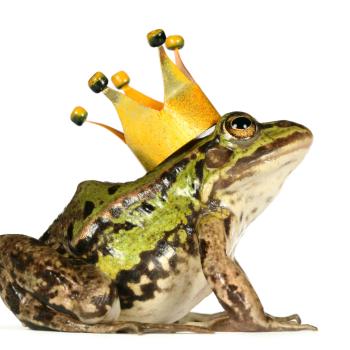
- Fairy Tales (Frog Prince)
- Picture Book Characters (Amazing Grace)
- Halloween Costumes (Firefighter)
- Habitats (Monkey/Rainforest)
- Healthy Foods (Apple-in English & Spanish)
- Animals (Dalmatian, Monkey)
Student Objectives
Students will
- write a poem about another topic, using the cinquain graphic organizer or outline.
- use words learned in the current thematic unit in poems they write.
Instruction & Activities
- Share examples of cinquain with your students. Using the Sample Cinquains handout or poems that you have written yourself on the topic that your students are exploring is also available.
- You or the students might read the poems aloud. Try reading some of the cinquain more than once to show how different words can be emphasize and to talk about line breaks. See "Joyful Noises: Creating Poems for Voices and Ears" (Apol and Harris, March 1999) for more information on reading poetry aloud.
- Outline the cinquain (below) for students on the board or using the graphic organizer:
To begin, choose an person, place, or thing to write your cinquain about.
(See graphic organizers or the Sample Cinquains handout for more examples)
Line 1: One word that tells what the poem is about
Line 2: Two words that describe the subject
Line 3: Three words that describe something the subject does
Line 4: Four to six words describing the subject further
Line 5: One or two words that rename what the poem is about (a synonym)
Here's an example:
Dalmatian
spotted, happy
running, barking, jumping
a wagging tail on the end
Fire Dog! - Once you and your students discuss the poems, students can use one of the Cinquain Graphic Organizer printouts to compose original poems of their own. Students can work individually, with partners, or in small groups.
- Once students have finished their poems, the cinquains can be shared with the entire class.
Extensions
- Make stapleless books out of the cinquain.
- Illustrate the cinquain on a sheet of paper with colored pencils or fine-line markers.
- Create a bulletin board or school website anthology of your cinquain.
Student Assessment / Reflections
- While students work, use kidwatching techniques to observe and monitor students' progress.
- Once the activity is completed, provide verbal feedback as individuals or groups share their work with the class. Commentary might focus on the students' feelings about the person, place , or thing described in the cinquain (e.g., "Your poem suggests that you really love your dog. Was it hard to choose just what to say in just five lines?), particularly interesting word choice (e.g., "You choose the word stubborn to describe your dog. Can you tell me something stubborn that your dog has done recently?"), and your own reaction or connection to the poems (e.g., "Your poem reminds me of my first dog, Taffi. Especially when you say that your dog is "a playful bundle of trouble." That's a good description of a puppy.")
- After students have shared their cinquain with the class, students could reflect on their own and their classmates's poems. Students could discuss their reactions out loud or use the cinquain reflections worksheet to record their thoughts.
Two suggestions for the model: On the Apple Graphic Organizer page, "rojo" modifies manzana and therefore needs to be in the feminie form of "roja" - also, the singular negative command in Spanish for don't eat in the familiar form (which would apply to students/friends/peers/etc.) would be "no comas" (the singular negative formal command would be "no coma" and the plural negative formal command would be "no coman" - the translations of "no comes" would be "you're not eating" / "you don't eat" / "you don't usually eat" (statements, not the imperative mood)
Two suggestions for the model: On the Apple Graphic Organizer page, "rojo" modifies manzana and therefore needs to be in the feminie form of "roja" - also, the singular negative command in Spanish for don't eat in the familiar form (which would apply to students/friends/peers/etc.) would be "no comas" (the singular negative formal command would be "no coma" and the plural negative formal command would be "no coman" - the translations of "no comes" would be "you're not eating" / "you don't eat" / "you don't usually eat" (statements, not the imperative mood)
Two suggestions for the model: On the Apple Graphic Organizer page, "rojo" modifies manzana and therefore needs to be in the feminie form of "roja" - also, the singular negative command in Spanish for don't eat in the familiar form (which would apply to students/friends/peers/etc.) would be "no comas" (the singular negative formal command would be "no coma" and the plural negative formal command would be "no coman" - the translations of "no comes" would be "you're not eating" / "you don't eat" / "you don't usually eat" (statements, not the imperative mood)
Add new comment