From Text to Film: Exploring Classic Literature Adaptations

- Preview |
- Standards |
- Resources & Preparation |
- Instructional Plan |
- Related Resources |
- Comments
Overview
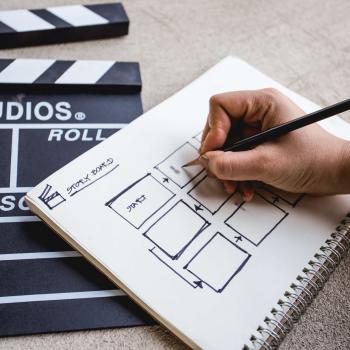
While students read a novel, they imagine the characters, setting, and action taking place. This lesson allows students to use their imaginations in the form of a storyboard. Students first read a book that has a complementary film adaptation. They then learn about adaptation by writing short paragraphs and adapting them for film using storyboards. Once they have evaluated the adaptations, the students will create their visions of the books and compare them to the film.
Featured Resources
- Film in the Classroom: A Guide For Teachers: This printable guide for teachers discusses 25 Masterpiece films and offers fresh ideas and innovative activities for teaching film in today’s digital environment.
- Venn Diagram: Students use this graphic organizer to describe similarities and differences between objects or ideas.
From Theory to Practice
Students often find the visual nature of film more accessible than works in print. When film and literature are used together in the classroom, students can transfer techniques from active viewing (which often comes more naturally) to their experience with reading literature. This transfer can enhance their skills as active readers and enable them to respond to a variety of media with more depth.
Further Reading
Common Core Standards
This resource has been aligned to the Common Core State Standards for states in which they have been adopted. If a state does not appear in the drop-down, CCSS alignments are forthcoming.
State Standards
This lesson has been aligned to standards in the following states. If a state does not appear in the drop-down, standard alignments are not currently available for that state.
NCTE/IRA National Standards for the English Language Arts
- 3. Students apply a wide range of strategies to comprehend, interpret, evaluate, and appreciate texts. They draw on their prior experience, their interactions with other readers and writers, their knowledge of word meaning and of other texts, their word identification strategies, and their understanding of textual features (e.g., sound-letter correspondence, sentence structure, context, graphics).
- 5. Students employ a wide range of strategies as they write and use different writing process elements appropriately to communicate with different audiences for a variety of purposes.
- 6. Students apply knowledge of language structure, language conventions (e.g., spelling and punctuation), media techniques, figurative language, and genre to create, critique, and discuss print and nonprint texts.
- 8. Students use a variety of technological and information resources (e.g., libraries, databases, computer networks, video) to gather and synthesize information and to create and communicate knowledge.
- 11. Students participate as knowledgeable, reflective, creative, and critical members of a variety of literacy communities.
- 12. Students use spoken, written, and visual language to accomplish their own purposes (e.g., for learning, enjoyment, persuasion, and the exchange of information).
Printouts
- Storyboard Graphic Organizer (p.36 Film in the Classroom: A Guide For Teachers)
Websites
This website contains a vast collection of teachers’ guides and other educational materials. The Learn section of the site offers 30 in-depth guides to classics as well as comprehensive author guides.
This link connects you to a PDF version of a PBS Teaching Guide that is connected to 25 Masterpiece films and offers new ideas and innovative activities for teaching film in today’s digital environment. This teacher’s guide also includes graphic organizers to help student’s evaluate classic films.
Preparation
- Begin by selecting books that the students will be using for this activity. Choose a novel that has an appropriate film adaption (p.38-39 Film in the Classroom: A Guide For Teachers) and have the class read it.
- Acquire the appropriate film adaptation and the technology needed to view it. Be sure to send a Movie Permission Slip or the forms required by your local school to families announcing details about the movie before showing it in class.
- Make appropriate copies of Venn Diagram, 2 Circles Printout, Storyboard Graphic Organizer (p.36 Film in the Classroom: A Guide For Teachers), Storyboard Reflection Handout, Storyboard Peer Review, Film Adaptation Handout, and the Gallery Walk Match.
- Have the students read the selected book completely and discuss main points/literary elements such as plot, characters, tone, and conflict. The chosen text needs to be completed before this lesson is taught.
Student Objectives
Students will:
- describe similarities and differences between elements of the book and the movie.
- evaluate the effects of and state preferences toward these similarities and differences.
- adapt a piece of literature into a movie storyboard.
Session One
- As a class, discuss how film and literature are alike and different. Using the Venn Diagram, 2 Circles Printout, have the students list as many similarities and differences between these medias as they can. Have the students consider:
- The tools an author and filmmaker uses to tell a story and to draw in its audience.
- How each handles aspects of storytelling such as point of view, narrative structure, and time frame.
- A work of literature is created by just one person and a film is created by a team.
- Once all students have completed the comparison activity, lead a class discussion sharing the student answers using an overhead or board.
- Show and explain the Storyboard Graphic Organizer (p.36 Film in the Classroom: A Guide For Teachers) and discuss how they create a link between a story and film. Show an example storyboard to further solidify students' understanding.
- Divide the class into pairs and have the students each write a paragraph or two that describes some event, action, or situation (an argument, a car trip, a first date, a party, etc.). Have the students include as much detail about the event. Explain to students that they will then turn this into a storyboard.
- Model how to storyboard with the class using one the students' stories as an example. Show the students a few other examples of how someone turned a story/idea into a storyboard.
- Have students begin to storyboard their events that they previously wrote about. Explain to the students that they may adapt the written paragraphs to be more cinematic, but they should try to be true to the spirit of the original idea. The adaptations must be completed before the next session.
Session Two
- Have the students get together with their assigned partners, and have them share their storyboard creations and explain the decisions that were made while adapting the story. Have the students complete the Storyboard Reflection Handout together.
- Lead a discussion about the Storyboard Reflection Handout and how each student’s story was adapted.
- Use the Storyboard Reflection Handout to structure the discussion.
- In addition, find partners that made major changes to each others' stories and others that made a literal adaptation, have them explain the choices they made.
- As a class, choose 10 to 15 excerpts from the book being used (chosen before the leson) that the students wish to see on film. Write these on the whiteboard or chart paper for the entire class to see. Assign a specific excerpt to each member in the class so that they all will be adapted.
- Introduce students to the Storyboard Peer Review handout, which will later be used for students to assess their peers on their work. Allow time for students to review the handout and ask questions, as needed.
- Have each student, using the Storyboard Graphic Organizer (p.36 Film in the Classroom: A Guide For Teachers), adapt their assigned excerpt into film. Instruct the students that they may adapt the excerpt to be more cinematic, but try to be true to the spirit of the original idea.
Session Three
- Pass out and explain the Film Adaptation Handout. Have the students complete the portion about the book before viewing the film. Instruct the students that while they are watching the film they will use the handout to evaluate the book, their storyboard adaption, and the film adaptation.
- Watch the entire film and discuss the main events and characters. For more information on books and their film adaptations please see the Film in the Classroom: A Guide For Teachers.
- Have the students complete the “class discussion” portion of the Film Adaptation Handout.
NOTE: Use other sessions, as necessary, to finish watching the film in its entirety before beginning Session Four.
Session Four
- Pair the students up and have them complete the Storyboard Peer Review handout. Allow time for students to revise and make changes based on the feedback. Have the students turn in the handout once it is completed.
- Display the final storyboards in a gallery walk. Distribute and explain the Gallery Walk Match handout. Organize the storyboards around the classroom and instruct students to travel in small groups exploring each exhibit. Number each storyboard so that students can match them with the correct event. Once the students have looked at all storyboards, have them complete the bottom portion of the Gallery Walk Match handout.
- Have students get out their completed Film Adaptation Handout. Lead the class in a discussion of the novel and the film adaptation. Go through each excerpt from the book in order using the “after viewing your scene” and “class discussion” portion of the Film Adaptation Handout. Be sure to go over the Gallery Walk Match handout as you discuss each excerpt to see if the students were accurate.
Extensions
- After adapting texts to storyboards, use the Comic Creator to construct a finished product.
- Use the storyboards to film your story. Analyze how the story changed from the storyboard to the completed film.
- Compare a text to two film adaptations. Compare and contrast using the Venn Diagram, 3 Circles printout. For example, use the PBS version of Great Expectations and compare it to another production. Three notable productions are a 1999 TV version with Charlotte Rampling as Miss Havisham; a 1998 modernized version with Ethan Hawke; and a 1946 version directed by David Lean with Alec Guiness.
- Students can explore the advantages and disadvantages of adapting a classic work for the screen in this excerpt from MASTERPIECE’s 2002 version of The Hound of the Baskervilles.
Student Assessment / Reflections
- Provide feedback to individuals as they complete the Storyboard Graphic Organizer (p.36 Film in the Classroom: A Guide For Teachers) and Storyboard Reflection Handout, and Film Adaptation Handout, paying special attention to the quality of their responses.
- Observe student participation in the class discussion conversation and gallery walk and check their Gallery Walk Match for completion.
- Assess the Storyboards using the Storyboard Peer Review handout.
Add new comment