This guide explores quantitative civic reasoning in English and math classrooms.
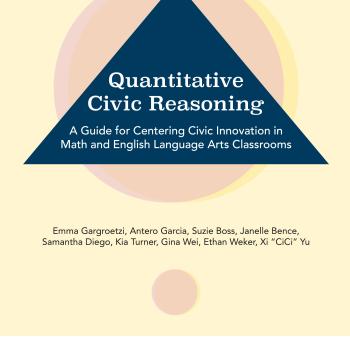
Quantitative Civic Reasoning: A Guide for Centering Civic Innovation in Math and English Language Arts Classrooms
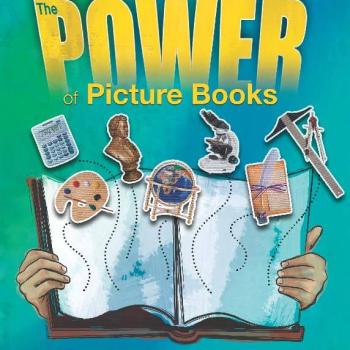
Power of Picture Books, The: Using Content Area Literature in Middle School
Featuring descriptions and activities for fifty exceptional titles, Mary Jo Fresch and Peggy Harkins offer a wealth of ideas for harnessing the power of picture books to improve reading and writing in the content areas.
Fresh Perspectives on New Literacies and Technology Integration
This article provides practical ideas for integrating technologies into the classroom in ways that honor students' out-of-school technology funds of knowledge.
The Middle School High Five: Strategies Can Triumph
A literacy support teacher leads a district-wide initiative to organize content-area teachers in an effort to help their students become better readers by offering instruction and practice in five reading strategies across the curriculum.
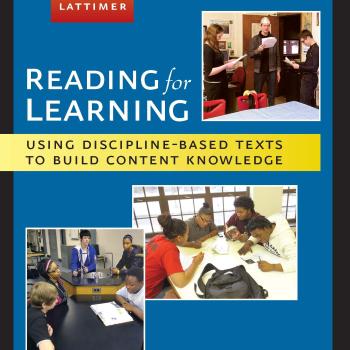
Reading for Learning: Using Discipline-Based Texts to Build Content Knowledge
Heather Lattimer provides practical, classroom-tested approaches to helping students access and critically respond to content-based texts.
Technology That Powers Up Learning
By designing lessons to activate prior knowledge and linking these activities to reading and writing, teachers found that students were more engaged, that they learned more material more quickly, and that they more willingly incorporated reading into their lives.
Violent Red, Ogre Green, and Delicious White: Expanding Meaning Potential through Media
This article reports on the meaning potential of daily access to drawing/writing media for widening and deepening meaning construction.
Finding the Thread: Character, Setting, and Theme
An annotated bibliography of books that exemplify the plot elements, character, setting, and theme. Includes guidelines on how to do a book talk.
Exploring the Past through Multigenre Writing
Research comes alive when students explore a range of alternate genres instead of writing the traditional research report.
Inquiry at the Window: The Year of the Birds
This science inquiry in a fourth-grade classroom affirms the importance of observation, questioning, reading, and writing to the inquiry process.
Technology in the Language Arts classroom: Is It Worth the Trouble?
Suggests the authentic audience found on the Internet has a profound effect on the quality of student writing in all grades, and that the key to successful technology projects is integrating them into the curriculum so that computers are a means, not an end. Offers ideas for classroom activities and projects using stand-alone computers, and using computers with Internet access.
Peek, Peak, Pique: Using Homophones to Teach Vocabulary (and Spelling!)
Argues that regular homophone practice enhances vocabulary knowledge, spelling skills, pronunciation ability, and overall reading proficiency. Describes how card games played with decks of homophones helped to accomplish these things. Notes particular benefits of homophone games to ESL students, and outlines key advantages of using the games.
Spelling: From Invention to Strategies
Veteran educator Howard Miller shares a set of strategies that can propel middle school writers (and "inventive" spellers) into the role of being responsible and strategic in this Voices from the Middle article.
Codeswitching: Tools of Language and Culture Transform the Dialectally Diverse Classroom
This article shows how to affirm and draw on the dialect diversity of students to foster the learning of Standard English.
The (Un)Making of a Reader
Through looking critically at the underpinnings of "story mapping, a teacher uncovers a contradiction between the author's definition of reading as a constructive process and the reductionist nature of story mapping, which she shows inhibits students' potential to explore a diverse range of personal responses by promoting comprehension over response, uniformity over diversity, and control over freedom.
The Literature Circle: Reading Like a Writer
Reading internalizes every aspect of good writing—if you're reading good writing, which most middle school textbooks aren't. Here are criteria and suggestions for good content-area articles and trade nonfiction books.
Sound and Sense in Children's Picturebooks
Explores (from the point of view of the writer, a children's author) one aspect of learning about language that is present in the picture books he writes: the relation between sound and sense.
"Genre Studies"
In this issue you will read about elementary children who are introduced to genre primarily through their teachers reading aloud. The children are invited to become inquirers who continue to explore books as they meet in small groups to write and read on their own—from fantasy to African folktales to poetry.
Joyful Noises: Creating Poems for Voices and Ears
This article discusses the efforts of a fifth-grade teacher and a visiting poet to rekindle students' sense of poetic passion and pleasure and describes how the authors introduced students to poems for two voices.
Professional Knowledge for the Teaching of Writing
With full recognition that writing is an increasingly multifaceted activity, we offer several principles that should guide effective teaching practice.