Today's students love chatting online with friends. This lesson combines that love with literature. Students form literature circles and have meaningful online discussions about a literary work.

Thoughtful Threads: Sparking Rich Online Discussions

Plotting a Plan to Improve Writing: Using Plot Scaffolds
Students really get into character in this lesson as they act out the parts of a script and analyze character motivations and dialogue.
Using the Four-Square Strategy to Define and Identify Poetic Terms
How do poets play with language? Students will explore some answers to this question as they search through poems for examples of alliteration, assonance, simile, and rhyme.

Guided Comprehension: Knowing How Words Work Using Semantic Feature Analysis
Based on the Guided Comprehension Model developed by Maureen McLaughlin and Mary Beth Allen, this lesson introduces students to the comprehension strategy of knowing how words work.
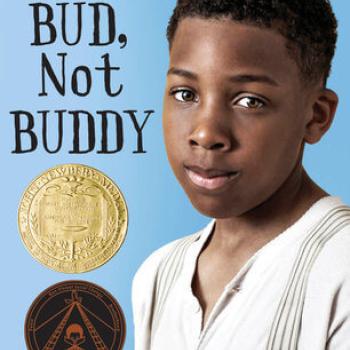
Press Conference for Bud, Not Buddy
Students read Bud, Not Buddy by Christopher Paul Curtis, demonstrate comprehension of the story by involving themselves in discussions, and analyze the characters in preparation for a class "press conference."
Using Story Innovation to Teach Fluency, Vocabulary, and Structure
An instructional strategy called story innovation teaches students fluency, comprehension, vocabulary, and story structure. This unique strategy can be adapted for many purposes.

What is Poetry? Contrasting Poetry and Prose
Students often find poetry frustrating and meaningless. By helping students think critically about the differences between poetry and prose, this introduction sets the stage for different strategies for comprehending poetic texts.

e-Book Reading and Response: Innovative Ways to Engage with Texts
Students in grades 5 through 12 read and respond to electronic books by using e-book tools and features, including digital note-taking capabilities.
Using Children's Literature to Develop Classroom Community
Conversation and cooperation bring out the best in students when they hold dialogues about their individual strengths, abilities, and talents.

Lonely as a Cloud: Using Poetry to Understand Similes
Students identify similes in poetry and gain experience in using similes as a poetic device in their own work.
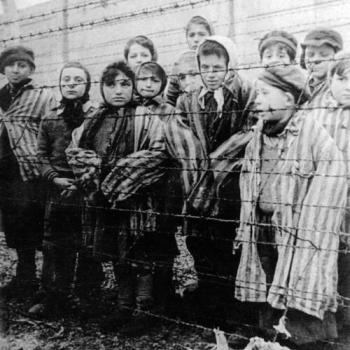
Using Technology to Analyze and Illustrate Symbolism in Night
Images have power—they can trigger memories or symbolize abstract ideas. Students put the power of images to the test as they analyze symbolism in Night and create symbolic photomontages.

Traveling the Road to Freedom Through Research and Historical Fiction
Students learn how to walk a mile in someone else's shoes by reading historical fiction about the Underground Railroad.
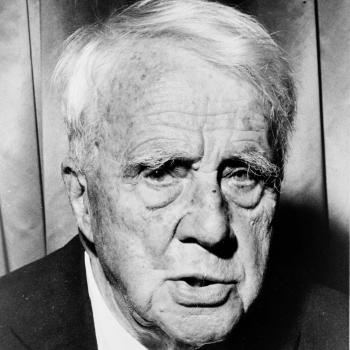
Robert Frost Prompts the Poet in You
Students will find their inner poet laureate in this lesson that involves writing a poem in the style of Robert Frost.
Collaborating, Writing, Linking: Using Wikis to Tell Stories Online
Students become online authors in this lesson in which they write and post a short story using wiki technology.
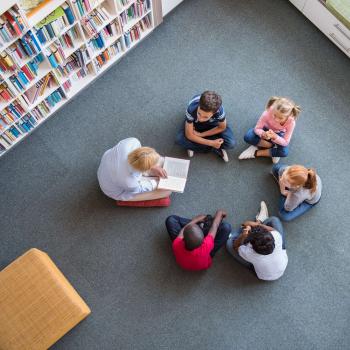
Give Them a Hand: Promoting Positive Interaction in Literature Circles
Students circle their desks as they analyze their own participation within a small group discussion.

In the Poet's Shoes: Performing Poetry and Building Meaning
Students take poetic license when they interpret William Carlos William's poem "The Red Wheelbarrow" to help create a poem of their own.

Exploring Friendship With Bridge to Terabithia
Students make predictions about Bridge to Terabithia and its characters, complete character studies, and relate the characters' experiences to their own as they identify ways to make and keep friends.
Using Picture Books to Explore Identity, Stereotyping, and Discrimination
Students analyze the concepts of identity, stereotyping, and discrimination by reading picture books; identify how these concepts are dealt with in each book; and discuss concrete actions to stop discrimination.
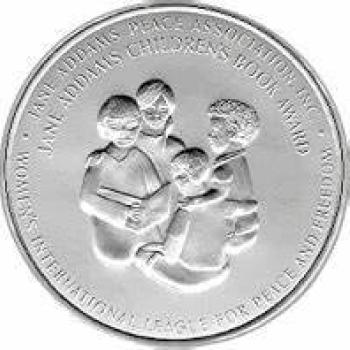
Exploring Author's Voice Using Jane Addams Award-Winning Books
History has many faces in this lesson in which students read Jane Addams Award-winning books to learn about peace, social justice, world community, and equality.
Postmodern Picture Books in Middle School
Students analyze the structure of a postmodern picture book, Black and White, to uncover how authors create unexpected plots and connections and form relationships between words and illustrations.