An instructional strategy called story innovation teaches students fluency, comprehension, vocabulary, and story structure. This unique strategy can be adapted for many purposes.
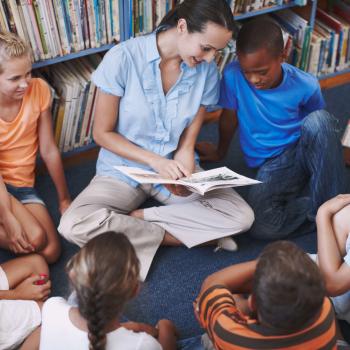
Using Story Innovation to Teach Fluency, Vocabulary, and Structure
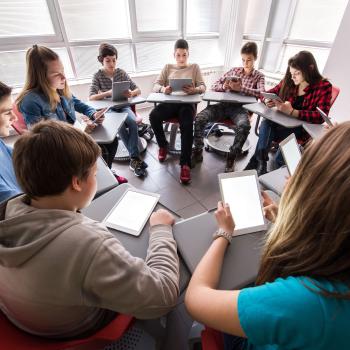
Digital Word Detectives: Building Vocabulary With e-Book Readers
Students in grades 2-6 use digital dictionaries and other e-book tools to learn new vocabulary as they read e-books on digital reading devices.
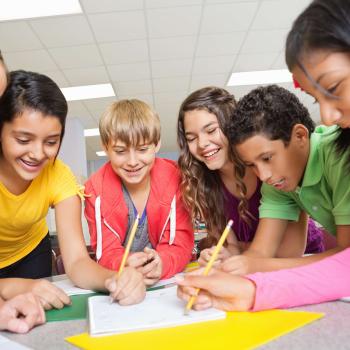
Loaded Words: Vocabulary That Packs a Punch in Persuasive Writing
In this minilesson, students practice identifying and purposefully using vocabulary in persuasive writing that is intended to have an emotional impact on the reader.
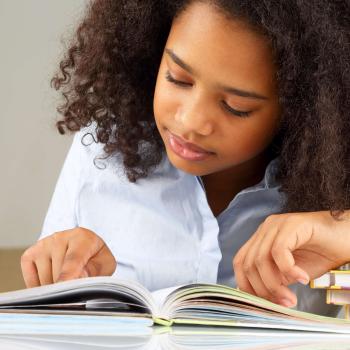
Creating a Feast for the Senses With Mentor Texts
This lesson teaches intermediate students to "use the experts" to learn how to revise to create sharp, sensory-rich experiences for their readers.
Show-Me Sentences
This lesson teaches students how to revise dull "telling" sentences into vivid, descriptive "showing" sentences.
A Portrait of Our World: Making Connections and Developing Comprehension
Students engage in carousel walks, character analyses, global explorations, and genre studies while using valuable language arts strategies to build higher-level comprehension skills.
What is Poetry? Contrasting Poetry and Prose
Students often find poetry frustrating and meaningless. By helping students think critically about the differences between poetry and prose, this introduction sets the stage for different strategies for comprehending poetic texts.

Making Memories: An End-of-Year Digital Scrapbook
Students reflect on their school year, creating a digital scrapbook consisting of images and text to present to their school community.
A Prereading Strategy: Using the Vocabulary, Language, Prediction (VLP) Approach
Students learn content area vocabulary and increase reading comprehension using the Vocabulary, Language, Prediction (VLP) approach.

3-2-1 Vocabulary: Learning Filmmaking Vocabulary by Making Films
Bring the vocabulary of film to life through the processes of filmmaking. Students learn terminology and techniques simultaneously as they plan, film, and edit a short video.

e-Book Reading and Response: Innovative Ways to Engage with Texts
Students in grades 5 through 12 read and respond to electronic books by using e-book tools and features, including digital note-taking capabilities.

When I Was Young In...A Literature to Language Experience
Past meets present in this lesson in which students practice verb tense when they write personal short stories that they then publish in a flip book.
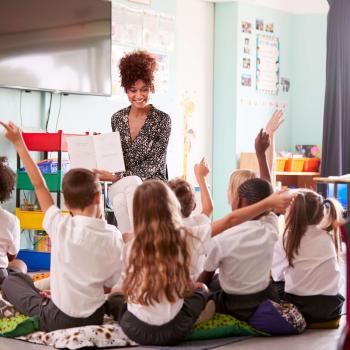
Using Children's Literature to Develop Classroom Community
Conversation and cooperation bring out the best in students when they hold dialogues about their individual strengths, abilities, and talents.

Lonely as a Cloud: Using Poetry to Understand Similes
Students identify similes in poetry and gain experience in using similes as a poetic device in their own work.
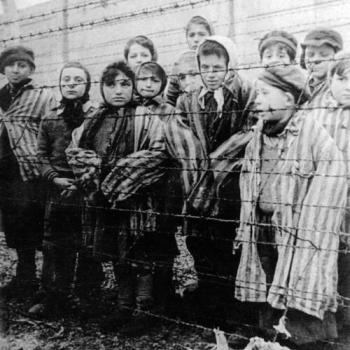
Using Technology to Analyze and Illustrate Symbolism in Night
Images have power—they can trigger memories or symbolize abstract ideas. Students put the power of images to the test as they analyze symbolism in Night and create symbolic photomontages.

Traveling the Road to Freedom Through Research and Historical Fiction
Students learn how to walk a mile in someone else's shoes by reading historical fiction about the Underground Railroad.
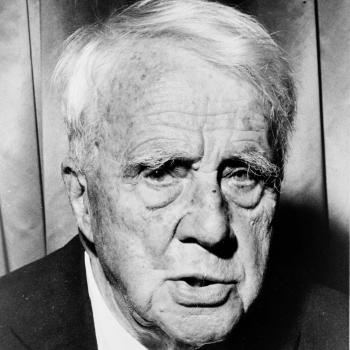
Robert Frost Prompts the Poet in You
Students will find their inner poet laureate in this lesson that involves writing a poem in the style of Robert Frost.

A Directed Listening-Thinking Activity for "The Tell-Tale Heart"
What's that sound? Students participate in a Directed ListeningThinking Activity (DLTA) using "The Tell-Tale Heart," make predictions, and respond in the form of an acrostic poem or comic strip.
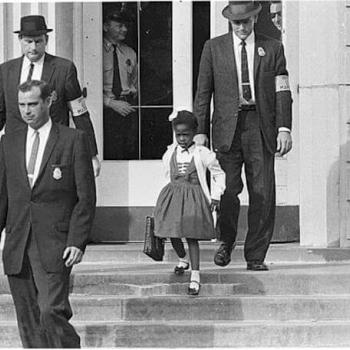
Seeing Integration From Different Viewpoints
What does the world look like through someone else's eyes? Guide students in using colorful paper glasses to examine a story of school desegregation from multiple perspectives.

Exploring and Sharing Family Stories
Writing gets personal when students interview family members in order to write a personal narrative about that person.