Students practice writing detailed, sensory-rich descriptions by framing a small piece of nature and freewriting about it. From this minilesson, students can develop a variety of types of writing.

Creative Writing in the Natural World: A Framing

Blurring Genre: Exploring Fiction and Nonfiction with Diary of a Worm
After reading several examples of how a published author incorporates facts in fiction writing, students research a topic of their choice and write fictional diary entries that incorporate factual information.

Glogging About Natural Disasters
After researching various natural disasters, students share their findings with each other using glogs, or through poster presentations.
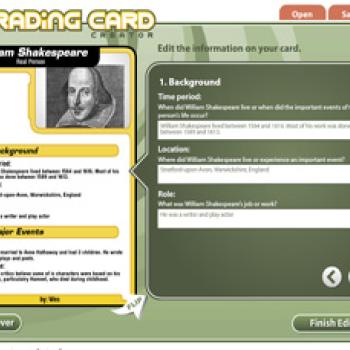
Trading Card Creator
This tool provides a fun and useful way to explore a variety of topics such as a character in a book, a person or place from history, or even a physical object. An excellent tool to for summarizing or as a prewriting exercise for original stories.
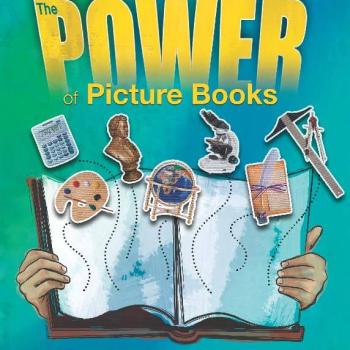
Power of Picture Books, The: Using Content Area Literature in Middle School
Featuring descriptions and activities for fifty exceptional titles, Mary Jo Fresch and Peggy Harkins offer a wealth of ideas for harnessing the power of picture books to improve reading and writing in the content areas.

RAFT Writing Template
Students can utilize this printout to organize their writing as they learn to use the RAFT strategy. This printout enables students to clearly define their role, audience, format, and topic for writing.

Supporting Student Comprehension in Content Area Reading
In this strategy guide, you'll learn a few simple, yet powerful, techniques to encourage students to use peer talk and writing to enhance their understanding of content area texts.

Teaching with Zooming Slideshows through Prezi
Through Prezi, a web application, students create "zooming" presentations for various purposes, such as presenting research, defending an opinion, or sharing a digital story.

Bringing Lessons to Life with Animoto
Using Animoto, a free Web 2.0 tool, students can develop short digital videos that include music, photos, video clips, and text as well as share their creations electronically.

Speak to Me: Teaching with Voki
Through Voki, a Web 2.0 tool, students create customizable avatars for class presentations for various purposes, such as presenting biographical information, expressing an opinion, or reading a poem.

Technology and Copyright Law: A "Futurespective"
Students research and report on instances of how copyright laws have adapted to encompass new technologies. They write articles predicting copyright issues that may arise with new and future technologies.

ABC Bookmaking Builds Vocabulary in the Content Areas
V is for vocabulary. A content area unit provides the theme for a specialized ABC book, as students select, research, define, and illustrate a word for each alphabet letter.

Astronomy Poetry: Combining Poetry With the Content Areas
Students' responses to this lesson will be out of this world after they've researched astronomy to write poetry and compile a poetry book.

Finding Solutions to Food Waste: Persuasion in a Digital World
Using various reading strategies and resources, students explore the issue of food waste. They also create persuasive arguments and blog posts examining this topic.

Cosmic Oranges: Observation and Inquiry Through Descriptive Writing and Art
Students will eat up this lesson about oranges as they practice the skills that help them investigate and make detailed observations for descriptive purposes.

Today is Leap Day!
Our solar year is 365.24219 days. Since our calendar does not deal in partial days, every four years, we add an additional day to February.

Science writer Seymour Simon was born in 1931.
Students select and explore a scientific topic in detail using Simon's nonfiction science books and then use what they learn to write original poetry on the topic.
It's Raining Cats and Dogs! Make a Children's Book about the Weather
Kids learn about weather sayings throughout history while writing and illustrating a book for younger children.

The Smithsonian Institution was founded in 1846.
After exploring an exhibit online, students use the information they learned to write "A Day in the Life" narratives that tell about a person, animal, or object they saw in the exhibit.