Tom Romano leads students to allow themselves creative freedom while developing the patience to hone that first rush into a tight and effective piece of writing with voice.
Writing with Voice
Position Statement on Multimodal Literacies
This position on Multimodal Literacies is a summary statement developed by the Multimodal Literacies Issue Management Team of the NCTE Executive Committee.
Let's Go to the Movies: Rethinking the Role of Film in the Elementary Classroom
Argues that elementary language-arts teachers should expand their definition of "text" to include film, a valuable instructional material. Notes that today's elementary students come to class with a great deal of knowledge about films--prior experiences which teachers can tap into. Discusses the application to film of reader-response theories.
Menu Magic!
This article helps eighth graders review the power of adjectives. Students eat up this project that promises to deliver the opportunity to analyze, synthesize, and evaluate while giving students the chance to work in cooperative groups. All in all, it's an appetizing way to get kids focused on descriptive writing.
Different Texts, Different Emergent Writing Forms
Examines young children's ability to vary the forms of emergent writing as they wrote a story, a shopping list, and a letter to a friend at three different times during the school year. Finds that children apply their emergent knowledge about written language differently. Indicates a considerable mismatch between written products and knowledge of genre characteristics.
Nonfiction Inquiry: Using Real Reading and Writing to Explore the World
Nonfiction is the genre most likely to spur children's passion and wonder for learning. This article discusses way to motivate children to read nonfiction.

Language and Literacy: The Poetry Connection
Offers a conceptual framework for building language awareness through the reading of poetry, encouraging children to reflect on language in interesting and powerful ways. Provides an instructional model for constructing literature-based experiences in the classroom.
Undoing the Great Grammatical Scam
Grammar should be taught in the context of students' own writing: "we learn what we actually have the opportunity to practice and do in the real world."
To Grammar or Not to Grammar: That Is Not the Question!
Argues that, taught in the context of writing, grammar can enhance and improve students' writing. Offers classroom examples showing how: good preparation for writing fosters good grammar and detail; students can use grammatical and syntactic constructions used by professional authors as models for their own writing; and how to help students learn revision strategies at the sentence and paragraph level.
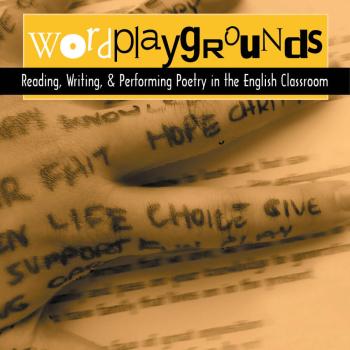
Wordplaygrounds: Reading, Writing, and Performing Poetry in the English Classroom
O'Connor offers new approaches to teaching poetry in middle and high school with more than 25 writing activities that can constitute an entire course or work as individual lessons.
Getting the Knack: 20 Poetry Writing Exercises
Dunning and Stafford, both widely known poets and educators, offer this delightful manual of exercises for beginning poets.
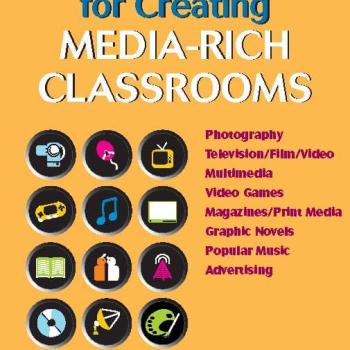
Lesson Plans for Creating Media-Rich Classrooms
This volume offers a collection of media literacy lessons for the secondary English classroom, including a CD of student handouts, teacher resources, and sample media files.
Standards for the English Language Arts
Standards for the English Language Arts presents a vision of literacy education that encompasses the use of print, oral, and visual language and addresses six interrelated English language arts: reading, writing, speaking, listening, viewing, and visually representing.
Language Learners in the English Classroom
This book provides practical, research-based strategies that can help secondary-level English language learners meet the challenges of both language and content learning.
Reading in the Reel World: Teaching Documentaries and Other Nonfiction Texts
John Golden offers middle and high school teachers a practical guide for using documentary film in the classroom to improve students' reading, writing, and thinking skills.
Building Literacy Connections with Graphic Novels: Page by Page, Panel by Panel
This collection of essays by classroom teachers demonstrates how to pair graphic novels with classic literature (including both canonical and YA lit).
Code-Switching: Teaching Standard English in Urban Classrooms
Wheeler and Swords show K–6 teachers how to use code-switching and contrastive analysis to help students use prior knowledge to translate vernacular English into Standard English.
Engaging Grammar: Practical Advice for Real Classrooms
Amy Benjamin challenges the idea of "skill and drill" grammar instruction, and Tom Oliva provides a teacher's journal chronicling how the concepts in this book can work in a real classroom.
Grammar Alive!: A Guide for Teachers
NCTE's Assembly for the Teaching of English Grammar provides this much-needed resource for teachers who wonder what to do about grammar—how to teach it, how to apply it, how to learn what they themselves were never taught.
The Writing Workshop: Working through the Hard Parts (And They're All Hard Parts)
A practical, comprehensive, and illuminating guide for both new and experienced teachers that confronts the challenges of the writing workshop head-on.