In this strategy guide, you'll learn about Partner Talk—a way to provide students with another learning opportunity to make learning their own through collaboration and discussion.

Using Partner Talk to Strengthen Student Collaboration and Understanding
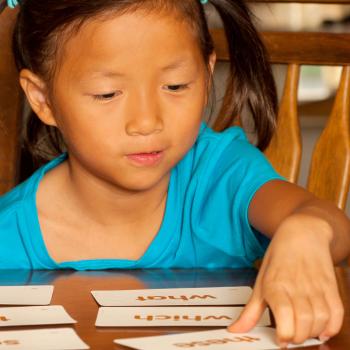
Introducing Ideas and Vocabulary with the Concept Sort
A Concept Sort is a vocabulary and comprehension strategy used with students to introduce new topics and/or familiarize students with new vocabulary.

Teaching with Zooming Slideshows through Prezi
Through Prezi, a web application, students create "zooming" presentations for various purposes, such as presenting research, defending an opinion, or sharing a digital story.

Bringing Lessons to Life with Animoto
Using Animoto, a free Web 2.0 tool, students can develop short digital videos that include music, photos, video clips, and text as well as share their creations electronically.

Speak to Me: Teaching with Voki
Through Voki, a Web 2.0 tool, students create customizable avatars for class presentations for various purposes, such as presenting biographical information, expressing an opinion, or reading a poem.

Shared Reading Opportunities for Direct Literacy Instruction
Shared reading affords teachers the opportunity to teach reading strategies in larger groups. The shared text and teacher support offer unique opportunities for instruction.

Supporting Students As They Read Independently
This guide includes basic theory and practice for supporting students reading independently, which is the last instructional context along the gradual release of responsibility.

Using Guided Reading to Develop Student Reading Independence
This guide presents basic structures for implementing guided reading, which involves working with small groups of children possessing similar strategies and challenges when encountering new text.

Teacher Read-Aloud That Models Reading for Deep Understanding
This guide describes the basic elements for reading aloud to students in ways that demonstrate thoughtful and deep interactions with the text.

Inquiry Charts (I-Charts)
This guide introduces I-Charts, a strategy that enables students to generate meaningful questions about a topic and organize their writing.

Question the Author (QtA)
In this guide, you'll be introduced to a strategy that requires students to challenge their understanding and solidify their knowledge while reading a text.

Exit Slips
This strategy guide introduces the concept of using Exit Slips in the classroom to help students reflect on what they have learned and express what or how they are thinking about the new information. Exit Slips easily incorporate writing into the content area classroom and require students to think critically.

Power Notes
The strategy examined in this Strategy Guide teaches students an outlining technique to help them differentiate between main ideas and details in their reading and writing.
The (Un)Making of a Reader
Through looking critically at the underpinnings of "story mapping, a teacher uncovers a contradiction between the author's definition of reading as a constructive process and the reductionist nature of story mapping, which she shows inhibits students' potential to explore a diverse range of personal responses by promoting comprehension over response, uniformity over diversity, and control over freedom.
The Literature Circle: Reading Like a Writer
Reading internalizes every aspect of good writing—if you're reading good writing, which most middle school textbooks aren't. Here are criteria and suggestions for good content-area articles and trade nonfiction books.
Sound and Sense in Children's Picturebooks
Explores (from the point of view of the writer, a children's author) one aspect of learning about language that is present in the picture books he writes: the relation between sound and sense.
Joyful Noises: Creating Poems for Voices and Ears
This article discusses the efforts of a fifth-grade teacher and a visiting poet to rekindle students' sense of poetic passion and pleasure and describes how the authors introduced students to poems for two voices.
Professional Knowledge for the Teaching of Writing
With full recognition that writing is an increasingly multifaceted activity, we offer several principles that should guide effective teaching practice.
Resolution on Composing with Nonprint Media
This resolution explains what educators can do to work with young people composing nonprint media that can include any combination of visual art, motion (video and film), graphics, text, and sound -- all of which are frequently written and read in nonlinear fashion.
Resolution on Promoting Media Literacy
This resolution discusses that understanding the new media and using them constructively and creatively actually requires developing a new form of literacy and new critical abilities "in reading, listening, viewing, and thinking."