Suggests the authentic audience found on the Internet has a profound effect on the quality of student writing in all grades, and that the key to successful technology projects is integrating them into the curriculum so that computers are a means, not an end. Offers ideas for classroom activities and projects using stand-alone computers, and using computers with Internet access.
Technology in the Language Arts classroom: Is It Worth the Trouble?
Peek, Peak, Pique: Using Homophones to Teach Vocabulary (and Spelling!)
Argues that regular homophone practice enhances vocabulary knowledge, spelling skills, pronunciation ability, and overall reading proficiency. Describes how card games played with decks of homophones helped to accomplish these things. Notes particular benefits of homophone games to ESL students, and outlines key advantages of using the games.
Spelling: From Invention to Strategies
Veteran educator Howard Miller shares a set of strategies that can propel middle school writers (and "inventive" spellers) into the role of being responsible and strategic in this Voices from the Middle article.
Ghosts and Fear in Language Arts
Describes how an English teacher uses ghost stories in his classroom to further students' interest in and understanding of epics. Presents a short unit in which all the class work focuses on scary kinds of things.
Codeswitching: Tools of Language and Culture Transform the Dialectally Diverse Classroom
This article shows how to affirm and draw on the dialect diversity of students to foster the learning of Standard English.
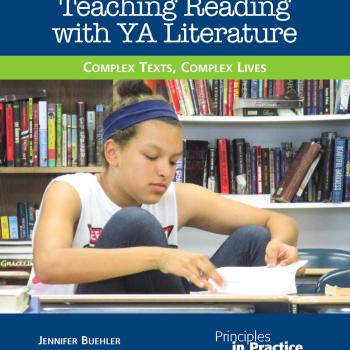
Teaching Reading with YA Literature: Complex Texts, Complex Lives
This book is designed to help teachers develop their own version of YA pedagogy and a vision for teaching YA lit in the middle and secondary classroom.
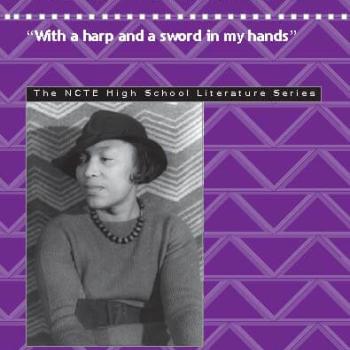
Zora Neale Hurston in the Classroom: "With a Harp and a Sword in My Hands"
The book offers a practical approach to Hurston using a range of student-centered activities for teaching Hurston's nonfiction, short stories, and the print and film versions of Their Eyes Were Watching God.
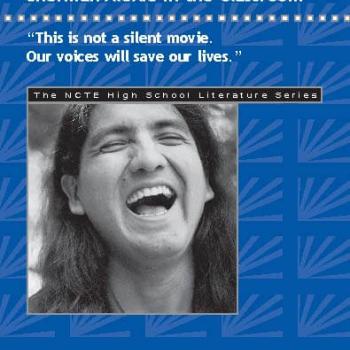
Sherman Alexie in the Classroom: "This is not a silent movie. Our voices will save our lives."
Provides high school teachers with teaching strategies, classroom activities, and student samples for teaching the works of Sherman Alexie.
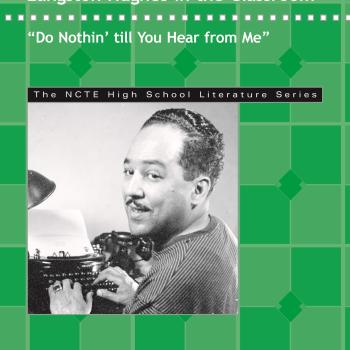
Langston Hughes in the Classroom: "Do Nothin' till You Hear from Me"
Carmaletta M. Williams provides high school teachers with background on Hughes and the Harlem Renaissance as well as help in teaching Hughes's poetry, short stories, novels, and autobiography.
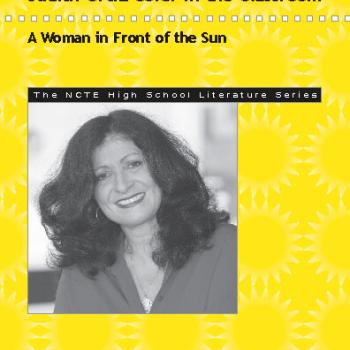
Judith Ortiz Cofer in the Classroom: A Woman in Front of the Sun
Carol Jago offers ways to teach the works of Judith Ortiz Cofer in the high school English classroom.
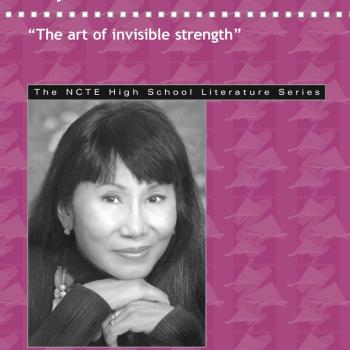
Amy Tan in the Classroom: "The art of invisible strength"
Offers high school teachers an activity-based approach to teaching the works of Amy Tan, especially The Joy Luck Club and The Opposite of Fate.
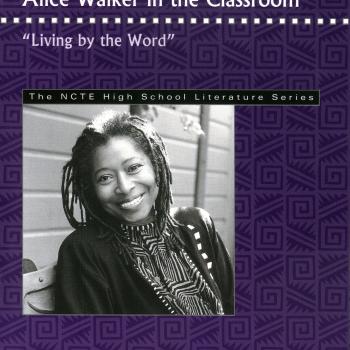
Alice Walker in the Classroom: "Living by the Word"
Carol Jago offers readers a handy guide for bringing this celebrated author's work into the classroom, including biographical information, ideas for literature circles using Walker's short stories, sample writing lessons using Walker's poems, suggestions for teaching The Color Purple, and a wealth of resources for further investigation of Alice Walker and her work.
The (Un)Making of a Reader
Through looking critically at the underpinnings of "story mapping, a teacher uncovers a contradiction between the author's definition of reading as a constructive process and the reductionist nature of story mapping, which she shows inhibits students' potential to explore a diverse range of personal responses by promoting comprehension over response, uniformity over diversity, and control over freedom.
The Literature Circle: Reading Like a Writer
Reading internalizes every aspect of good writing—if you're reading good writing, which most middle school textbooks aren't. Here are criteria and suggestions for good content-area articles and trade nonfiction books.

Alternative Book Reports
This article describes different ways that students can report on books they have read other than the traditional "book report."
Sound and Sense in Children's Picturebooks
Explores (from the point of view of the writer, a children's author) one aspect of learning about language that is present in the picture books he writes: the relation between sound and sense.
Fifty Alternatives to the Book Report
Offers 50 diverse suggestions intended to offer students new ways to think about a piece of literature, new directions to explore, and ways to respond with greater depth to the books they read.
Joyful Noises: Creating Poems for Voices and Ears
This article discusses the efforts of a fifth-grade teacher and a visiting poet to rekindle students' sense of poetic passion and pleasure and describes how the authors introduced students to poems for two voices.
Professional Knowledge for the Teaching of Writing
With full recognition that writing is an increasingly multifaceted activity, we offer several principles that should guide effective teaching practice.
Resolution on Composing with Nonprint Media
This resolution explains what educators can do to work with young people composing nonprint media that can include any combination of visual art, motion (video and film), graphics, text, and sound -- all of which are frequently written and read in nonlinear fashion.