Based on the Guided Comprehension Model by Maureen McLaughlin and Mary Beth Allen, this lesson helps students learn three types of connections (text-to-text, text-to-self, and text-to-world) using a double-entry journal.
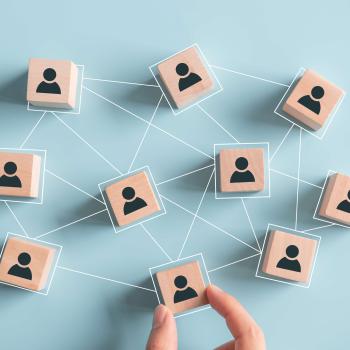
Guided Comprehension: Making Connections Using a Double-Entry Journal

Persuading Readers with Endorsement Letters
Students explore the genre of commercial endorsements, establishing characteristics and requirements for the genre. Each student then composes an endorsement of a product, service, company, or industry.
Color of Silence: Sensory Imagery in Pat Mora's Poem "Echoes"
Pat Mora's poem "Echoes" demonstrates that our senses are powerful tools for literary analysis and comprehension as students use their senses to discover new ways to read and write.

Analyzing and Comparing Medieval and Modern Ballads
Students explore the ballads genre by reading medieval ballads to deduce their characteristics, acting out the ballads, comparing medieval and modern ballads using Venn diagrams, and composing their own ballads.

Exploring Setting: Constructing Character, Point of View, Atmosphere, and Theme
Students read texts by Dybek, Dickens, Poe, and Morrison to explore how authors use language to create setting and, in turn, how setting constructs other elements in a literary work.

Exploring Change through Allegory and Poetry
Students read an example of allegory, review literary concepts, complete literary elements maps and plot diagrams, create a pictorial allegory, and write diamante poems related to the theme of change.

Designing Effective Poster Presentations
Students explore the genre of posters, review informational writing and visual design, and then design poster presentations to share in class or at a school-wide fair.

Worth Its Weight: Letter Writing with "The Things They Carried"
This lesson uses a letter-writing activity based on Tim O'Brien's story "The Things They Carried" to build empathy as students examine the weight they symbolically carry in their own lives.
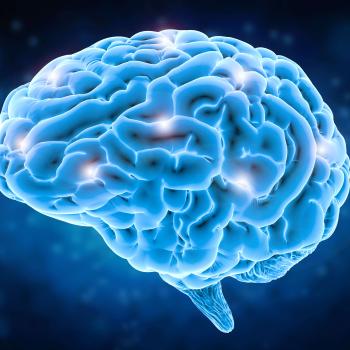
Discovering Memory: Li-Young Lee's Poem "Mnemonic" and the Brain
Students learn about memory by doing a memory-writing exercise, studying the brain to understand how it affects memory, reading Li-Young Lee's poem "Mnemonic," and creating projects to demonstrate their understanding.
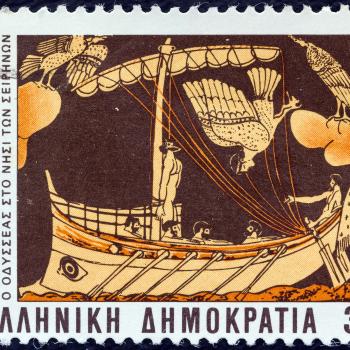
Weaving the Old into the New: Pairing The Odyssey with Contemporary Works
After exploring The Odyssey and a contemporary epic, students choose paired characters from the texts, complete a graphic organizer, and place their characters in hypothetical contemporary situations.

Many Years Later: Responding to Gwendolyn Brooks' "We Real Cool"
Students analyze the Gwendolyn Brooks' poem "We Real Cool" and then write about how the character's pool hall days might influence who the character becomes fifty years in the future.

The Day Jimmy's Boa Taught Cause and Effect
This lesson introduces the concept of cause and effect with Trinka Hakes Noble's books about Jimmy and his boa constrictor.

Connecting Past and Present: A Local Research Project
In this unit, students become active archivists, gathering photos, artifacts, and stories for a museum exhibit that highlights one decade in their school's history.
Creative Problem-Solving with Ezra Jack Keats
Using books by Ezra Jack Keats as inspiration, students explore problems and solutions through read-alouds, discussion, and an interactive bulletin board.
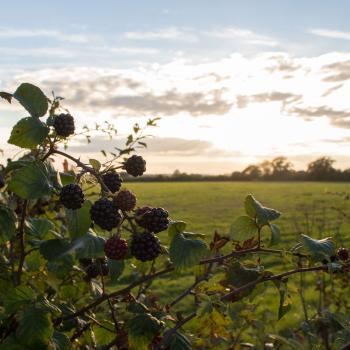
Thinking Inductively: A Close Reading of Seamus Heaney's "Blackberry Picking"
This lesson eases students' fear of interpreting complex poetry by teaching them a strategy with which they determine patterns of imagery, diction, and figurative language in order to unlock meaning.
Assessing Cultural Relevance: Exploring Personal Connections to a Text
As a class, students evaluate a nonfiction or realistic fiction text for its cultural relevance to themselves personally and as a group.

Textmasters: Shaking Up Textbook Reading in Science Classrooms
Engage students in content area reading with the Textmasters strategy, which allows students to collaborate with their peers in different roles that enable better understanding of the content.