In this episode, you'll hear about what goes on behind the scenes in audiobook production. You'll also hear samples from an array of distinguished audio titles including YA classics as well as newer works of contemporary realistic fiction, dystopian fiction, historical fiction, and novels written in verse.

Appreciating Audiobooks

Using the Think-Pair-Share Technique
In this strategy guide, you will learn how to organize students and classroom topics to encourage a high degree of classroom participation and assist students in developing a conceptual understanding of a topic through the use of the Think-Pair-Share technique.

Socratic Seminars
This strategy guide explains Socratic seminars and offers practical methods for applying the approach in your classroom to help students investigate multiple perspectives in a text.

Using the Jigsaw Cooperative Learning Technique
In this strategy guide, you will learn how to organize students and texts to allow for learning that meets the diverse needs of students but keeps student groups flexible.
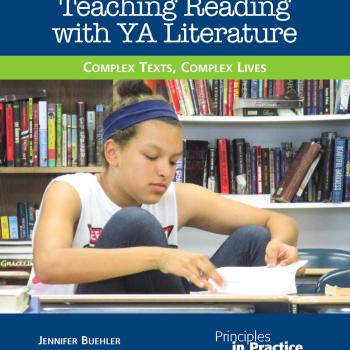
Teaching Reading with YA Literature: Complex Texts, Complex Lives
This book is designed to help teachers develop their own version of YA pedagogy and a vision for teaching YA lit in the middle and secondary classroom.

Using Word Walls to Develop and Maintain Academic Vocabulary
In this guide, you will learn how to use Word Walls to support vocabulary development and retention.
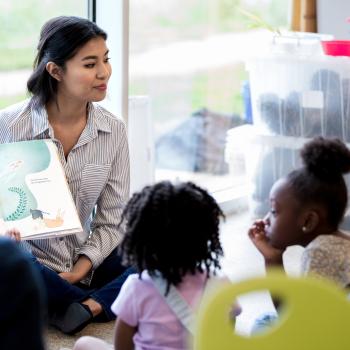
Depend on the Text! How to Create Text-Dependent Questions
Teachers need to create text-dependent questions to elicit close reading. When answering these questions, students learn to reread and think deeply about the text.
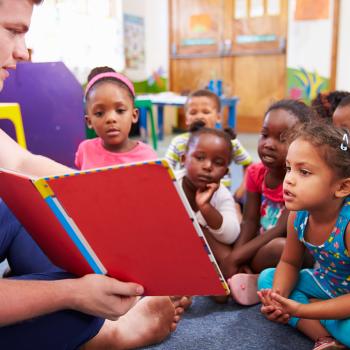
Promote Deep Thinking! How to Choose a Complex Text
Complex texts promote deep thinking and critical analysis by students. Through close reading of a complex text, students' independent reading abilities also increase.
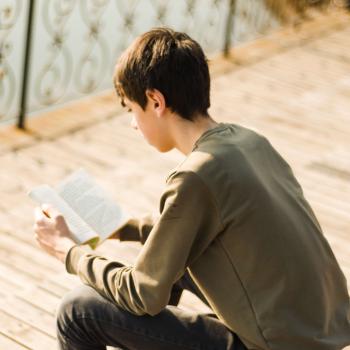
Close Reading of Literary Texts
This guide provides strategies for choosing text that is appropriate for close reading and to plan for instruction.

Reading on the Go
In this Strategy Guide, learn how to prepare yourself and your students for reading and note-taking in mobile environments.
Get Close to Think Deeply: Creating Primary-Level Close Readings
Close readings allow primary students to engage with complex texts. Through repeated reading, students build a deep understanding of the text and critical thinking skills.
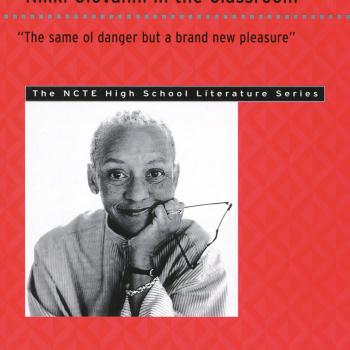
Nikki Giovanni in the Classroom: "The same ol' danger but a brand new pleasure"
The first volume in the NCTE High School Literature Series, this small, practical book features primary source materials including many of Giovanni's poems reprinted in full, easily adaptable lessons and activities, and a resource section for students and teachers wishing to study Giovanni further.

Color of Silence: Sensory Imagery in Pat Mora's Poem "Echoes"
Pat Mora's poem "Echoes" demonstrates that our senses are powerful tools for literary analysis and comprehension as students use their senses to discover new ways to read and write.

Analyzing and Comparing Medieval and Modern Ballads
Students explore the ballads genre by reading medieval ballads to deduce their characteristics, acting out the ballads, comparing medieval and modern ballads using Venn diagrams, and composing their own ballads.

Exploring Change through Allegory and Poetry
Students read an example of allegory, review literary concepts, complete literary elements maps and plot diagrams, create a pictorial allegory, and write diamante poems related to the theme of change.

Discovering Memory: Li-Young Lee's Poem "Mnemonic" and the Brain
Students learn about memory by doing a memory-writing exercise, studying the brain to understand how it affects memory, reading Li-Young Lee's poem "Mnemonic," and creating projects to demonstrate their understanding.
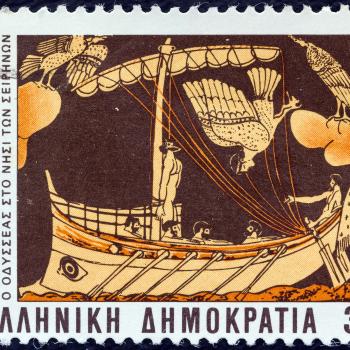
Weaving the Old into the New: Pairing The Odyssey with Contemporary Works
After exploring The Odyssey and a contemporary epic, students choose paired characters from the texts, complete a graphic organizer, and place their characters in hypothetical contemporary situations.

Many Years Later: Responding to Gwendolyn Brooks' "We Real Cool"
Students analyze the Gwendolyn Brooks' poem "We Real Cool" and then write about how the character's pool hall days might influence who the character becomes fifty years in the future.
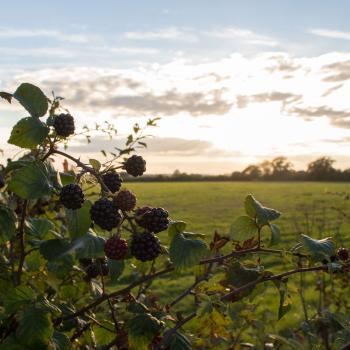
Thinking Inductively: A Close Reading of Seamus Heaney's "Blackberry Picking"
This lesson eases students' fear of interpreting complex poetry by teaching them a strategy with which they determine patterns of imagery, diction, and figurative language in order to unlock meaning.

I've Got the Literacy Blues
Students will be singing the blues in this lesson in which they identify themes from "The Gift of the Magi" and write and present blues poetry based on those themes.