Using published writers' texts and students' own writing, this unit explores emotions that are associated with the artful and deliberate use of commas, semicolons, colons, and exclamation points (end-stop marks of punctuation).

The Passion of Punctuation

Designing Elements of Story in Little Blue and Little Yellow
In this series of four lessons, students will explore key elements of design in Little Blue and
Little Yellow to learn about setting, character relationships, and plot.

Exploring the Power of Language with Six-Word Memoirs
What do the words we write really have to say about us? In this lesson, students examine the power of word choice as they write six-word memoirs of their lives.

Sí, Se Puede: Making a Difference, One Letter at a Time
After reading the book ¡Si, Se Puede!/Yes, We Can!: Janitor Strike in L.A., students learn about labor unions, strikes, and organizing for change. Students interview staff members in their school to learn about their daily work life, and write persuasive advocacy letters.

Boars and Baseball: Making Connections
In this lesson, students will make text-to-self, text-to-text, and text-to-world connections after reading In the Year of the Boar and Jackie Robinson. After sharing and discussing connections, students choose and plan a project that makes a personal connection to the text.

Analyzing the Rhetoric of Corporate Logos across Time
Students think critically about how design elements in logos work together to tell a changing story about a company or product in this visual rhetoric lesson.

Comparing William Carlos Williams's Poetry with Cubist Paintings
Through discussion, drawing, and writing, students compare how William Carlos Williams's poetry and Cubist and Precisionist painting employ similar artistic strategies, enhancing their understanding of both kinds of text.
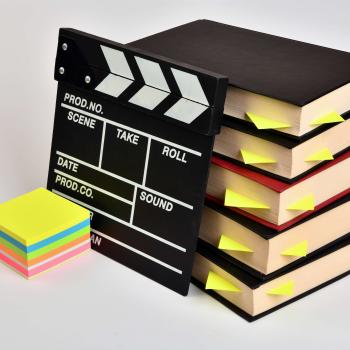
"Roused by the Change of Scene": Analyzing a Film Adaptation of Jane Eyre
As part of their study of Charlotte Brontë's Jane Eyre, students read selected sections of the novel closely and compare their representation in the text to representations in the 2007 Masterpiece adaptation of Jane Eyre. They use the concepts of time/pacing, character, and theme to focus their analysis and to plan an adaptation of a scene of their choice.

Style-Shifting: Examining and Using Formal and Informal Language Styles
Students observe how language features vary when shifting from an informal to a formal style or vice versa. By engaging in style shifting in both speech and writing, students become aware of how we all change language styles depending on the contexts in which we are speaking or writing.

Sharing Information about Careers with Infographics
Students research careers of their own choosing. Then using Piktochart, students create their own infographics to illustrate their research.

Captioning the Civil Rights Movement: Reading the Images, Writing the Words
Teachers guide students to carefully view images from the Civil Rights Movement and write captions that accurately describe the images and/or their probable purposes.

"Three Stones Back": Using Informational Text to Enhance Understanding of Ball Don't Lie
Students engage in a close reading of a passage from Matt de la Pena's novel Ball Don't Lie before researching important background information to assess the accuracy of the claims made by a character.
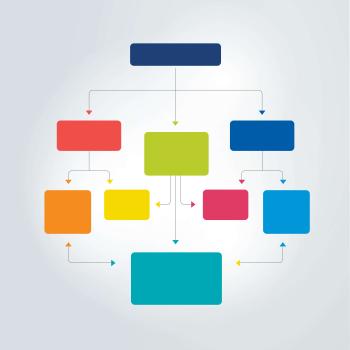
A Picture IS Worth a Thousand Words: Using Infographics to Illustrate How-to Writing
Students write step-by-step instructions on topics of their own choosing. Then using Piktochart, students create their own infographics to illustrate their instructions.

Picture This: Combining Infographics and Argumentative Writing
After researching topics that the students have chosen, students write argumentative essays. Then, using Piktochart, students create their own infographics to illustrate their research.

Picture This: Using Instagram to Report
After taking a field trip that students document using mobile app Instagram, students become new reporters as they use the interactive Printing Press to tell about their experiences.

From Quantitative to Qualitative: Writing Descriptions of Data From Tables
Students develop quantitative reasoning and critical thinking by analyzing descriptions tables for content, language, and organization with a particular focus on verb tense selection, and then writing descriptions of tables themselves.

Persuade Me in Five Slides! Creating Persuasive Digital Stories
After students write persuasive essays, use this lesson to challenge them to summarize their essays concisely by creating five-slide presentations.

Making the Cut: Revising Memoirs by Detecting Clutter and Confusion
Students improve a slide show by removing pictures. Their reasons for cutting pictures are translated into revision guidelines for cutting unnecessary words and sections from their rough drafts.

Charlotte is Wise, Patient, and Caring: Adjectives and Character Traits
Students find examples of adjectives in a shared reading. Then students "become" major characters in a book and describe themselves and other characters, using powerful adjectives.

Audience, Purpose, and Language Use in Electronic Messages
Students explore using electronic messaging and Internet abbreviations for specific purposes and examine the importance of using a more formal style of writing based on their audience.