In this strategy guide, you'll learn about Partner Talk—a way to provide students with another learning opportunity to make learning their own through collaboration and discussion.
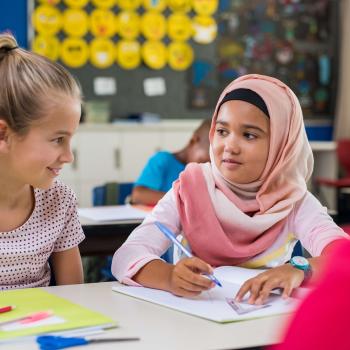
Using Partner Talk to Strengthen Student Collaboration and Understanding

Using Paired Reading to Increase Fluency and Peer Cooperation
In this strategy, students read aloud to each other, pairing more fluent readers with less fluent readers. This strategy can also be used to pair older students with younger students to create "reading buddies."

Teaching with Zooming Slideshows through Prezi
Through Prezi, a web application, students create "zooming" presentations for various purposes, such as presenting research, defending an opinion, or sharing a digital story.

Bringing Lessons to Life with Animoto
Using Animoto, a free Web 2.0 tool, students can develop short digital videos that include music, photos, video clips, and text as well as share their creations electronically.

Speak to Me: Teaching with Voki
Through Voki, a Web 2.0 tool, students create customizable avatars for class presentations for various purposes, such as presenting biographical information, expressing an opinion, or reading a poem.
Go Public!: Encouraging Student Writers to Publish
Intended for middle and high school teachers, Go Public! offers specific writing ideas and classroom activities to help students develop the confidence and ability to publish in a wide market.
Talking in Class: Using Discussion to Enhance Teaching and Learning
The authors guide high school teachers in developing skills in promoting and facilitating authentic discussion in the English language arts classroom.
Language Learners in the English Classroom
This book provides practical, research-based strategies that can help secondary-level English language learners meet the challenges of both language and content learning.

Swish! Pow! Whack! Teaching Onomatopoeia Through Sports Poetry
Students explore poetry about sports, looking closely at the use of onomatopoeia. After viewing a segment of a sporting event, students create their own onomatopoeic sports poems.

Tracking the Ways Writers Develop Heroes and Villains
Everyone knows that Star Wars character Darth Vader is a villain. This lesson asks students to explore how they know such things about heroes and villains they encounter in texts.
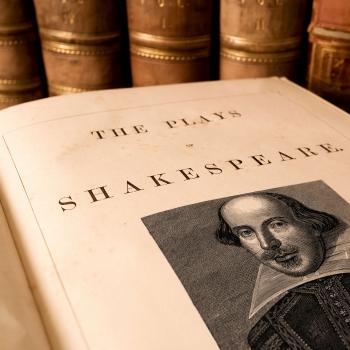
Constructing New Understanding Through Choral Readings of Shakespeare
After reading The Tempest or any other play by William Shakespeare, students work in small groups to plan, compose, and perform a choral reading based on a character or theme.

All's Well that Sells Well: A Creative Introduction to Shakespeare
Students compare attending a performance at The Globe Theater with attending a modern theater production or movie. They then create a commercial for an Elizabethan audience promoting a modern product.

Analyzing Grammar Pet Peeves
By analyzing Dear Abby's "rant" about bad grammar usage, students become aware that attitudes about race, social class, moral and ethical character, and "proper" language use are intertwined.

Copyright Law: From Digital Reprints to Downloads
Students investigate how and why copyright law has changed over time, and apply this information to recent copyright issues, creating persuasive arguments based on the perspective of a particular group.

Gaining Background for the Graphic Novel Persepolis: A WebQuest on Iran
To prepare students for reading the graphic novel Persepolis, this lesson uses a WebQuest to focus students' research on finding reliable information about Iran before and during the Islamic Revolution.

Connecting Past and Present: A Local Research Project
In this unit, students become active archivists, gathering photos, artifacts, and stories for a museum exhibit that highlights one decade in their school's history.