Today's students love chatting online with friends. This lesson combines that love with literature. Students form literature circles and have meaningful online discussions about a literary work.

Thoughtful Threads: Sparking Rich Online Discussions

Latino Poetry Blog: Blogging as a Forum for Open Discussion
In this lesson, students use blogs to hold discussions about the effect of the factors of culture, history, and environment on Latino poetry.

Exploring Careers Using the Internet
Doctors, astrophysicists, and daycare providers are only some of the careers that will be explored in this lesson in which students research careers and publish occupational summaries about them.

I Remember That Book: Rereading as a Critical Investigation
Curl up with a good book againor not. In this lesson, students brainstorm why they reread some books, while passing up others, and write their reflections in an essay.

Persuading the Principal: Writing Persuasive Letters About School Issues
Students learn that you don't have to raise your voice to raise a point. Writing a persuasive letter to your principal is a great way to get your opinions heard.
Promoting Cultural Values Through Alphabet Books
C is for Culture in this lesson in which students research a culture different from their own and compile an alphabet book that showcases cultural symbols for each letter of the alphabet.
Make a Splash! Using Dramatic Experience to "Explode the Moment"
Students will have a blast as they use descriptive language to write about an "explosive" and dramatic moment in their lives.
Spelling in Parts: Learning to Spell, Write, and Read Polysyllabic Words
How do you spell polysyllabic? While this word may be a bit too advanced for students, they will definitely be spelling polysyllabic words using a strategy called Spelling in Parts.
Write-Talks: Students Discovering Real Writers, Real Audiences, Real Purposes
There's a world of writers out there, and in this lesson students discover them as they listen to presentations from local writers and learn about what, why, and how they write in their day-to-day lives.
To, Too, or Two: Developing an Understanding of Homophones
The classroom becomes a stage in this interactive lesson in which students sing, act, and design comic strips to learn the meanings and spellings of common homophones.
Using Word Webs to Teach Synonyms for Commonly Used Words
Students use word webs to choose synonyms for generic adjectives and to learn to adjust their word usage for different contexts.

Sort, Hunt, Write: A Weekly Spelling Program
It's easy to make spelling fun. Using a variety of activities from sorting to using words in context will help deepen students' understanding of word patterns.

The Peace Journey: Using Process Drama in the Classroom
What does peace mean to you? In this lesson, students attempt to answer this question as they write and perform a short skit that reflects their ideas of peace.

I've Got the Literacy Blues
Students will be singing the blues in this lesson in which they identify themes from "The Gift of the Magi" and write and present blues poetry based on those themes.
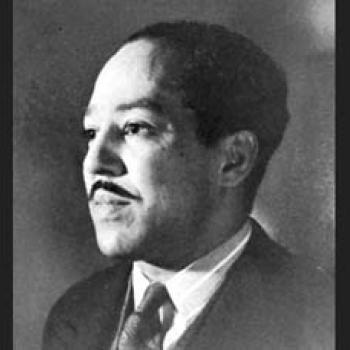
Discovering a Passion for Poetry With Langston Hughes
Through a study of Langston Hughes' poetry, students connect his writing to his place in history.
The Big Green Monster Teaches Phonics in Reading and Writing
A big green monster helps students build their reading fluency and word recognition skills through choral reading, literacy center activities, and writing stories.
Guided Comprehension: Evaluating Using the Meeting of the Minds Technique
Based on the Guided Comprehension Model developed by Maureen McLaughlin and Mary Beth Allen, this lesson introduces students to the strategy of evaluating, using the Meeting of the Minds technique.

Guided Comprehension: Knowing How Words Work Using Semantic Feature Analysis
Based on the Guided Comprehension Model developed by Maureen McLaughlin and Mary Beth Allen, this lesson introduces students to the comprehension strategy of knowing how words work.

Spelling Cheerleading: Integrating Movement and Spelling Generalizations
"2-4-6-8, students will be spelling great" in this lesson that teaches the y rule for adding suffixes through cheering the spelling of words aloud, word sorts, and writing stories.

Using QARs to Develop Comprehension and Reflective Reading Habits
Students are introduced to question-answer relationships (QARs). Using the QAR strategy, students identify different types of questions and learn how to determine the appropriate response for each question type.