Draft letters ask students to think critically about their writing on a specific assignment before submitting their work to a reader. This lesson explains and provides models for the strategy.

Draft Letters: Improving Student Writing through Critical Thinking
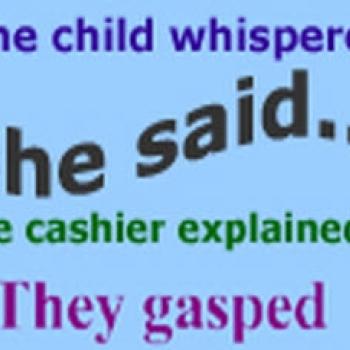
Choosing Clear and Varied Dialogue Tags: A Minilesson
In this minilesson, students explore the use of dialogue tags such as "he said" or "she answered" in picture books and novels, discussing their purpose, form, and style.

Collaborative Stories 2: Revising
Using a collaborative story written by students, the teacher leads a shared-revising activity to help students consider content when revising, with students participating in the marking of text revisions.

Research Building Blocks: Notes, Quotes, and Fact Fragments
Students are guided through the process of taking notes while reading factual information, then turning those notes into new sentences and paragraphs written in their own words.

Peer Review: Narrative
This minilesson guides student in using the PQP techniquePraise–Question–Polishto offer concrete and useful peer review feedback.
What Makes Poetry? Exploring Line Breaks
Students read various poems and explore why lines are broken where they are and how they affect rhythm, sound, meaning, and appearance in poetry.

Using Repetition and Picture Cues to Foster Independent Young Readers
Kindergartners share their knowledge of letters and sounds in a large group setting, giving teachers an assessment opportunity. Each student contributes a page to make a repetitive classroom book.

Using Children's Natural Curiosity to Lead to Descriptive Writing
Inspired by the book It Begins with an A, kindergarten students are invited to turn their curiosity and guesswork into a class book, complete with illustrated objects and descriptive language

Promoting Cultural Values Through Alphabet Books
C is for Culture in this lesson in which students research a culture different from their own and compile an alphabet book that showcases cultural symbols for each letter of the alphabet.
To, Too, or Two: Developing an Understanding of Homophones
The classroom becomes a stage in this interactive lesson in which students sing, act, and design comic strips to learn the meanings and spellings of common homophones.

Identifying and Classifying Verbs in Context
The interactive read-aloud in this lesson helps students to identify and classify the three verb typesaction, state-of-being or linking, and helping verbs.

Poetry Plus! Creating 21st Century Poems with Web Tools
This lesson encourages students to immerse themselves in poetry as they share their original poems orally and digitally with published poets and peers nationwide.

Bringing Economic Vocabulary to Life Through Video Posters
Imagine if vocabulary could come alive with the click of a button! Students create video posters to demonstrate knowledge of new economics vocabulary.

Creating a Feast for the Senses With Mentor Texts
This lesson teaches intermediate students to "use the experts" to learn how to revise to create sharp, sensory-rich experiences for their readers.

Phonic Generalizations in Chrysanthemum
Students learn about word families by reading Kevin Henkes's book Chrysanthemum, identifying words with certain vowel pair endings, and reading words with similar endings.

Using Folk Tales: Vowel Influences on the Letter G
Gentle, gigantic, gracefuldo these g words describe the giant in Jack and the Beanstalk? Students will explore the hard and soft g sounds by studying fairy tales and animals.