After reading a piece of math-related children's literature aloud, students pose and solve new problems by asking what-if questions about the events in the story.

What If We Changed the Book? Problem-Posing with Sixteen Cows
Introducing the Venn Diagram in the Kindergarten Classroom
In this lesson, kindergarten students manipulate hula hoops and real objects, as they use Venn diagrams to problem solve, explore, and record information to share with others.

Authentic Writing Experiences and Math Problem-Solving Using Shopping Lists
Students use their emerging writing skills to write shopping lists. They work within a budget, use problem-solving skills to create lists, and buy their favorite treats at the class store.
Quantitative Civic Reasoning: A Guide for Centering Civic Innovation in Math and English Language Arts Classrooms
This guide explores quantitative civic reasoning in English and math classrooms.
Power of Picture Books, The: Using Content Area Literature in Middle School
Featuring descriptions and activities for fifty exceptional titles, Mary Jo Fresch and Peggy Harkins offer a wealth of ideas for harnessing the power of picture books to improve reading and writing in the content areas.

Supporting Student Comprehension in Content Area Reading
In this strategy guide, you'll learn a few simple, yet powerful, techniques to encourage students to use peer talk and writing to enhance their understanding of content area texts.

Preparing Students for Success with Reading in the Content Areas
In this strategy guide, you'll learn how to determine the level and type of support you need to provide students based on careful preparation as a content area expert.

Reading with Purpose in the Content Areas
In this strategy guide, you'll learn how to organize students and instruction to establish a sense of purpose for reading authentic texts in the content areas.
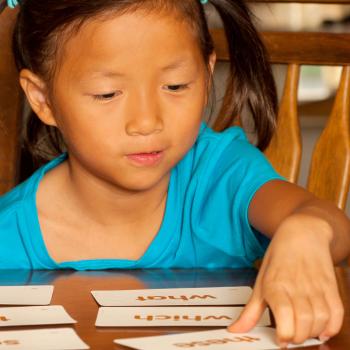
Introducing Ideas and Vocabulary with the Concept Sort
A Concept Sort is a vocabulary and comprehension strategy used with students to introduce new topics and/or familiarize students with new vocabulary.
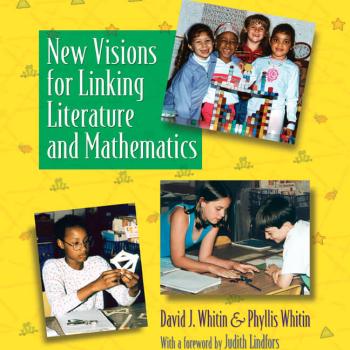
New Visions for Linking Literature and Mathematics
David and Phyllis Whitin offer K–6 teachers a wealth of ideas for integrating literature and mathematics.
Solving the Math Curse: Reading and Writing Math Word Problems
Students' reading, writing, listening, and speaking skills add up as they decipher word problems and use what they've learned to solve a crossword puzzle.

Exploring Cost and Savings Using Children's Literature
Students make sense of dollars and cents when they study the importance of saving and budgeting in this lesson.

Going on a Shape Hunt: Integrating Math and Literacy
Students participate in a scavenger hunt for shapes; reading, writing, and discussion of shapes encourage literacy and math skills.

Show What You Know: Read, Write and Solve Math Problems
Informational texts, iPads, and interactive games, oh, my! Help students journey through multimodal texts to identify and solve real-world mathematics problems using writing and apps.

Bringing Economic Vocabulary to Life Through Video Posters
Imagine if vocabulary could come alive with the click of a button! Students create video posters to demonstrate knowledge of new economics vocabulary.

Finding Solutions to Food Waste: Persuasion in a Digital World
Using various reading strategies and resources, students explore the issue of food waste. They also create persuasive arguments and blog posts examining this topic.

Inspire Healthful Reading Using Unconventional Texts
This minilesson encourages children to seek out and appropriately react to nutrition labels and to make healthy food choices, integrating science, math, health, and literacy.

Engineering the Perfect Poem by Using the Vocabulary of STEM
Students research engineering careers and create poetry to understand the vocabulary of STEM (science, technology, engineering, and mathematics).

Combining Read-Alouds With Economics in the Primary Grades
Students learn that what you read in books can really add up when they analyze literary texts for economic concepts.

QARs + Tables = Successful Comprehension of Math Word Problems
Using census data for an example, students use the question-answer relationship (QAR) strategy to understand and solve word problems that refer to tables and other graphics.