DeSena offers a practical guide on how high school and college teachers can structure assignments and guide students so that students don't plagiarize.
Preventing Plagiarism: Tips and Techniques
Standards for the English Language Arts
Standards for the English Language Arts presents a vision of literacy education that encompasses the use of print, oral, and visual language and addresses six interrelated English language arts: reading, writing, speaking, listening, viewing, and visually representing.
Language Learners in the English Classroom
This book provides practical, research-based strategies that can help secondary-level English language learners meet the challenges of both language and content learning.
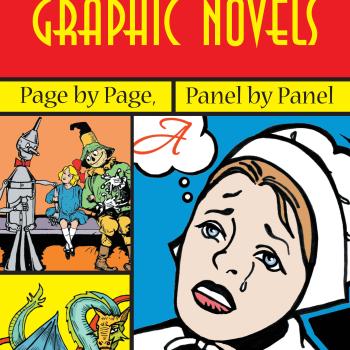
Building Literacy Connections with Graphic Novels: Page by Page, Panel by Panel
This collection of essays by classroom teachers demonstrates how to pair graphic novels with classic literature (including both canonical and YA lit).
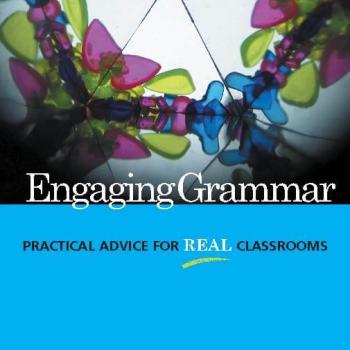
Engaging Grammar: Practical Advice for Real Classrooms
Amy Benjamin challenges the idea of "skill and drill" grammar instruction, and Tom Oliva provides a teacher's journal chronicling how the concepts in this book can work in a real classroom.
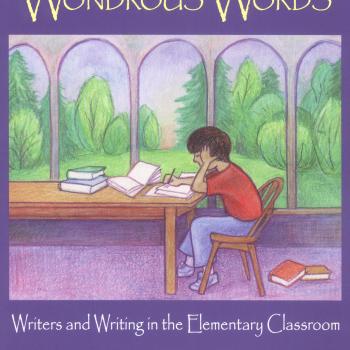
Wondrous Words: Writers and Writing in the Elementary Classroom
Katie Wood Ray explains in practical terms the theoretical underpinnings of how elementary and middle school students learn to write from their reading.

Guided Comprehension: Making Connections Using a Double-Entry Journal
Based on the Guided Comprehension Model by Maureen McLaughlin and Mary Beth Allen, this lesson helps students learn three types of connections (text-to-text, text-to-self, and text-to-world) using a double-entry journal.

Analyzing Grammar Pet Peeves
By analyzing Dear Abby's "rant" about bad grammar usage, students become aware that attitudes about race, social class, moral and ethical character, and "proper" language use are intertwined.

BOOKMATCH: Scaffolding Independent Book Selection
This lesson will be turning heads and pages as students learn how to choose appropriate books for independent reading exercises and later evaluate their choices.

Thoughtful Threads: Sparking Rich Online Discussions
Today's students love chatting online with friends. This lesson combines that love with literature. Students form literature circles and have meaningful online discussions about a literary work.

Latino Poetry Blog: Blogging as a Forum for Open Discussion
In this lesson, students use blogs to hold discussions about the effect of the factors of culture, history, and environment on Latino poetry.

Exploring Careers Using the Internet
Doctors, astrophysicists, and daycare providers are only some of the careers that will be explored in this lesson in which students research careers and publish occupational summaries about them.

I Remember That Book: Rereading as a Critical Investigation
Curl up with a good book againor not. In this lesson, students brainstorm why they reread some books, while passing up others, and write their reflections in an essay.

Promoting Cultural Values Through Alphabet Books
C is for Culture in this lesson in which students research a culture different from their own and compile an alphabet book that showcases cultural symbols for each letter of the alphabet.
Make a Splash! Using Dramatic Experience to "Explode the Moment"
Students will have a blast as they use descriptive language to write about an "explosive" and dramatic moment in their lives.
Spelling in Parts: Learning to Spell, Write, and Read Polysyllabic Words
How do you spell polysyllabic? While this word may be a bit too advanced for students, they will definitely be spelling polysyllabic words using a strategy called Spelling in Parts.
Write-Talks: Students Discovering Real Writers, Real Audiences, Real Purposes
There's a world of writers out there, and in this lesson students discover them as they listen to presentations from local writers and learn about what, why, and how they write in their day-to-day lives.
To, Too, or Two: Developing an Understanding of Homophones
The classroom becomes a stage in this interactive lesson in which students sing, act, and design comic strips to learn the meanings and spellings of common homophones.
Using Word Webs to Teach Synonyms for Commonly Used Words
Students use word webs to choose synonyms for generic adjectives and to learn to adjust their word usage for different contexts.
Using Songwriting to Build Awareness of Beginning Letter Sounds
"Bessie bird lives in a barn" in this lesson in which students create alliterative animal songs to help them learn letter names and consonant sounds and build phonemic awareness.