August Wilson's play The Piano Lesson invites students to ask a number of questions—big
and small. Students learn how to create effective discussion questions and then put them to use in student-led discussions.

Facilitating Student-Led Seminar Discussions with The Piano Lesson
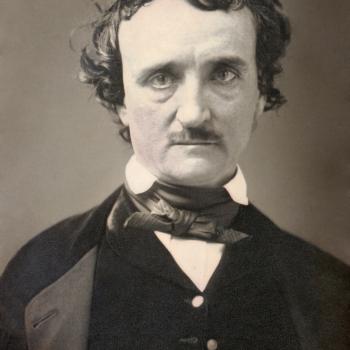
Modeling Reading and Analysis Processes with the Works of Edgar Allan Poe
Explore reading strategies using Edgar Allan Poe's "The Raven" and other works. Students read Poe's works in both large- and small-group readings then conclude with a variety of projects.

Making History Come Alive Through Poetry and Song
Students compare the sinking of the Edmund Fitzgerald with the song, "The Wreck of the Edmund Fitzgerald," then create their own poetry about a historical event.
Active Reading through Self-Assessment: The Student-Made Quiz
This recurring lesson encourages students to comprehend their reading through inquiry and collaboration. They choose important quotations from the text and work in groups to formulate "quiz" questions that their peers will answer.

Writing Acrostic Poems with Thematically Related Texts in the Content Areas
Students read thematically related texts, scaffolded from simple to complex, to help them gather necessary concept vocabulary and background knowledge in a content area. They then write acrostic poems to organize and present their learning in a creative way.

Examining History with Maya Angelou's Poetry
To understand the historical background that influenced Maya Angelou's poems, students research events to produce trading cards using the ReadWriteThink Trading Card Student Interactive. Through the sharing of these trading cards, students understand the historical background as they analyze Angelou's poetry.
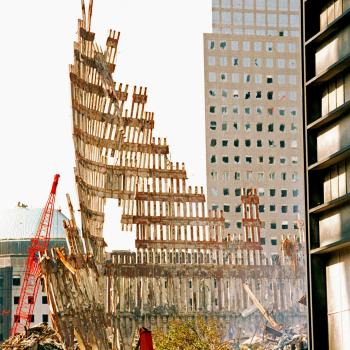
Huge Mistakes that Led to Catastrophe: Learning about Human-made Disasters throughout History
After researching various human-made disasters such as the BP oil spill, the sinking of the Titanic, and the Great Chicago Fire, students share their research in oral presentations. Then students pair up to compare and contrast their disasters using the Venn Diagram Student Interactive or the Venn diagram Mobile App.

Learning about Clouds with Haikus
Using a mobile app or Interactive activity, students write haikus describing various types of clouds that they have studied.
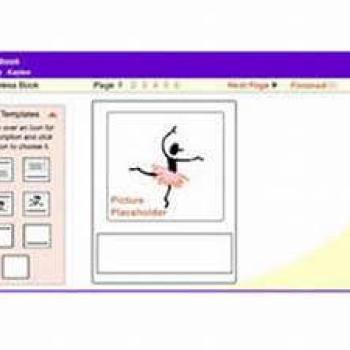
Stapleless Book
The Stapleless Book can be used for taking notes while reading, making picture books, collecting facts, or creating vocabulary booklets . . . the possibilities are endless!
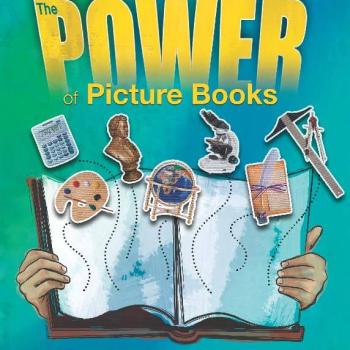
Power of Picture Books, The: Using Content Area Literature in Middle School
Featuring descriptions and activities for fifty exceptional titles, Mary Jo Fresch and Peggy Harkins offer a wealth of ideas for harnessing the power of picture books to improve reading and writing in the content areas.

Socratic Seminars
This strategy guide explains Socratic seminars and offers practical methods for applying the approach in your classroom to help students investigate multiple perspectives in a text.

Teaching with Zooming Slideshows through Prezi
Through Prezi, a web application, students create "zooming" presentations for various purposes, such as presenting research, defending an opinion, or sharing a digital story.

Bringing Lessons to Life with Animoto
Using Animoto, a free Web 2.0 tool, students can develop short digital videos that include music, photos, video clips, and text as well as share their creations electronically.

Latino Poetry Blog: Blogging as a Forum for Open Discussion
In this lesson, students use blogs to hold discussions about the effect of the factors of culture, history, and environment on Latino poetry.

I've Got the Literacy Blues
Students will be singing the blues in this lesson in which they identify themes from "The Gift of the Magi" and write and present blues poetry based on those themes.
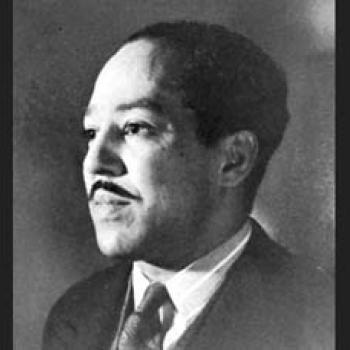
Discovering a Passion for Poetry With Langston Hughes
Through a study of Langston Hughes' poetry, students connect his writing to his place in history.
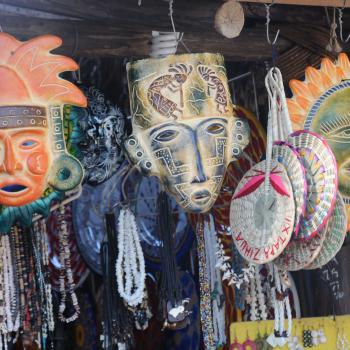
Behind the Masks: Exploring Culture Through Art and Poetry
Students research mask-making from various cultures, highlight the masks' connections to cultural practices, compose poetry to reveal their understanding, analyze their own culture, and create personal masks and poetry.
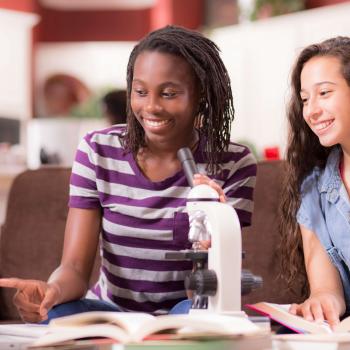
Create a Great Future: STEM Career Research Using Close Reading
What if students could see the relevance of their school curriculum to real-world, interesting, STEM-related careers? Let's help them create a great future!
All About Alliteration: Responding to Literature Through a Poetry Link
Studied students stupefy! Students learn about alliteration by listening to an alliterative read-aloud and apply the knowledge they gain to the creation of their own poem and illustration.