Student pairs aim to be the first team to call out "bingo" in this lesson in which they use skimming and scanning to locate information about ancient Greece and Rome.
Developing Searching, Skimming, and Scanning Skills With Internet Bingo

Comparing a Literary Work to Its Film Interpretation
Students will really get into the swing of things as they analyze the text and film versions of Edgar Allan Poe's story, "The Pit and the Pendulum."

Spelling Patterns "Go Fish" Card Game
Students use sets of words that share a spelling pattern to create a card game like "Go Fish" and then play the game in groups, helping them improve their spelling.
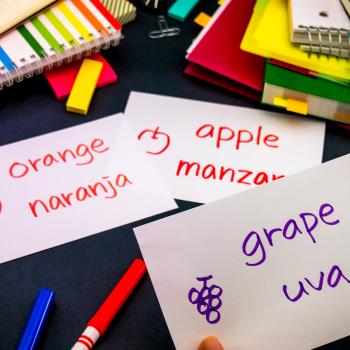
Let's Read It Again: Comprehension Strategies for English-Language Learners
Help Spanish-speaking English-language learners unlock the mysteries of their new language by using a bilingual book to recognize unfamiliar words and construct meaning from the text.

Improve Comprehension: A Word Game Using Root Words and Affixes
Students study common root words and affixes, improve their comprehension and spelling, and make a card game in which they form words with a prefix, root word, and suffix.

Crit Lit for Kids: From Critical Consciousness to Service Learning
Students take their ideas from the classroom page to the community pavement when they participate in a service-learning project based on their multimedia presentations.
Writers' Workshop: The Biographical Sketch
Students use the faces and places they learn about in their research to write a biography about a contemporary or historical figure.

Becoming History Detectives Using Shakespeare's Secret
Is the case closed on the authorship of Shakespeare's plays? Student history detectives explore the evidence for and against one of the possible alternatives, Edward deVere, using the novel Shakespeare's Secret plus a variety of online sources.
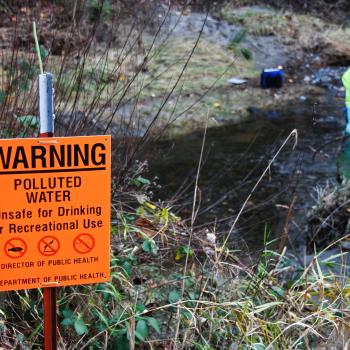
Reading and Writing About Pollution to Understand Cause and Effect
Students get to write a whale of a tale when they complete a graphic organizer sequencing the journey of a mountain fish to a polluted waterway.

Guided Comprehension in Action: Teaching Summarizing With the Bio-Cube
Students learn the ins and outs of writing biographies by researching a contemporary or historical figure and writing a summary.
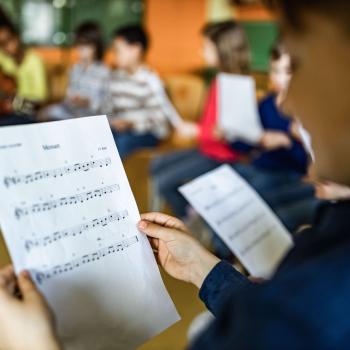
Read a Song: Using Song Lyrics for Reading and Writing
This lesson will be music to the students' ears when they hear that they get to read song lyrics and compose original lyrics for a familiar song.

Empowered Fiction Writers: Generating and Organizing Ideas for Story Writing
Do their minds go blank when they confront a blank piece of paper? Speedwriting can help students get started on writing and come up with topics to write about. They can then incorporate their key ideas and phrases into a narrative with the help of a graphic story organizer.

Developing Story Structure With Paper-Bag Skits
Lights, camera, action, and a bit of mystery! In this lesson, students use mystery props in a skit bag to create and perform in short, impromptu skits.

Whose Shoes? Using Artifacts to Teach Reading and Rhyming Patterns
If the shoe fits… Actually, any shoe will fit this lesson, and the Artifact Analysis Questions provided will help students see it in a whole new way. Several rhyming texts take the shoe theme a step further, and introduce activities to increase students' awareness of rhyming words.

Safety Tips With Officer Buckle and Gloria
Safety first! In this lesson, students take the lessons taught by Officer Buckle and Gloria to heart as they explore safety in everyday situations.

Get Cooking With Words! Creating a Recipe Using Procedural Writing
Students participate in read-alouds of books that exemplify effective word choice, explore how to choose words to best communicate an idea, and then write explicit instructions for a recipe.

Casting Shadows Across Literacy and Science
Shadows, shadows, everywhere! In this lesson, students read fiction, informational text, and poetry about shadows to extend their knowledge of the concept before casting their own shadow poetry.

This is My Story: Encouraging Students to Use a Unique Voice
What did the wolf think of Red Riding Hood? Once Upon a Fairy Tale offers his side of the story and more, providing vivid examples of how voice enlivens narrative. After comparing versions of the story, students apply the concept of voice to Fractured Fairy Tales and other writing activities.
Zines for Kids: Multigenre Texts About Media Icons
Special edition! Students use ReadWriteThink tools to create magazines about prominent figures using a variety of writing genres and styles.

Exploring Literacy in Cyberspace
It's not just words on a page (or screen)—reading comprehension involves making sense of the text. When students become aware of the analytical strategies they are using, they can explore the similarities and differences between making sense of print and making sense of a website.