ReadWriteThink - Powered by NCTE
  • About
  • Classroom Resources
    • Lesson Plans
    • Teaching Comics
    • Teaching With Primary Resources
    • Calendar
    • Printouts
    • Student Interactives
  • Collections
    • Assessment
    • Authors
    • Booklists
    • Media Literacy
    • Poetry
    • Primary Sources
    • Writing
  • Professional Development
    • Strategy Guides
    • Professional Library
    • Meetings & Events
  • Join NCTE
  • Contact Us
  • About
  • Classroom Resources
    • Lesson Plans
    • Teaching Comics
    • Teaching With Primary Resources
    • Calendar
    • Printouts
    • Student Interactives
  • Collections
    • Assessment
    • Authors
    • Booklists
    • Media Literacy
    • Poetry
    • Primary Sources
    • Writing
  • Professional Development
    • Strategy Guides
    • Professional Library
    • Meetings & Events
  • Join NCTE
  • Contact Us
  • Facebook
  • Twitter
  • Instagram
  • Pinterest
  • YouTube

Breadcrumb

  1. Home

Type

  • Classroom Resources
  • Professional Development

Grades

  • 2 (308)
  • 4 (525)
  • 5 (603)
  • 6 (735)
  • 7 (750)
  • 8 (780)
  • 9 (787)
  • 10 (767)
  • 11 (754)
  • 12 (751)
  • K (262)
  • (-) 1 (298)
  • (-) 3 (508)

Learning Objectives

  • collaboration (215)
  • Comprehension (226)
  • critical thinking (242)
  • digital literacy (44)
  • Grammar (23)
  • inquiry / research (148)
  • listening (96)
  • literary analysis (109)
  • Media literacy (55)
  • metacognition (116)
  • multicultural awareness (41)
  • multimodal literacy (81)
  • oral communication (95)
  • phonological awareness (55)
  • print awareness (52)
  • reading fluency (50)
  • reading genres (98)
  • Spelling (40)
  • text structure / story structure (126)
  • Vocabulary (109)
  • writing genres (146)
  • writing process (183)

Topics

  • arts
  • careers
  • community
  • drama
  • ELL
  • Family
  • fiction
  • Mathematics
  • Mobile Learning
  • nonfiction
  • poetry
  • science
  • seasons / holidays
  • social action
  • social studies / history
  • Sports
  • STEM
Readers Theatre With Jan Brett
Grades
1 - 2
|
Lesson Plan
|
Standard Lesson
Readers Theatre With Jan Brett

Students in grades 1-2 use Jan Brett's Hedgie's Surprise for a Readers Theatre experience.
Using Science Texts to Teach the Organizational Features of Nonfiction
Grades
3 - 5
|
Lesson Plan
|
Standard Lesson
Using Science Texts to Teach the Organizational Features of Nonfiction

Students explore organizational features of nonfiction science. Students then work together to create a two-page spread using those features to present information about their local environment.
Q is for Duck: Using Alphabet Books With Struggling Writers
Grades
3 - 5
|
Lesson Plan
|
Standard Lesson
Q is for Duck: Using Alphabet Books With Struggling Writers
A is for zoo? Q is for duck? The alphabet as students know it is transformed when students create a class book that contains clever associations for each letter of the alphabet.

Questioning: A Comprehension Strategy for Small-Group Guided Reading
Grades
3 - 5
|
Lesson Plan
|
Standard Lesson
Questioning: A Comprehension Strategy for Small-Group Guided Reading
Students learn about the process of questioning and using webs to organize information during reading and then practice writing factual and inferential questions.

Grades
K - 2
|
Lesson Plan
|
Unit
Junie B. Jones Introduces Literacy Mystery Boxes
Like Junie B. Jones, students will be saying "Wait till you hear this" after listening to a Junie B. story and creating mystery boxes to help retell the story.

A Bad Case of Bullying: Using Literature Response Groups
Grades
3 - 5
|
Lesson Plan
|
Standard Lesson
A Bad Case of Bullying: Using Literature Response Groups
Students learn how to effectively deal with bullying by participating in literature response groups and writing about when they experienced a similar situation or emotion as a fictional character.
Applying Question-Answer Relationships to Pictures
Grades
3 - 5
|
Lesson Plan
|
Standard Lesson
Applying Question-Answer Relationships to Pictures
A picture is worth a thousand words as students are guided in viewing wordless picture books and responding to four different types of questions about the images they see.

Using Personal Connections to Build an Understanding of Emotions
Grades
K - 2
|
Lesson Plan
|
Standard Lesson
Using Personal Connections to Build an Understanding of Emotions
What makes you happy? What makes you sad? Connecting words to feelings enriches vocabulary and helps with concept development.
Thundering Tall Tales: Using Read-Aloud as a Springboard to Writing
Grades
3 - 5
|
Lesson Plan
|
Standard Lesson
Thundering Tall Tales: Using Read-Aloud as a Springboard to Writing
Imagination and application are key to this tall tale lesson in which students take what they know about tall tales to spin a yarn of their own.
Developing Students' Critical Thinking Skills Through Whole-Class Dialogue
Grades
3 - 5
|
Lesson Plan
|
Standard Lesson
Developing Students' Critical Thinking Skills Through Whole-Class Dialogue
"That's my position and I'm sticking to it!" After reading about the Korean War, students will take a position in response to an open-ended question, support their position, and evaluate that support.
Pourquoi Stories: Creating Tales to Tell Why
Grades
3 - 5
|
Lesson Plan
|
Standard Lesson
Pourquoi Stories: Creating Tales to Tell Why
Where did the stars come from? What makes lightning and thunder? Pourquoi tales are narratives developed by various cultures around the world to explain natural phenomena. Students study three tales and learn about their cultures of origin, then work cooperatively to write and present an original pourquoi tale.
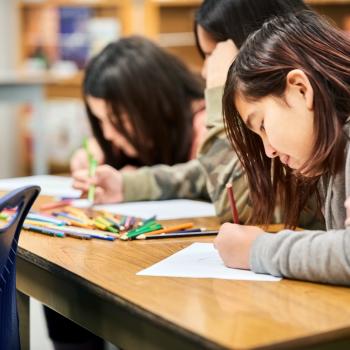
children coloring
Grades
3 - 5
|
Lesson Plan
|
Standard Lesson
Artistic Elements: Exploring Art Through Descriptive Writing

Paint a vivid picture in your reader's mind with good descriptive writing! Artwork provides the perfect starting point for practicing descriptive writing that conveys color, shape, line, and mood.

Predicting and Gathering Information With Nonfiction Texts
Grades
K - 2
|
Lesson Plan
|
Unit
Predicting and Gathering Information With Nonfiction Texts
Students take a walk on the wild side when they develop an understanding of nonfiction texts with hands-on experiences and intense analysis.
Sequencing: A Strategy to Succeed at Reading Comprehension
Grades
3 - 5
|
Lesson Plan
|
Standard Lesson
Sequencing: A Strategy to Succeed at Reading Comprehension
Did Paul Bunyan gouge out the Grand Canyon before or after he dug the Great Lakes? Students create a life-sized timeline showing the sequence of events in this tall tale.
Writing Workshop: Helping Writers Choose and Focus on a Topic
Grades
K - 2
|
Lesson Plan
|
Standard Lesson
Writing Workshop: Helping Writers Choose and Focus on a Topic
Students engage in writing workshop, using a timeline to focus in on and write about a specific event.
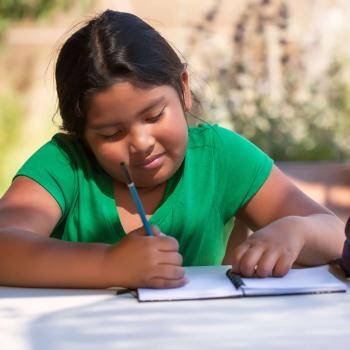
Demonstrating Comprehension Through Journal Writing
Grades
3 - 5
|
Lesson Plan
|
Recurring Lesson
Demonstrating Comprehension Through Journal Writing

Students demonstrate comprehension by responding to open-ended questions based on the Newbery Honor book Mr. Popper's Penguins, and then draw from the text and their personal experiences to create journals.
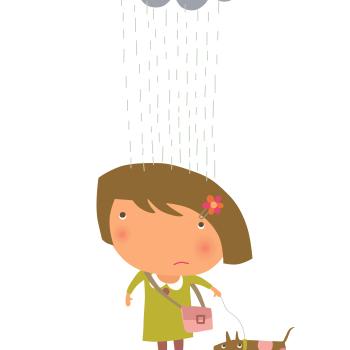
Exploring the Subtext Strategy: Thinking Beyond the Text
Grades
2 - 4
|
Lesson Plan
|
Standard Lesson
Exploring the Subtext Strategy: Thinking Beyond the Text
What is it like to have a terrible, horrible, no good, very bad day? Students find out in this lesson in which they "become" the characters in Judith Viorst's book.
Phonics In Context
Grades
K - 2
|
Lesson Plan
|
Minilesson
Phonics In Context
Use an engaging, authentic text to build students' knowledge of phonic elements and give them a taste of Japanese culture.

Learning Vocabulary Down By the Bay
Grades
K - 1
|
Lesson Plan
|
Standard Lesson
Learning Vocabulary Down By the Bay
Students sing a popular children's song, follow along with a picture book that contains the lyrics and illustrations, and then participate in activities to reinforce learning of the vocabulary words.

Sentence Quest: Using Parts of Speech to Write Descriptive Sentences
Grades
K - 2
|
Lesson Plan
|
Standard Lesson
Sentence Quest: Using Parts of Speech to Write Descriptive Sentences
Students learn about sentences by listing verbs, nouns, and adjectives. They use word cards to create descriptive sentences and work in groups to create the longest sentences they can.

Pagination

  • First page « First
  • Previous page ‹‹
  • …
  • Page 13
  • Page 14
  • Page 15
  • Page 16
  • Page 17
  • Page 18
  • Page 19
  • Page 20
  • Page 21
  • …
  • Next page ››
  • Last page Last »

Explore Resources by Grade

  • KindergartenK
  • 1-2
  • 3-4
  • 5-6
  • 7-8
  • 9-10
  • 11-12

RWT-logo

Powered By NCTE

Footer 1 Menu

  • About
  • Classroom Resources
  • Professional Development
  • Collections
  • Contact Us

Footer 2 Menu

  • National Council of Teachers of English
  • Contribute to RWT
  • FAQs
  • Join NCTE

Footer 3 Menu

  • Legal Notices
  • Privacy Policy
  • Promotional Materials
  • Site Demonstrations

Want to stay in touch with RWT and NCTE? Sign up here!

  • Facebook
  • Twitter
  • Instagram
  • Pinterest
  • YouTube

© NCTE 2026. All rights reserved