In this minilesson, students explore the use of dialogue tags such as "he said" or "she answered" in picture books and novels, discussing their purpose, form, and style.
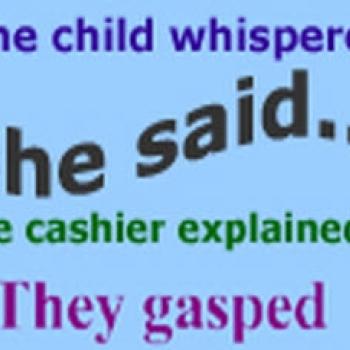
Choosing Clear and Varied Dialogue Tags: A Minilesson

He Said/She Said: Analyzing Gender Roles through Dialogue
Students analyze dialogue tags used with male and female characters in a book they have read. They then evaluate the message the dialogue tags convey about gender roles.

Teaching the Compare and Contrast Essay through Modeling
The compare and contrast essay is taught through modeling from the brainstorming phase through the first draft.

Childhood Remembrances: Life and Art Intersect in Nikki Giovanni's "Nikki-Rosa"
Students explore what Carol Jago calls the place "where life and art intersect" by reading Nikki Giovanni's poem, "Nikki-Rosa," and then writing about childhood memories of their own.

Genre Study: A Collaborative Approach
Students explore multiple genres through genre studies. They record evidence of genre characteristics on bookmarks as they read, and finish by giving a book review for their classmates.
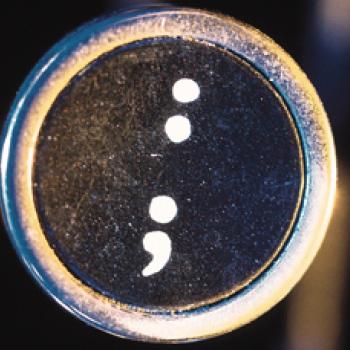
Every Punctuation Mark Matters: A Minilesson on Semicolons
Students analyze stylistic choices and grammar use in authentic writing, focusing on the use of the semicolon in Martin Luther King Jr.'s "Letter from Birmingham Jail."
Book Report Alternative: Creating Careers for Characters
Students select a job listing for a character in a book they have read, then create a resume and application letter for that character.

Beyond the Story: A Dickens of a Party
Students attend a 19th Century Victorian party to celebrate Scrooge's new outlook on life. They research characters from Charles Dickens' A Christmas Carol and assume those personas for the party.
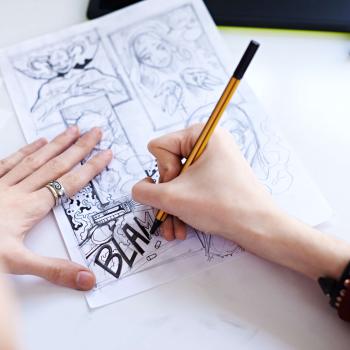
Book Report Alternative: Examining Story Elements Using Story Map Comic Strips
Comic frames are traditionally used to illustrate a story in a short, concise format. In this lesson, students use a six-paneled comic strip frame to create a story map, summarizing a book or story that they've read. Each panel retells a particular detail or explains a literary element (such as setting or character) from the story.

Webcams in the Classroom: Animal Inquiry and Observation
Students observe animals using one of the many webcams broadcasting from zoos and aquariums around the United States and the world, with a focus on observation, discussion, questioning, and research.
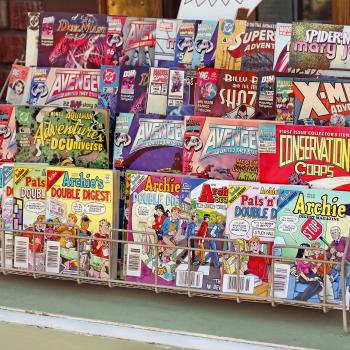
Comics in the Classroom as an Introduction to Narrative Structure
This lesson uses comic strip frames to define plot and reinforce the structure that underlies a narrative. Students finish by writing their own original narratives.

Book Report Alternative: Comic Strips and Cartoon Squares
Students must think critically to create comic strips highlighting six important scenes from a book they have read.

Doodle Splash: Using Graphics to Discuss Literature
Students keep a doodle journal while reading short stories by a common author. In small groups, students then combine their doodles into a graphic representation of the text.
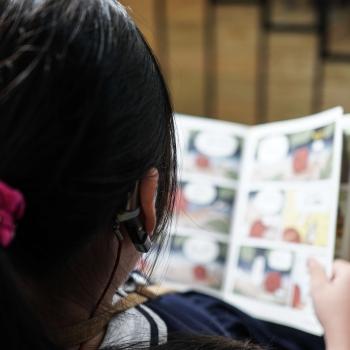
Comics in the Classroom as an Introduction to Genre Study
Multidimensional, challenging, and popular with students, comics provide an excellent way to introduce the concept of genres.
Making History Come Alive Through Poetry and Song
Students compare the sinking of the Edmund Fitzgerald with the song, "The Wreck of the Edmund Fitzgerald," then create their own poetry about a historical event.
Story Writing from an Object's Perspective
Students explore writing from non-human perspectives through a picture book read aloud, mini-lesson, collaborative writing, and the writing process. Students create "A Day in the Life of…" story about an inanimate object.

Book Report Alternative: Creating Reading Excitement with Book Trailers
In this alternative to the traditional book report, students create book trailers using Microsoft Photo Story 3, a free downloadable software program for digital storytelling.

Talking Poetry with Blabberize
Students will be motivated to share their poetry through an online tool the features recording and animation.

Book Report Alternative: Rewind the Plot!
In this alternative to the traditional book report, students report on their novel choices by rewinding the plot.

Prove It!: A Citation Scavenger Hunt
Students are challenged to find citations that support details about the characters, plot, or themes from a text.