With full recognition that writing is an increasingly multifaceted activity, we offer several principles that should guide effective teaching practice.
Professional Knowledge for the Teaching of Writing
Resolution on Composing with Nonprint Media
This resolution explains what educators can do to work with young people composing nonprint media that can include any combination of visual art, motion (video and film), graphics, text, and sound -- all of which are frequently written and read in nonlinear fashion.
Resolution on Promoting Media Literacy
This resolution discusses that understanding the new media and using them constructively and creatively actually requires developing a new form of literacy and new critical abilities "in reading, listening, viewing, and thinking."
A Call to Action: What We Know About Adolescent Literacy and Ways to Support Teachers in Meeting Students' Needs
This document provides a research-based resource that acknowledges the complexities of reading as a developmental process and addresses the needs of secondary readers and their teachers.

Guideline on The Students' Right to Read
The current edition of The Students' Right to Read is an adaptation and updating of the original Council statement, including "Citizen's Request for Reconsideration of a Work."
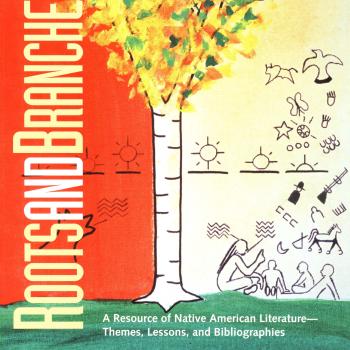
Roots and Branches: A Resource of Native American Literature
This valuable resource book offers teachers an opportunity to learn and to teach about Native American literatures in context. Susag examines the historical and literary contexts that frame the literary work of Native peoples.

Planning for Inquiry: It's Not an Oxymoron!
Planning for Inquiry shows you how to get an inquiry-based curriculum started, how to keep it going, and how to do so while remaining accountable to mandated curricula, standards, and programs.

Literary Terms: A Practical Glossary
Literary Terms: A Practical Glossary provides up-to-date definitions, drawing on recent developments in literary theory and emphasizing the role of reading practices in the reproduction of literary meanings. Unlike other glossaries, it includes brief activities to help students develop a working knowledge of the concepts.
Risking Intensity: Reading and Writing Poetry with High School Students
Judith Michaels approaches the subject of the self at both the personal and practical levels, opening the world of poetry to her classes through carefully planned strategies.
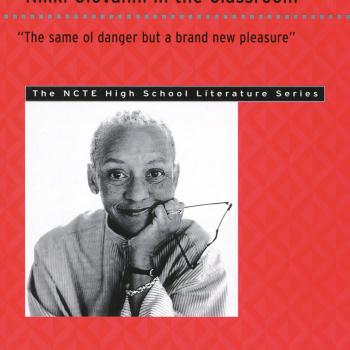
Nikki Giovanni in the Classroom: "The same ol' danger but a brand new pleasure"
The first volume in the NCTE High School Literature Series, this small, practical book features primary source materials including many of Giovanni's poems reprinted in full, easily adaptable lessons and activities, and a resource section for students and teachers wishing to study Giovanni further.
Great Films and How to Teach Them
Costanzo offers high school and college teachers an updated, expanded edition that contains 80% new material on teaching film, including study guides of 14 new film with relevant ways to engage their students through a medium that students know and love.
Code of Best Practices in Fair Use for Media Literacy Education
This document is a code of best practices that helps educators using media literacy concepts and techniques to interpret the copyright doctrine of fair use.
Being and Becoming: Multilingual Writers' Practices
This study examines the writing practices taken on and negotiated by multilingual class members within two multiage elementary classrooms.
From Sheryl Crow to Homer Simpson: Literature and Composition through Pop Culture
High school teacher Jerome Evans makes popular culture an integral part of his courses. Through analyzing themes in song lyrics, rhetorical devices in essays and advertisements, and psychology in contemporary film, students improve their skills in critical thinking and writing.
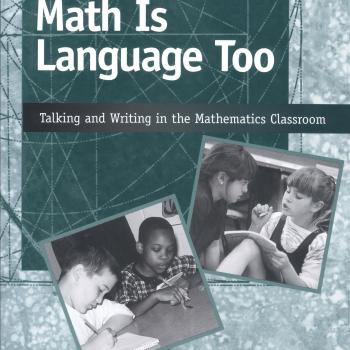
Math Is Language Too: Talking and Writing in the Mathematics Classroom
Replete with children's stories and illustrations, Math Is Language Too looks at children as sense-makers, storytellers, language creators, and problem-posers.
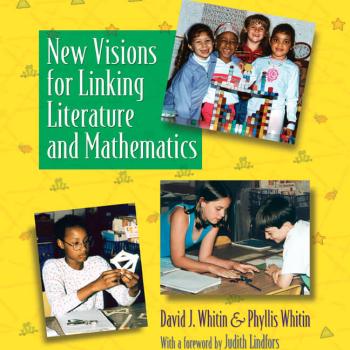
New Visions for Linking Literature and Mathematics
David and Phyllis Whitin offer K–6 teachers a wealth of ideas for integrating literature and mathematics.
Teaching Poetry in High School
Albert Somers offers teachers a vast compendium of resources for teaching poetry in a highly accessible format.
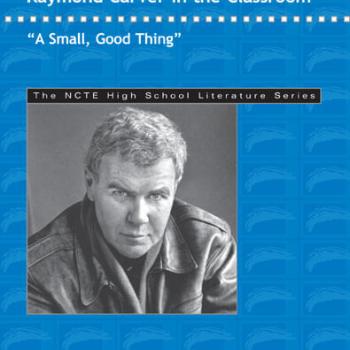
Raymond Carver in the Classroom: "A Small, Good Thing"
Rubenstein offers specific, classroom-tested strategies for teaching Raymond Carver's short stories and poems in the high school English classroom.
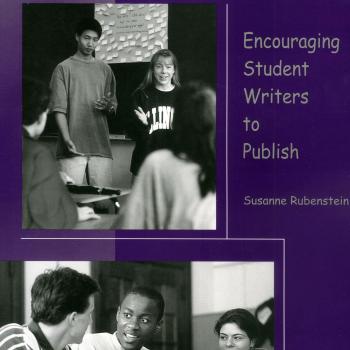
Go Public!: Encouraging Student Writers to Publish
Intended for middle and high school teachers, Go Public! offers specific writing ideas and classroom activities to help students develop the confidence and ability to publish in a wide market.
Beyond Voices of Readers: Students on School's Effects on Reading
This article summarizes and explicates research on 272 twelfth-grade students' reading autobiographies. Cope quotes from some noteworthy comments and makes some suggestions on how teachers and schools might do a better job of teaching literature.