Using different writing/drawing materials (e.g., markers, color pencils, pastels, etc.), students learn how to communicate different moods and/or feelings to support their written ideas and how authors do the same through their work.

Color My World: Expanding Meaning Potential through Media
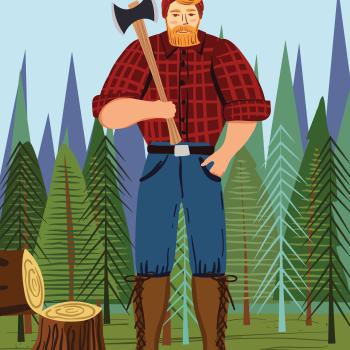
American Folklore: A Jigsaw Character Study
Groups of students read and discuss American folklore stories, each group reading a different story. Using a jigsaw strategy, the groups compare character traits and main plot points of the stories. A diverse selection of American folk tales is used for this lesson, which is adaptable to any text set.

Utilizing Visual Images for Creating and Conveying Setting in Written Text
This lesson supports third-through-sixth grade students as they communicate story setting to their readers through the use of visual image prompts. Activities include individual and cooperative learning group work, as well as whole class discussion.

Engaging Students in a Collaborative Exploration of the Gettysburg Address
In small groups, students closely examine one sentence from the Gettysburg Address and create a multigenre project communicating what they have discovered about the meaning and significance of the text.
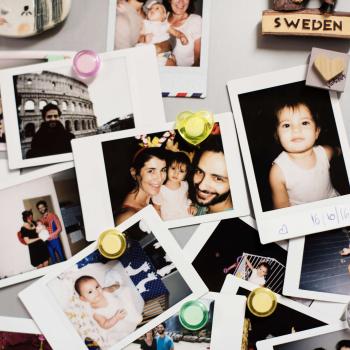
Creating Family Timelines: Graphing Family Memories and Significant Events
Students interview family members, and then create graphic family timelines based on important and memorable family events.
What If We Changed the Book? Problem-Posing with Sixteen Cows
After reading a piece of math-related children's literature aloud, students pose and solve new problems by asking what-if questions about the events in the story.
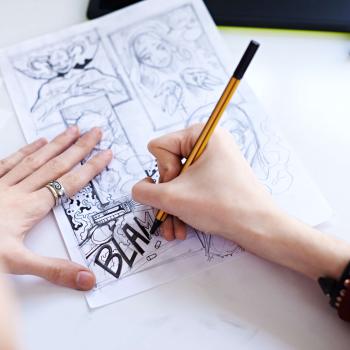
Book Report Alternative: Examining Story Elements Using Story Map Comic Strips
Comic frames are traditionally used to illustrate a story in a short, concise format. In this lesson, students use a six-paneled comic strip frame to create a story map, summarizing a book or story that they've read. Each panel retells a particular detail or explains a literary element (such as setting or character) from the story.
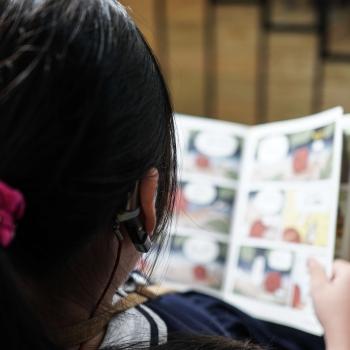
Comics in the Classroom as an Introduction to Genre Study
Multidimensional, challenging, and popular with students, comics provide an excellent way to introduce the concept of genres.

Designing Elements of Story in Little Blue and Little Yellow
In this series of four lessons, students will explore key elements of design in Little Blue and
Little Yellow to learn about setting, character relationships, and plot.

Captioning the Civil Rights Movement: Reading the Images, Writing the Words
Teachers guide students to carefully view images from the Civil Rights Movement and write captions that accurately describe the images and/or their probable purposes.

Research Building Blocks: Examining Electronic Sources
In this lesson, students evaluate and rate the relevance of electronic resources as they research information about their state.

Powerful Writing: Description in Creating Monster Trading Cards
Students create their own monster trading cards using "powerful," vivid language to describe their creatures.

Get the Reel Scoop: Comparing Books to Movies
Students compare a book to its film adaptation, and then perform readers theater of a scene from the book that they feel was not well represented in the movie version.

Playing with Prepositions through Poetry
Students play with and explore prepositions during a whole group reading of Ruth Heller's Behind the Mask, and then by composing and publishing prepositional poems based on the book's style.
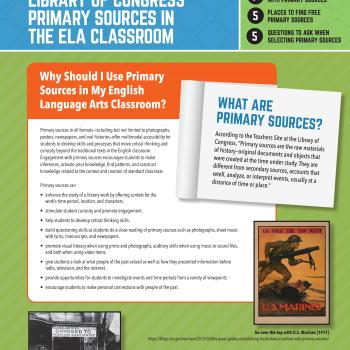
Engaging Students with Library of Congress Primary Sources in the ELA Classroom Quick-Reference Guide (QRG)
Quick-Reference Guide (QRG) focused on "Engaging Students with Library of Congress Primary Sources in the ELA Classroom."

Rosa Parks was born on this day in 1913.
Rosa Parks was committed to the struggle for social justice and human rights until her death, inspiring millions of people around the world. Today, we celebrate her!
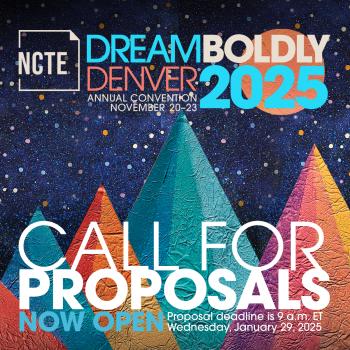
2025 NCTE Annual Convention
Each November thousands of literacy educators from across the country make the journey to a Convention that inspires their practice and rejuvenates their profession.
Fact Fragment Frenzy
Fact Fragment Frenzy provides elementary students with an online model for finding facts in nonfiction text, then invites students to find facts in five sample passages.
Stapleless Book
The Stapleless Book can be used for taking notes while reading, making picture books, collecting facts, or creating vocabulary booklets . . . the possibilities are endless!

Choral Reading
During choral reading, students read together orally. Repeated, supported reading helps students read with greater expression and read unfamiliar words with greater ease.