Through interactive writing, students work together and then independently to create invitation letters for a group of their peers and their families.

Teaching Audience Through Interactive Writing
Catching the Bug for Reading Through Interactive Read-Alouds
Students learn about story structure, new vocabulary, and a variety of reading strategies by participating in an interactive read-aloud of Miss Bindergarten Stays Home From Kindergarten by Joseph Slate.

Guided Comprehension: Knowing How Words Work Using Semantic Feature Analysis
Based on the Guided Comprehension Model developed by Maureen McLaughlin and Mary Beth Allen, this lesson introduces students to the comprehension strategy of knowing how words work.

Let's Build a Snowman
In this lesson, students use both fiction and nonfiction texts, the Internet, and a K-W-L chart to learn about how animals survive the winter.

Spelling Cheerleading: Integrating Movement and Spelling Generalizations
"2-4-6-8, students will be spelling great" in this lesson that teaches the y rule for adding suffixes through cheering the spelling of words aloud, word sorts, and writing stories.

Using QARs to Develop Comprehension and Reflective Reading Habits
Students are introduced to question-answer relationships (QARs). Using the QAR strategy, students identify different types of questions and learn how to determine the appropriate response for each question type.

Guided Comprehension: Summarizing Using the QuIP Strategy
Students learn to use the QuIP (questions into paragraphs) comprehension strategy to organize information and then synthesize it in writing.
Guided Comprehension: Monitoring Using the INSERT Technique
Based on the Guided Comprehension Model developed by Maureen McLaughlin and Mary Beth Allen, this lesson introduces students to the comprehension strategy of monitoring.

Guided Comprehension: Visualizing Using the Sketch-to-Stretch Strategy
Guided comprehension moves your middle-grade students beyond decoding to become successful, independent readers. The sketch-to-stretch strategy encourages students to use "brain TV" to help them understand a text through visualization.

Guided Comprehension: Self-Questioning Using Question-Answer Relationships
Guided comprehension moves your students beyond decoding to become independent readers. Generating questions to guide reading helps readers make connections with the text and supports independent comprehension of new texts.
Guided Comprehension: Previewing Using an Anticipation Guide
Based on the Guided Comprehension Model developed by Maureen McLaughlin and Mary Beth Allen, this lesson introduces students to the comprehension strategy of previewing.

Weather: A Journey in Nonfiction
Questions about weather clear up when students use what they learned from their books to create a presentation to share with the rest of the class.
Hey Diddle, Diddle! Generating Rhymes for Analogy-Based Phonics Instruction
Students practice matching rhyming words, apply phonological awareness to analogy-based phonics, and use the interactive Construct-a-Word to create rhyming words by adding a beginning consonant to a word ending.

Everyone Loves a Mystery: A Genre Study
Students track the elements of mystery stories through Directed Learning-Thinking Activities, story maps, and puzzles. Then they offer clues for other readers as they plan and write original mystery stories.

Word Sorts for Beginning and Struggling Readers
Students are introduced to short-vowel word families and learn to sort words alone and with a partner using the Word Family Sort activity.

Mind Pictures: Strategies That Enhance Mental Imagery While Reading
Students create mental images while reading using a three-pronged approach: developing schemata and visual awareness; Watch-Read-Watch-Read (W-R-W-R), using video clips; and a strategy similar to the think-aloud approach.

Diagram It! Identifying, Comparing, and Writing About Nonfiction Texts
Students compare the traits fact and fiction by using a Venn diagram to compare fiction and nonfiction books about Native Americans.
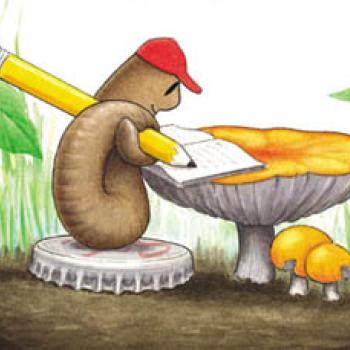
Fact or Fiction: Learning About Worms Using Diary of a Worm
Students often believe that fiction writers make everything up, seldom realizing how research worms its way into entertaining writing. In this lesson, students read Diary of a Worm to find out how fact merges with fiction.

Writing Free Verse in the "Voice" of Cesar Chavez
Poetry and politics combine in this lesson where students write a free verse poem in the voice of Cesar Chavez.

Going on a Shape Hunt: Integrating Math and Literacy
Students participate in a scavenger hunt for shapes; reading, writing, and discussion of shapes encourage literacy and math skills.