ReadWriteThink - Powered by NCTE
  • About
  • Classroom Resources
    • Lesson Plans
    • Teaching Comics
    • Teaching With Primary Resources
    • Calendar
    • Printouts
    • Student Interactives
  • Collections
    • Assessment
    • Authors
    • Booklists
    • Media Literacy
    • Poetry
    • Primary Sources
    • Writing
  • Professional Development
    • Strategy Guides
    • Professional Library
    • Meetings & Events
  • Join NCTE
  • Contact Us
  • About
  • Classroom Resources
    • Lesson Plans
    • Teaching Comics
    • Teaching With Primary Resources
    • Calendar
    • Printouts
    • Student Interactives
  • Collections
    • Assessment
    • Authors
    • Booklists
    • Media Literacy
    • Poetry
    • Primary Sources
    • Writing
  • Professional Development
    • Strategy Guides
    • Professional Library
    • Meetings & Events
  • Join NCTE
  • Contact Us
  • Facebook
  • Twitter
  • Instagram
  • Pinterest
  • YouTube

Breadcrumb

  1. Home

Type

  • Classroom Resources
  • Professional Development

Grades

  • 1 (298)
  • 2 (308)
  • 3 (508)
  • 5 (603)
  • 7 (750)
  • 8 (780)
  • 9 (787)
  • 10 (767)
  • 11 (754)
  • 12 (751)
  • K (262)
  • (-) 4 (525)
  • (-) 6 (735)

Learning Objectives

  • collaboration (277)
  • Comprehension (318)
  • critical thinking (409)
  • digital literacy (102)
  • Grammar (33)
  • inquiry / research (238)
  • listening (111)
  • literary analysis (182)
  • Media literacy (120)
  • metacognition (202)
  • multicultural awareness (69)
  • multimodal literacy (162)
  • oral communication (138)
  • phonological awareness (11)
  • print awareness (43)
  • reading fluency (39)
  • reading genres (190)
  • Spelling (21)
  • text structure / story structure (157)
  • Vocabulary (120)
  • writing genres (221)
  • writing process (239)

Topics

  • arts
  • careers
  • community
  • drama
  • ELL
  • Family
  • fiction
  • Mathematics
  • Mobile Learning
  • nonfiction
  • poetry
  • science
  • seasons / holidays
  • social action
  • social studies / history
  • Sports
  • STEM
Wondrous Words: Writers and Writing in the Elementary Classroom
Grades
K - 6
|
Professional Library
|
Book
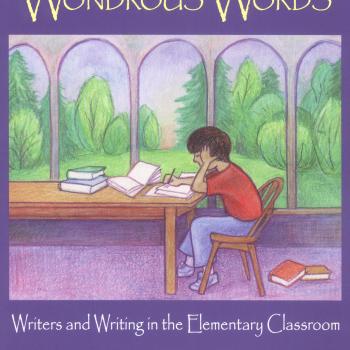
Wondrous Words: Writers and Writing in the Elementary Classroom
Katie Wood Ray explains in practical terms the theoretical underpinnings of how elementary and middle school students learn to write from their reading.
The Writing Workshop: Working through the Hard Parts (And They're All Hard Parts)
Grades
K - 8
|
Professional Library
|
Book
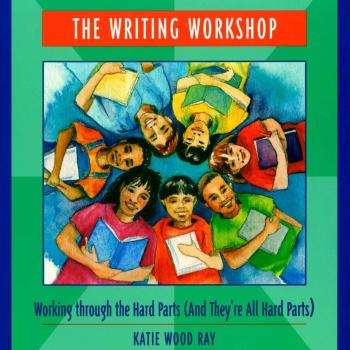
The Writing Workshop: Working through the Hard Parts (And They're All Hard Parts)
A practical, comprehensive, and illuminating guide for both new and experienced teachers that confronts the challenges of the writing workshop head-on.

6 - 12

The Major Impact of Minor Characters in the Lives of Immigrant Heroes

Teaching Comics
6 - 12

Create a Comic Book Vignette of Immigration to the US

Teaching Comics
6 - 12

Write an Illustrated “I Am” Poem in Comic-Book Style

Teaching Comics
6 - 12

A Different Point of View for a Comic

After reading Great Immigrants, Great Americans: The Comic Book, students will revise a comic from the perspective of another character in the original story, allowing the new narrator to be the main character.

Teaching Comics
6 - 12

Questions All Around: A Collection of Questions for Graphic Novel Stories from Great Immigrants, Great Americans

Teaching Comics
6 - 8

Character Traits: Character Analysis through Comics: Digging Into Body Biography

Teaching Comics
6 - 12

Comics as a Gateway to Stronger Writing

Teaching Comics
6 - 12

The Value that Immigrants Bring to Our Community: A Socratic Seminar

Teaching Comics
Guided Comprehension: Making Connections Using a Double-Entry Journal
Grades
4 - 6
|
Lesson Plan
|
Standard Lesson
Guided Comprehension: Making Connections Using a Double-Entry Journal

Based on the Guided Comprehension Model by Maureen McLaughlin and Mary Beth Allen, this lesson helps students learn three types of connections (text-to-text, text-to-self, and text-to-world) using a double-entry journal.

6 - 12

Multimodal Text Sets Strategy Guide

Teaching Comics
Swish! Pow! Whack! Teaching Onomatopoeia Through Sports Poetry
Grades
6 - 8
|
Lesson Plan
|
Standard Lesson
Swish! Pow! Whack! Teaching Onomatopoeia Through Sports Poetry
Students explore poetry about sports, looking closely at the use of onomatopoeia. After viewing a segment of a sporting event, students create their own onomatopoeic sports poems.

Color of Silence: Sensory Imagery in Pat Mora's Poem "Echoes"
Grades
6 - 8
|
Lesson Plan
|
Standard Lesson
Color of Silence: Sensory Imagery in Pat Mora's Poem "Echoes"

Pat Mora's poem "Echoes" demonstrates that our senses are powerful tools for literary analysis and comprehension as students use their senses to discover new ways to read and write.
Grades
6 - 8
|
Lesson Plan
|
Standard Lesson
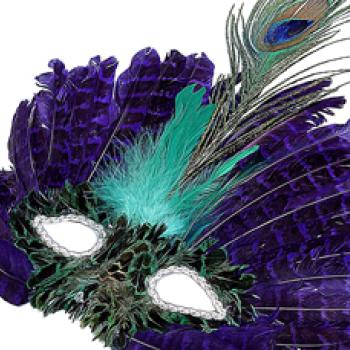
Polishing Preposition Skills through Poetry and Publication

Students deepen and refine their understanding of prepositions by reading Ruth Heller's Behind the Mask. They write preposition poetry and create a study guide using an online tool.

Cover to Cover: Comparing Books to Movies
Grades
6 - 8
|
Lesson Plan
|
Unit
Cover to Cover: Comparing Books to Movies
Students compare and analyze novels and the movies adapted from them. They design new DVD covers and a related insert for the movies, reflecting their response to the movie version.
Students as Creators: Exploring Multimedia
Grades
6 - 8
|
Lesson Plan
|
Unit
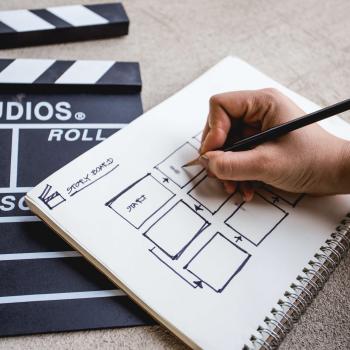
Students as Creators: Exploring Multimedia
Students are introduced to the genre of multimedia presentations through a review and analysis of online presentations. They then apply what they have learned to create their own multimedia presentations.
Students as Creators: Exploring Copyright
Grades
6 - 8
|
Lesson Plan
|
Standard Lesson
Students as Creators: Exploring Copyright
This lesson gives students the tools they need to consider the ethical issues surrounding use and ownership of copyrighted materials.
Exploring Change through Allegory and Poetry
Grades
6 - 8
|
Lesson Plan
|
Standard Lesson
Exploring Change through Allegory and Poetry

Students read an example of allegory, review literary concepts, complete literary elements maps and plot diagrams, create a pictorial allegory, and write diamante poems related to the theme of change.

Technology and Copyright Law: A "Futurespective"
Grades
6 - 8
|
Lesson Plan
|
Standard Lesson
Technology and Copyright Law: A "Futurespective"
Students research and report on instances of how copyright laws have adapted to encompass new technologies. They write articles predicting copyright issues that may arise with new and future technologies.

Pagination

  • First page « First
  • Previous page ‹‹
  • …
  • Page 20
  • Page 21
  • Page 22
  • Page 23
  • Page 24
  • Page 25
  • Page 26
  • Page 27
  • Page 28
  • …
  • Next page ››
  • Last page Last »

Explore Resources by Grade

  • KindergartenK
  • 1-2
  • 3-4
  • 5-6
  • 7-8
  • 9-10
  • 11-12

RWT-logo

Powered By NCTE

Footer 1 Menu

  • About
  • Classroom Resources
  • Professional Development
  • Collections
  • Contact Us

Footer 2 Menu

  • National Council of Teachers of English
  • Contribute to RWT
  • FAQs
  • Join NCTE

Footer 3 Menu

  • Legal Notices
  • Privacy Policy
  • Promotional Materials
  • Site Demonstrations

Want to stay in touch with RWT and NCTE? Sign up here!

  • Facebook
  • Twitter
  • Instagram
  • Pinterest
  • YouTube

© NCTE 2026. All rights reserved