After reading a piece of math-related children's literature aloud, students pose and solve new problems by asking what-if questions about the events in the story.

What If We Changed the Book? Problem-Posing with Sixteen Cows
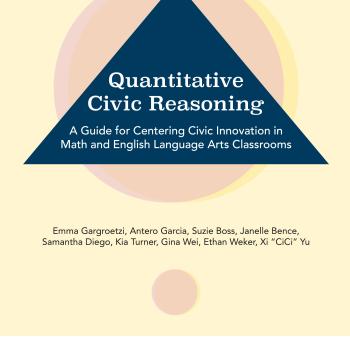
Quantitative Civic Reasoning: A Guide for Centering Civic Innovation in Math and English Language Arts Classrooms
This guide explores quantitative civic reasoning in English and math classrooms.

Introducing Ideas and Vocabulary with the Concept Sort
A Concept Sort is a vocabulary and comprehension strategy used with students to introduce new topics and/or familiarize students with new vocabulary.
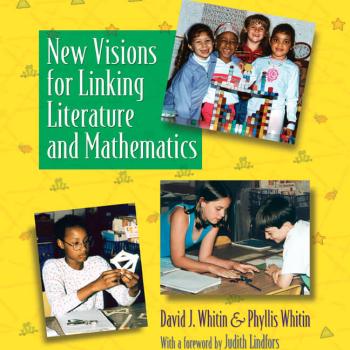
New Visions for Linking Literature and Mathematics
David and Phyllis Whitin offer K–6 teachers a wealth of ideas for integrating literature and mathematics.
Solving the Math Curse: Reading and Writing Math Word Problems
Students' reading, writing, listening, and speaking skills add up as they decipher word problems and use what they've learned to solve a crossword puzzle.

Exploring Cost and Savings Using Children's Literature
Students make sense of dollars and cents when they study the importance of saving and budgeting in this lesson.

Bringing Economic Vocabulary to Life Through Video Posters
Imagine if vocabulary could come alive with the click of a button! Students create video posters to demonstrate knowledge of new economics vocabulary.

QARs + Tables = Successful Comprehension of Math Word Problems
Using census data for an example, students use the question-answer relationship (QAR) strategy to understand and solve word problems that refer to tables and other graphics.

Celebrate John Venn's Birthday!
Students celebrate the birth of English logician, philosopher, and creator of the Venn Diagram by building community within the classroom by comparing and contrasting likes, dislikes, and characteristics about one another.