Using different writing/drawing materials (e.g., markers, color pencils, pastels, etc.), students learn how to communicate different moods and/or feelings to support their written ideas and how authors do the same through their work.
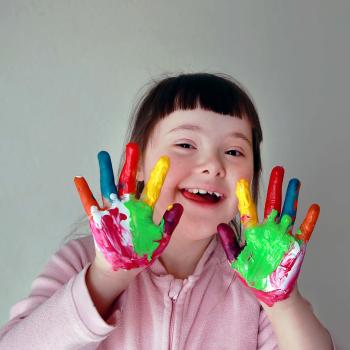
Color My World: Expanding Meaning Potential through Media
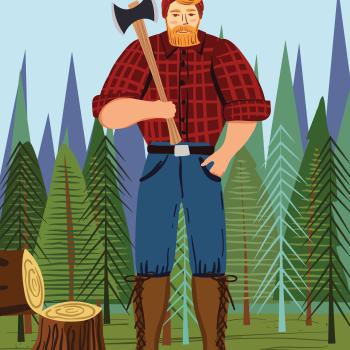
American Folklore: A Jigsaw Character Study
Groups of students read and discuss American folklore stories, each group reading a different story. Using a jigsaw strategy, the groups compare character traits and main plot points of the stories. A diverse selection of American folk tales is used for this lesson, which is adaptable to any text set.
Engaging Students in a Collaborative Exploration of the Gettysburg Address
In small groups, students closely examine one sentence from the Gettysburg Address and create a multigenre project communicating what they have discovered about the meaning and significance of the text.

Creating Family Timelines: Graphing Family Memories and Significant Events
Students interview family members, and then create graphic family timelines based on important and memorable family events.
What If We Changed the Book? Problem-Posing with Sixteen Cows
After reading a piece of math-related children's literature aloud, students pose and solve new problems by asking what-if questions about the events in the story.
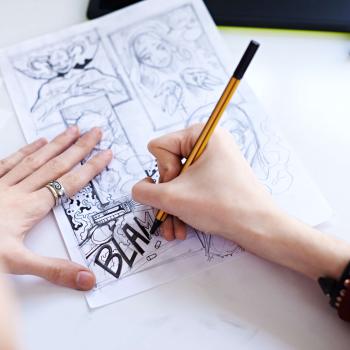
Book Report Alternative: Examining Story Elements Using Story Map Comic Strips
Comic frames are traditionally used to illustrate a story in a short, concise format. In this lesson, students use a six-paneled comic strip frame to create a story map, summarizing a book or story that they've read. Each panel retells a particular detail or explains a literary element (such as setting or character) from the story.
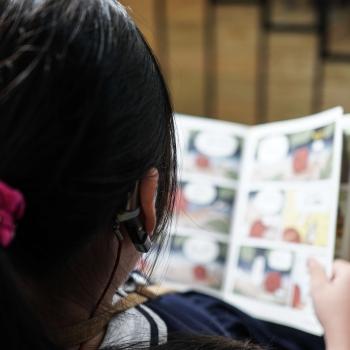
Comics in the Classroom as an Introduction to Genre Study
Multidimensional, challenging, and popular with students, comics provide an excellent way to introduce the concept of genres.

Talking Poetry with Blabberize
Students will be motivated to share their poetry through an online tool the features recording and animation.

Designing Elements of Story in Little Blue and Little Yellow
In this series of four lessons, students will explore key elements of design in Little Blue and
Little Yellow to learn about setting, character relationships, and plot.

Boars and Baseball: Making Connections
In this lesson, students will make text-to-self, text-to-text, and text-to-world connections after reading In the Year of the Boar and Jackie Robinson. After sharing and discussing connections, students choose and plan a project that makes a personal connection to the text.

Captioning the Civil Rights Movement: Reading the Images, Writing the Words
Teachers guide students to carefully view images from the Civil Rights Movement and write captions that accurately describe the images and/or their probable purposes.

Picture This: Using Instagram to Report
After taking a field trip that students document using mobile app Instagram, students become new reporters as they use the interactive Printing Press to tell about their experiences.

Powerful Writing: Description in Creating Monster Trading Cards
Students create their own monster trading cards using "powerful," vivid language to describe their creatures.

Playing with Prepositions through Poetry
Students play with and explore prepositions during a whole group reading of Ruth Heller's Behind the Mask, and then by composing and publishing prepositional poems based on the book's style.
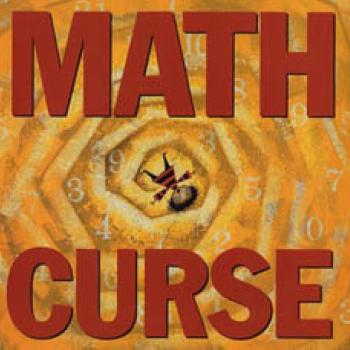
Solving the Math Curse: Reading and Writing Math Word Problems
Students' reading, writing, listening, and speaking skills add up as they decipher word problems and use what they've learned to solve a crossword puzzle.

Descriptive Video: Using Media Technology to Enhance Writing
Students will have a roaring good time when they watch a scene from The Lion King as a way to compare standard and described programming media.
To, Too, or Two: Developing an Understanding of Homophones
The classroom becomes a stage in this interactive lesson in which students sing, act, and design comic strips to learn the meanings and spellings of common homophones.

Figurative Language: Teaching Idioms
It's raining cats and dogs! Students explore figurative language through read-alouds, teacher modeling, and student-centered activities, further developing their understanding of the literal versus the metaphorical translations of idioms.

Creating a Classroom Newspaper
Students write authentic newspaper stories, including learning about various aspects of newspapers, such as writing an article, online articles, newspaper reading habits, and layout and design techniques.

Spelling Cheerleading: Integrating Movement and Spelling Generalizations
"2-4-6-8, students will be spelling great" in this lesson that teaches the y rule for adding suffixes through cheering the spelling of words aloud, word sorts, and writing stories.