Based on the Guided Comprehension Model developed by Maureen McLaughlin and Mary Beth Allen, this lesson introduces students to the comprehension strategy of monitoring.
Guided Comprehension: Monitoring Using the INSERT Technique
Guided Comprehension: Self-Questioning Using Question-Answer Relationships
Guided comprehension moves your students beyond decoding to become independent readers. Generating questions to guide reading helps readers make connections with the text and supports independent comprehension of new texts.

Using Historical Fiction to Learn About the Civil War
Students in grades 4 and 5 discuss inferential comprehension and visualization as they use a think-aloud questioning strategy to develop a deeper understanding of a historical novel.
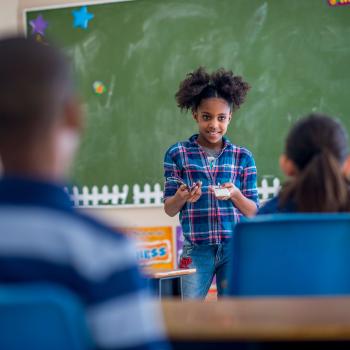
Vote for Me! Developing, Writing, and Evaluating Persuasive Speeches
This lesson encourages students in grades 4 and 5 to think critically and write persuasively by focusing on preparing, presenting, and evaluating mock campaign speeches.

Developing Students' Critical Thinking Skills Through Whole-Class Dialogue
"That's my position and I'm sticking to it!" After reading about the Korean War, students will take a position in response to an open-ended question, support their position, and evaluate that support.

Pourquoi Stories: Creating Tales to Tell Why
Where did the stars come from? What makes lightning and thunder? Pourquoi tales are narratives developed by various cultures around the world to explain natural phenomena. Students study three tales and learn about their cultures of origin, then work cooperatively to write and present an original pourquoi tale.

Bringing Economic Vocabulary to Life Through Video Posters
Imagine if vocabulary could come alive with the click of a button! Students create video posters to demonstrate knowledge of new economics vocabulary.
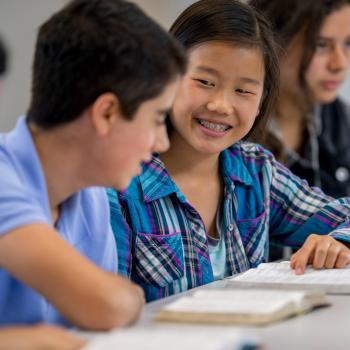
Beyond History Books: Researching With Twin Texts and Technology
Students in grades 4–8 activate prior knowledge and research information about a historic event through fiction and nonfiction literature and exploration of relevant websites.

The Houdini Box: What Did Houdini Hide? Writing Creative Endings
Students are encouraged to understand a book that the teacher reads aloud to create a new ending for it using the writing process.

The Magic of Three: Techniques for the Writer's Craft
Students learn to use tricolons—a writer's technique of putting words and phrases into groups of threes—to add rhythm and power to their writing.
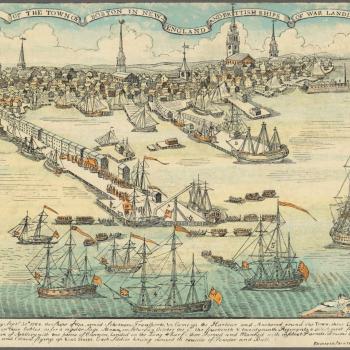
Learning About Research and Writing Using the American Revolution
Students across the board will get a kick out of researching a historical figure from the American Revolution to create an acrostic poem.

Skimming and Scanning: Using Riddles to Practice Fact Finding Online
Students will learn to skim and scan to make sure they don't flounder when they're surfing the Internet for facts to help them complete riddles about the United States.
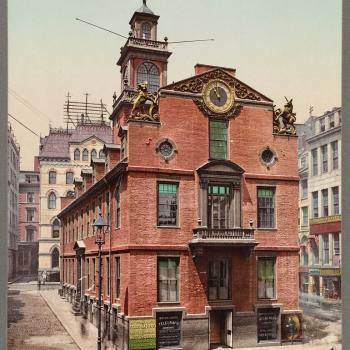
Using Pictures to Build Schema for Social Studies Content
How do you read an image? Students find out in this lesson in which they "read" several images of the Boston Massacre to better understand the event and recognize effects of propaganda.
Developing Searching, Skimming, and Scanning Skills With Internet Bingo
Student pairs aim to be the first team to call out "bingo" in this lesson in which they use skimming and scanning to locate information about ancient Greece and Rome.
Writers' Workshop: The Biographical Sketch
Students use the faces and places they learn about in their research to write a biography about a contemporary or historical figure.
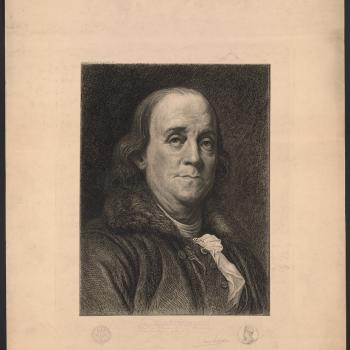
History Comes Alive: Developing Fluency and Comprehension Using Social Studies
Let the power of imagination and inference serve as a "time machine" to bring Benjamin Franklin into the classroom! History and science come to life in a dialogue with Franklin the inventor, developed through lesson activities that incorporate research, imagination, writing, visual arts, and drama.
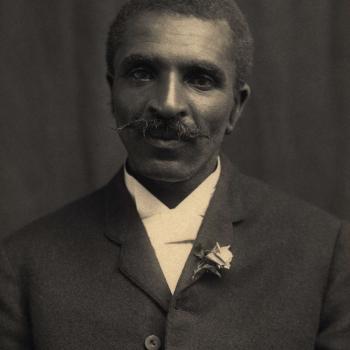
Great American Inventors: Using Nonfiction to Learn About Technology Inventions
Who are the people behind the world's greatest inventions? Students read biographies of a terrific trio of American inventors and create presentations that highlight how their inventions from the past impacted the future.
Storytelling in the Social Studies Classroom
People make the past come alive as students research and then share stories about famous Americans who promoted democratic ideals.
Flying to Freedom: Tar Beach and The People Could Fly
Students look to the past and use historical context to compare and contrast two characters from folktales.
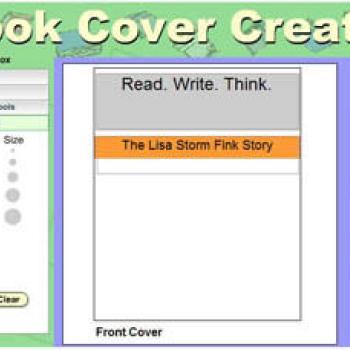
Book Cover Creator
The Book Cover Creator is designed to allow users to type and illustrate front book covers, front and back covers, and full dust jackets. Students can use the tool to create new covers for books that they read as well as to create covers for books they write individually or as a class.