Heather Lattimer provides practical, classroom-tested approaches to helping students access and critically respond to content-based texts.
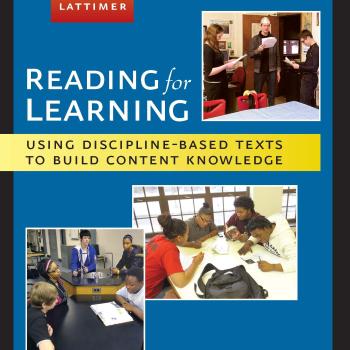
Reading for Learning: Using Discipline-Based Texts to Build Content Knowledge
Technology That Powers Up Learning
By designing lessons to activate prior knowledge and linking these activities to reading and writing, teachers found that students were more engaged, that they learned more material more quickly, and that they more willingly incorporated reading into their lives.

Violent Red, Ogre Green, and Delicious White: Expanding Meaning Potential through Media
This article reports on the meaning potential of daily access to drawing/writing media for widening and deepening meaning construction.
Finding the Thread: Character, Setting, and Theme
An annotated bibliography of books that exemplify the plot elements, character, setting, and theme. Includes guidelines on how to do a book talk.

Exploring the Past through Multigenre Writing
Research comes alive when students explore a range of alternate genres instead of writing the traditional research report.

Inquiry at the Window: The Year of the Birds
This science inquiry in a fourth-grade classroom affirms the importance of observation, questioning, reading, and writing to the inquiry process.
Technology in the Language Arts classroom: Is It Worth the Trouble?
Suggests the authentic audience found on the Internet has a profound effect on the quality of student writing in all grades, and that the key to successful technology projects is integrating them into the curriculum so that computers are a means, not an end. Offers ideas for classroom activities and projects using stand-alone computers, and using computers with Internet access.
Peek, Peak, Pique: Using Homophones to Teach Vocabulary (and Spelling!)
Argues that regular homophone practice enhances vocabulary knowledge, spelling skills, pronunciation ability, and overall reading proficiency. Describes how card games played with decks of homophones helped to accomplish these things. Notes particular benefits of homophone games to ESL students, and outlines key advantages of using the games.
Spelling: From Invention to Strategies
Veteran educator Howard Miller shares a set of strategies that can propel middle school writers (and "inventive" spellers) into the role of being responsible and strategic in this Voices from the Middle article.

Codeswitching: Tools of Language and Culture Transform the Dialectally Diverse Classroom
This article shows how to affirm and draw on the dialect diversity of students to foster the learning of Standard English.
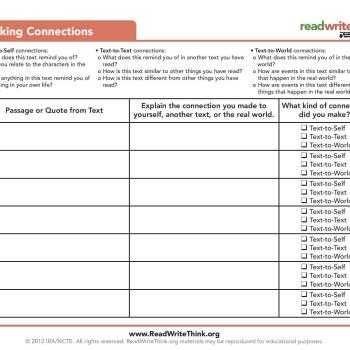
Making Connections
Using this printout, students make personal associations to a text by finding and describing text-to-text, text-to-self, and text-to-world connections.

Narrative Pyramid
After students read a short story or chapter of a novel, they can use the Narrative Pyramid to reflect on key ideas and details.
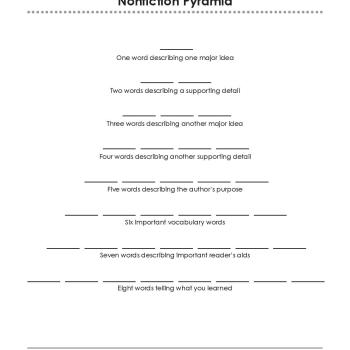
Nonfiction Pyramid
After students read an article or other work of nonfiction, they can use the Nonfiction Pyramid to reflect on key ideas and details in the text.
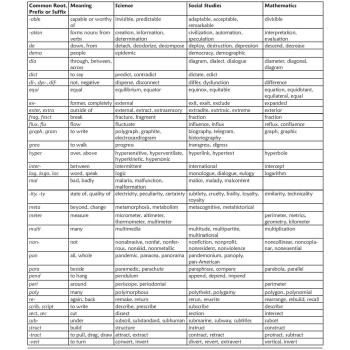
Common Content Area Roots and Affixes
This printout offers 50 or so common roots, prefixes, and affixes that give students access to hundreds of key concepts across the content areas.

Connection Stems
Connection Stems give students the language (and a reminder) to support their understanding by tying new learning to what they know about themselves and their world.

K-W-L-S Chart
This printable extends the familiar K-W-L's means of organizing students' prior knowledge, formulating inquiry questions, and recording new learning by adding space for questions for further inquiry.

Venn Diagram, 3 Circles
Students use this graphic organizer to describe similarities and differences between three objects or ideas.

I-Chart
This printout assists students with generating meaningful questions about a topic and organizing their writing by using a structured guide while researching.

Exit Slips
This printout provides prompts that help students reflect on and process new information and think critically, and offers teachers the opportunity to differentiate upcoming instruction based on these reflections.

Oral Presentation Rubric
This rubric is designed to be used for any oral presentation. Students are scored in three categories—delivery, content, and audience awareness.