ReadWriteThink - Powered by NCTE
  • About
  • Classroom Resources
    • Lesson Plans
    • Teaching Comics
    • Teaching With Primary Resources
    • Calendar
    • Printouts
    • Student Interactives
  • Collections
    • Assessment
    • Authors
    • Booklists
    • Media Literacy
    • Poetry
    • Primary Sources
    • Writing
  • Professional Development
    • Strategy Guides
    • Professional Library
    • Meetings & Events
  • Join NCTE
  • Contact Us
  • About
  • Classroom Resources
    • Lesson Plans
    • Teaching Comics
    • Teaching With Primary Resources
    • Calendar
    • Printouts
    • Student Interactives
  • Collections
    • Assessment
    • Authors
    • Booklists
    • Media Literacy
    • Poetry
    • Primary Sources
    • Writing
  • Professional Development
    • Strategy Guides
    • Professional Library
    • Meetings & Events
  • Join NCTE
  • Contact Us
  • Facebook
  • Twitter
  • Instagram
  • Pinterest
  • YouTube

Breadcrumb

  1. Home

Type

  • Classroom Resources
  • Professional Development

Grades

  • 1 (89)
  • 2 (98)
  • 3 (172)
  • 4 (173)
  • 5 (187)
  • 7 (224)
  • 8 (224)
  • 9 (214)
  • 10 (212)
  • 11 (211)
  • 12 (210)
  • K (72)
  • (-) 6 (222)

Learning Objectives

  • (-) Comprehension (222)
  • collaboration (177)
  • critical thinking (332)
  • digital literacy (80)
  • Grammar (20)
  • inquiry / research (178)
  • listening (70)
  • literary analysis (130)
  • Media literacy (102)
  • metacognition (175)
  • multicultural awareness (52)
  • multimodal literacy (132)
  • oral communication (99)
  • phonological awareness (2)
  • print awareness (34)
  • reading fluency (19)
  • reading genres (147)
  • Spelling (12)
  • text structure / story structure (104)
  • Vocabulary (82)
  • writing genres (160)
  • writing process (150)

Topics

  • arts
  • careers
  • community
  • drama
  • ELL
  • Family
  • fiction
  • Mathematics
  • Mobile Learning
  • nonfiction
  • poetry
  • science
  • seasons / holidays
  • social action
  • social studies / history
  • Sports
  • STEM
Conducting Inner-Outer Circle Discussions
Grades
Grades
6 - 12
|
Strategy Guide
Conducting Inner-Outer Circle Discussions
This guide shares the steps to take to get more students talking by dividing the group into speaking and non-speaking circles.
Using Concept Circles to Develop Academic Vocabulary
Grades
Grades
3 - 12
|
Strategy Guide
Using Concept Circles to Develop Academic Vocabulary
In this guide, you will learn how to use the Concept Circles strategy to support vocabulary development and comprehension of complex text.
Using Word Walls to Develop and Maintain Academic Vocabulary
Grades
Grades
K - 12
|
Strategy Guide
Using Word Walls to Develop and Maintain Academic Vocabulary
In this guide, you will learn how to use Word Walls to support vocabulary development and retention.
Using Disciplinary Facets to Deepen Academic Vocabulary Knowledge
Grades
Grades
4 - 12
|
Strategy Guide
Using Disciplinary Facets to Deepen Academic Vocabulary Knowledge
In this guide, you will learn how to use the disciplinary facets strategy to support vocabulary development across contexts and academic disciplines.

Close Reading of Literary Texts
Grades
Grades
6 - 12
|
Strategy Guide
Close Reading of Literary Texts
This guide provides strategies for choosing text that is appropriate for close reading and to plan for instruction.
Reading on the Go
Grades
Grades
5 - 12
|
Strategy Guide
Reading on the Go
In this Strategy Guide, learn how to prepare yourself and your students for reading and note-taking in mobile environments.

Making the Reading Process Visible through Performance Assessment
Grades
Grades
6 - 12
|
Strategy Guide
Making the Reading Process Visible through Performance Assessment
Effective differentiation begins with purposeful assessment. In this strategy guide, you'll learn how to construct an authentic performance-based reading assessment that will give you access to students' thinking before, during, and after reading.

Using Partner Talk to Strengthen Student Collaboration and Understanding
Grades
Grades
K - 8
|
Strategy Guide
Using Partner Talk to Strengthen Student Collaboration and Understanding
In this strategy guide, you'll learn about Partner Talk—a way to provide students with another learning opportunity to make learning their own through collaboration and discussion.
Inquiry Charts (I-Charts)
Grades
Grades
3 - 12
|
Strategy Guide
Inquiry Charts (I-Charts)
This guide introduces I-Charts, a strategy that enables students to generate meaningful questions about a topic and organize their writing.
Question the Author (QtA)
Grades
Grades
3 - 12
|
Strategy Guide
Question the Author (QtA)
In this guide, you'll be introduced to a strategy that requires students to challenge their understanding and solidify their knowledge while reading a text.
Exit Slips
Grades
Grades
K - 12
|
Strategy Guide
Exit Slips
This strategy guide introduces the concept of using Exit Slips in the classroom to help students reflect on what they have learned and express what or how they are thinking about the new information. Exit Slips easily incorporate writing into the content area classroom and require students to think critically.
Power Notes
Grades
Grades
6 - 12
|
Strategy Guide
Power Notes
The strategy examined in this Strategy Guide teaches students an outlining technique to help them differentiate between main ideas and details in their reading and writing.
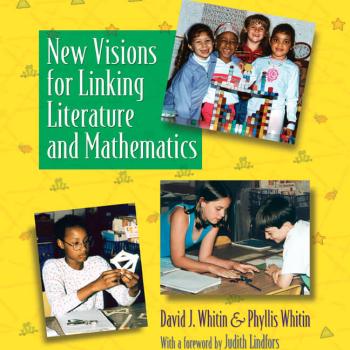
New Visions for Linking Literature and Mathematics
Grades
K - 6
|
Professional Library
|
Book
New Visions for Linking Literature and Mathematics
David and Phyllis Whitin offer K–6 teachers a wealth of ideas for integrating literature and mathematics.
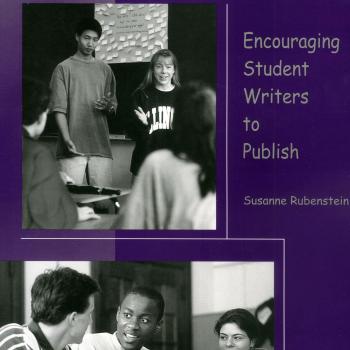
Go Public!: Encouraging Student Writers to Publish
Grades
6 - 12
|
Professional Library
|
Book
Go Public!: Encouraging Student Writers to Publish
Intended for middle and high school teachers, Go Public! offers specific writing ideas and classroom activities to help students develop the confidence and ability to publish in a wide market.
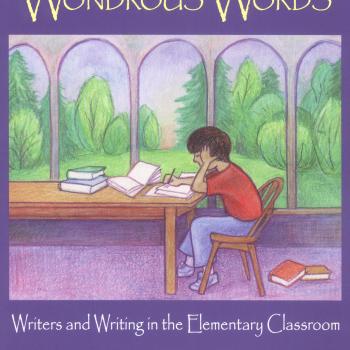
Wondrous Words: Writers and Writing in the Elementary Classroom
Grades
K - 6
|
Professional Library
|
Book
Wondrous Words: Writers and Writing in the Elementary Classroom
Katie Wood Ray explains in practical terms the theoretical underpinnings of how elementary and middle school students learn to write from their reading.

6 - 12

Create a Comic Book Vignette of Immigration to the US

Teaching Comics
6 - 12

A Different Point of View for a Comic

After reading Great Immigrants, Great Americans: The Comic Book, students will revise a comic from the perspective of another character in the original story, allowing the new narrator to be the main character.

Teaching Comics
6 - 12

Questions All Around: A Collection of Questions for Graphic Novel Stories from Great Immigrants, Great Americans

Teaching Comics
6 - 12

The Value that Immigrants Bring to Our Community: A Socratic Seminar

Teaching Comics
Guided Comprehension: Making Connections Using a Double-Entry Journal
Grades
4 - 6
|
Lesson Plan
|
Standard Lesson
Guided Comprehension: Making Connections Using a Double-Entry Journal

Based on the Guided Comprehension Model by Maureen McLaughlin and Mary Beth Allen, this lesson helps students learn three types of connections (text-to-text, text-to-self, and text-to-world) using a double-entry journal.

Pagination

  • First page « First
  • Previous page ‹‹
  • Page 1
  • Page 2
  • Page 3
  • Page 4
  • Page 5
  • Page 6
  • Page 7
  • Page 8
  • Page 9
  • …
  • Next page ››
  • Last page Last »

Explore Resources by Grade

  • KindergartenK
  • 1-2
  • 3-4
  • 5-6
  • 7-8
  • 9-10
  • 11-12

RWT-logo

Powered By NCTE

Footer 1 Menu

  • About
  • Classroom Resources
  • Professional Development
  • Collections
  • Contact Us

Footer 2 Menu

  • National Council of Teachers of English
  • Contribute to RWT
  • FAQs
  • Join NCTE

Footer 3 Menu

  • Legal Notices
  • Privacy Policy
  • Promotional Materials
  • Site Demonstrations

Want to stay in touch with RWT and NCTE? Sign up here!

  • Facebook
  • Twitter
  • Instagram
  • Pinterest
  • YouTube

© NCTE 2026. All rights reserved