This tool provides a fun and useful way to explore a variety of topics such as a character in a book, a person or place from history, or even a physical object. An excellent tool to for summarizing or as a prewriting exercise for original stories.
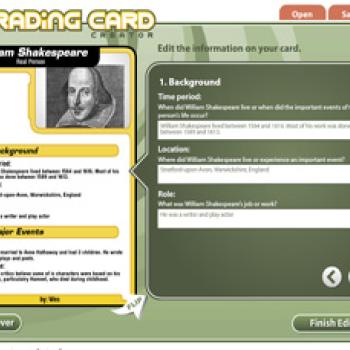
Trading Card Creator
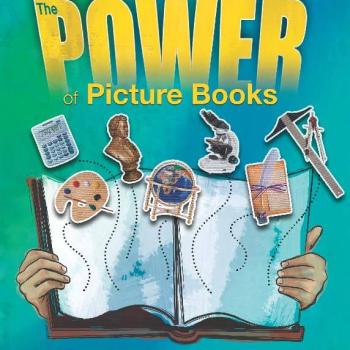
Power of Picture Books, The: Using Content Area Literature in Middle School
Featuring descriptions and activities for fifty exceptional titles, Mary Jo Fresch and Peggy Harkins offer a wealth of ideas for harnessing the power of picture books to improve reading and writing in the content areas.
Exploring History
Hear about an amazing range of books that explore history, including works of fiction as well as non-fiction, biographies, graphic novels, verse novels, and investigative journalism.

Connection Web
Students use this printout to expand on connections they have made to a text and use those details to write essays or create projects about the text.
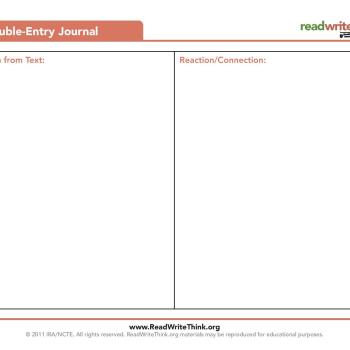
Double-Entry Journal
This printout helps students record ideas and situations from texts in one column, and their reactions in the second, thus making a connection between the text and themselves, another text, or the world.

Making Connections
In this strategy guide, you'll learn to model how students can make three different kinds of connections (text-to-text, text-to-self, text-to-world). Students then use this knowledge to find their own personal connections to a text.

Socratic Seminars
This strategy guide explains Socratic seminars and offers practical methods for applying the approach in your classroom to help students investigate multiple perspectives in a text.

Supporting Comprehension Strategies for English Language Learners
This Strategy Guide is for developing comprehension that incorporates the gradual release of responsibility model.

Developing Evidence-Based Arguments from Texts
This strategy guide clarifies the difference between persuasion and argumentation, stressing the connection between close reading of text to gather evidence and formation of a strong argumentative claim about text.
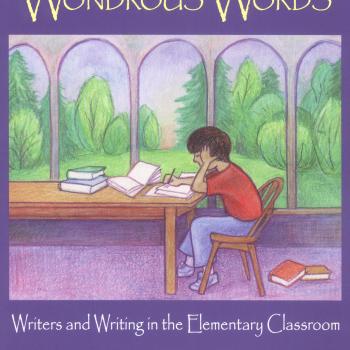
Wondrous Words: Writers and Writing in the Elementary Classroom
Katie Wood Ray explains in practical terms the theoretical underpinnings of how elementary and middle school students learn to write from their reading.

Swish! Pow! Whack! Teaching Onomatopoeia Through Sports Poetry
Students explore poetry about sports, looking closely at the use of onomatopoeia. After viewing a segment of a sporting event, students create their own onomatopoeic sports poems.

Color of Silence: Sensory Imagery in Pat Mora's Poem "Echoes"
Pat Mora's poem "Echoes" demonstrates that our senses are powerful tools for literary analysis and comprehension as students use their senses to discover new ways to read and write.

Cover to Cover: Comparing Books to Movies
Students compare and analyze novels and the movies adapted from them. They design new DVD covers and a related insert for the movies, reflecting their response to the movie version.

Exploring Change through Allegory and Poetry
Students read an example of allegory, review literary concepts, complete literary elements maps and plot diagrams, create a pictorial allegory, and write diamante poems related to the theme of change.

BOOKMATCH: Scaffolding Independent Book Selection
This lesson will be turning heads and pages as students learn how to choose appropriate books for independent reading exercises and later evaluate their choices.