ReadWriteThink - Powered by NCTE
  • About
  • Classroom Resources
    • Lesson Plans
    • Teaching Comics
    • Teaching With Primary Resources
    • Calendar
    • Printouts
    • Student Interactives
  • Collections
    • Assessment
    • Authors
    • Booklists
    • Media Literacy
    • Poetry
    • Primary Sources
    • Writing
  • Professional Development
    • Strategy Guides
    • Professional Library
    • Meetings & Events
  • Join NCTE
  • Contact Us
  • About
  • Classroom Resources
    • Lesson Plans
    • Teaching Comics
    • Teaching With Primary Resources
    • Calendar
    • Printouts
    • Student Interactives
  • Collections
    • Assessment
    • Authors
    • Booklists
    • Media Literacy
    • Poetry
    • Primary Sources
    • Writing
  • Professional Development
    • Strategy Guides
    • Professional Library
    • Meetings & Events
  • Join NCTE
  • Contact Us
  • Facebook
  • Twitter
  • Instagram
  • Pinterest
  • YouTube

Breadcrumb

  1. Home

Type

  • Classroom Resources
  • Professional Development

Grades

  • 1 (81)
  • 2 (86)
  • 3 (130)
  • 4 (131)
  • 5 (144)
  • 6 (150)
  • 7 (154)
  • 8 (158)
  • 10 (169)
  • 11 (162)
  • 12 (162)
  • K (77)
  • (-) 9 (172)

Learning Objectives

  • (-) writing process (172)
  • collaboration (191)
  • Comprehension (214)
  • critical thinking (379)
  • digital literacy (79)
  • Grammar (20)
  • inquiry / research (166)
  • listening (85)
  • literary analysis (206)
  • Media literacy (137)
  • metacognition (193)
  • multicultural awareness (70)
  • multimodal literacy (146)
  • oral communication (106)
  • phonological awareness (4)
  • print awareness (38)
  • reading fluency (11)
  • reading genres (157)
  • Spelling (5)
  • text structure / story structure (110)
  • Vocabulary (55)
  • writing genres (197)

Topics

  • arts
  • careers
  • community
  • drama
  • ELL
  • Family
  • fiction
  • Mathematics
  • Mobile Learning
  • nonfiction
  • poetry
  • science
  • seasons / holidays
  • social action
  • social studies / history
  • Sports
Analyzing the Rhetoric of Corporate Logos across Time
Grades
9 - 12
|
Lesson Plan
|
Standard Lesson
Analyzing the Rhetoric of Corporate Logos across Time
Students think critically about how design elements in logos work together to tell a changing story about a company or product in this visual rhetoric lesson.
And in Conclusion: Inquiring into Strategies for Writing Effective Conclusions
Grades
9 - 12
|
Lesson Plan
|
Standard Lesson
And in Conclusion: Inquiring into Strategies for Writing Effective Conclusions

While drafting a literary analysis essay (or another type of argument) of their own, students work in pairs to investigate advice for writing conclusions and to analyze conclusions of sample essays. They then draft two conclusions for their essay, select one, and reflect on what they have learned through the process.
A Picture IS Worth a Thousand Words: Using Infographics to Illustrate How-to Writing
Grades
7 - 10
|
Lesson Plan
|
Standard Lesson
A Picture IS Worth a Thousand Words: Using Infographics to Illustrate How-to Writing
Students write step-by-step instructions on topics of their own choosing. Then using Piktochart, students create their own infographics to illustrate their instructions.
Picture This: Combining Infographics and Argumentative Writing
Grades
7 - 10
|
Lesson Plan
|
Standard Lesson
Picture This: Combining Infographics and Argumentative Writing
After researching topics that the students have chosen, students write argumentative essays. Then, using Piktochart, students create their own infographics to illustrate their research.
Grades
7 - 12
|
Lesson Plan
|
Standard Lesson
Aim for the Heart: Using Haiku to Identify Theme
Using haiku, students focus on themes in literature and demonstrate their understanding of an author's message. Writing haiku to accompany an analytical paper hones analytical skills and fosters creative expression.

For Argument's Sake: Playing "Devil's Advocate" with Nonfiction Texts
Grades
9 - 12
|
Lesson Plan
|
Standard Lesson
For Argument's Sake: Playing "Devil's Advocate" with Nonfiction Texts
Students learn how to play "devil's advocate" by evaluating sports reforms, reading an engaging non-fiction article, and participating in a town hall meeting in which they represent the interests of various stakeholders to generate debate and develop critical thinking skills.
Summarizing with Haikus
Grades
6 - 12
|
Lesson Plan
|
Standard Lesson
Summarizing with Haikus
Using the Haiku Poem App or the Haiku Poem Interactive, students summarize papers they have written using the traditional format of a haiku.
From Quantitative to Qualitative: Writing Descriptions of Data From Tables
Grades
9 - 12
|
Lesson Plan
|
Standard Lesson
From Quantitative to Qualitative: Writing Descriptions of Data From Tables
Students develop quantitative reasoning and critical thinking by analyzing descriptions tables for content, language, and organization with a particular focus on verb tense selection, and then writing descriptions of tables themselves.

Developing Aesthetic Criteria: Using Music to Move Beyond Like/Dislike with Poetry
Grades
9 - 10
|
Lesson Plan
|
Standard Lesson
Developing Aesthetic Criteria: Using Music to Move Beyond Like/Dislike with Poetry
In this lesson, students develop the cognitive tool of criteria development for discussing the aesthetics of poetry and music.

Persuade Me in Five Slides!  Creating Persuasive Digital Stories
Grades
6 - 12
|
Lesson Plan
Persuade Me in Five Slides! Creating Persuasive Digital Stories
After students write persuasive essays, use this lesson to challenge them to summarize their essays concisely by creating five-slide presentations.

Making the Cut: Revising Memoirs by Detecting Clutter and Confusion
Grades
6 - 10
|
Lesson Plan
|
Standard Lesson
Making the Cut: Revising Memoirs by Detecting Clutter and Confusion
Students improve a slide show by removing pictures. Their reasons for cutting pictures are translated into revision guidelines for cutting unnecessary words and sections from their rough drafts.
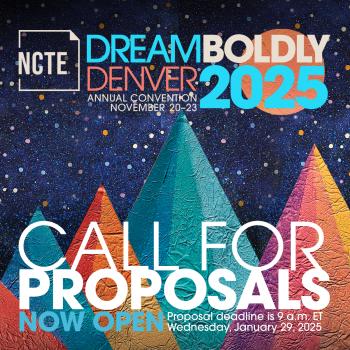
NCTE25CFP
Grades
K - 12
|
Meeting & Event
|
Convention
2025 NCTE Annual Convention

Each November thousands of literacy educators from across the country make the journey to a Convention that inspires their practice and rejuvenates their profession.
Stapleless Book
Grades
K - 12
|
Student Interactive
|
Writing & Publishing Prose
Stapleless Book

The Stapleless Book can be used for taking notes while reading, making picture books, collecting facts, or creating vocabulary booklets . . . the possibilities are endless!
Essay Map
Grades
3 - 12
|
Student Interactive
|
Organizing & Summarizing
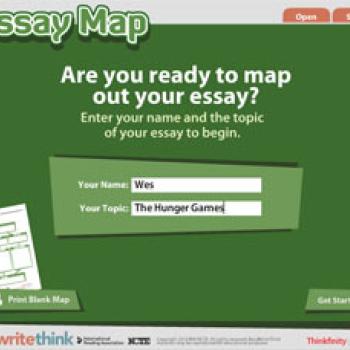
Essay Map

The Essay Map is an interactive graphic organizer that enables students to organize and outline their ideas for an informational, definitional, or descriptive essay.
Fractured Fairy Tales
Grades
3 - 12
|
Student Interactive
|
Writing & Publishing Prose
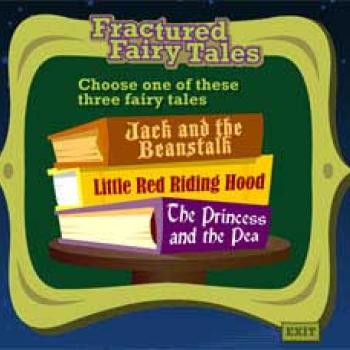
Fractured Fairy Tales

The Fractured Fairy Tale tool encourages students to create their own fractured fairy tales.
Diamante Poems
Grades
K - 12
|
Student Interactive
|
Writing Poetry
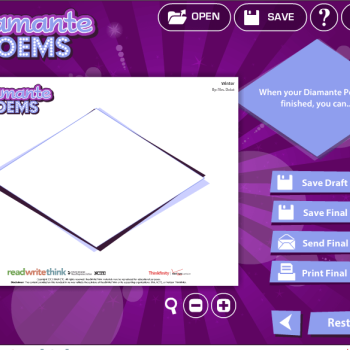
Diamante Poems

This online tool enables students to learn about and write diamante poems.
AcrosticPoem
Grades
K - 12
|
Student Interactive
|
Writing Poetry
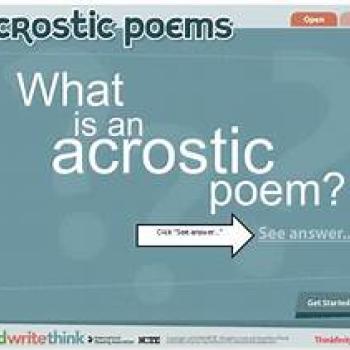
Acrostic Poems

This online tool enables students to learn about and write acrostic poems. Elements of the writing process are also included.
Persuasion Map
Grades
3 - 12
|
Student Interactive
|
Organizing & Summarizing
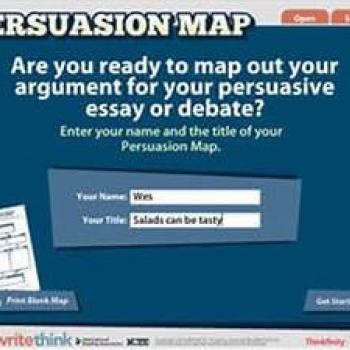
Persuasion Map

The Persuasion Map is an interactive graphic organizer that enables students to map out their arguments for a persuasive essay or debate.
Writing about Literature, 2nd ed., Revised and Updated
Grades
9 - 12
|
Professional Library
|
Book
Writing about Literature, 2nd ed., Revised and Updated
This book is intended to help middle and secondary school English language arts teachers integrate literature study and composition instruction.
What Works in Writing Instruction: Research and Practices
Grades
7 - 12
|
Professional Library
|
Book
What Works in Writing Instruction: Research and Practices
Through teacher-friendly language and classroom examples, Deborah Dean takes a close look at effective, research-based practices for writing instruction.

Pagination

  • First page « First
  • Previous page ‹‹
  • Page 1
  • Page 2
  • Page 3
  • Page 4
  • Page 5
  • Page 6
  • Page 7
  • Page 8
  • Page 9
  • Next page ››
  • Last page Last »

Explore Resources by Grade

  • KindergartenK
  • 1-2
  • 3-4
  • 5-6
  • 7-8
  • 9-10
  • 11-12

RWT-logo

Powered By NCTE

Footer 1 Menu

  • About
  • Classroom Resources
  • Professional Development
  • Collections
  • Contact Us

Footer 2 Menu

  • National Council of Teachers of English
  • Contribute to RWT
  • FAQs
  • Join NCTE

Footer 3 Menu

  • Legal Notices
  • Privacy Policy
  • Promotional Materials
  • Site Demonstrations

Want to stay in touch with RWT and NCTE? Sign up here!

  • Facebook
  • Twitter
  • Instagram
  • Pinterest
  • YouTube

© NCTE 2026. All rights reserved