ReadWriteThink - Powered by NCTE
  • About
  • Classroom Resources
    • Lesson Plans
    • Teaching Comics
    • Teaching With Primary Resources
    • Calendar
    • Printouts
    • Student Interactives
  • Collections
    • Assessment
    • Authors
    • Booklists
    • Media Literacy
    • Poetry
    • Primary Sources
    • Writing
  • Professional Development
    • Strategy Guides
    • Professional Library
    • Meetings & Events
  • Join NCTE
  • Contact Us
  • About
  • Classroom Resources
    • Lesson Plans
    • Teaching Comics
    • Teaching With Primary Resources
    • Calendar
    • Printouts
    • Student Interactives
  • Collections
    • Assessment
    • Authors
    • Booklists
    • Media Literacy
    • Poetry
    • Primary Sources
    • Writing
  • Professional Development
    • Strategy Guides
    • Professional Library
    • Meetings & Events
  • Join NCTE
  • Contact Us
  • Facebook
  • Twitter
  • Instagram
  • Pinterest
  • YouTube

Breadcrumb

  1. Home

Type

  • Classroom Resources
  • Professional Development

Grades

  • 1 (16)
  • 2 (19)
  • 3 (19)
  • 4 (23)
  • 5 (27)
  • 6 (28)
  • 7 (28)
  • 8 (28)
  • 9 (22)
  • 10 (18)
  • K (15)
  • (-) 12 (17)

Learning Objectives

  • collaboration (6)
  • Comprehension (3)
  • critical thinking (6)
  • digital literacy (4)
  • Grammar (1)
  • inquiry / research (6)
  • literary analysis (1)
  • Media literacy (3)
  • metacognition (4)
  • multimodal literacy (3)
  • reading genres (6)
  • Vocabulary (4)
  • writing genres (3)
  • writing process (2)

Topics

  • (-) Mathematics
  • (-) STEM
  • arts
  • careers
  • community
  • drama
  • ELL
  • Family
  • fiction
  • Mobile Learning
  • nonfiction
  • poetry
  • science
  • seasons / holidays
  • social action
  • social studies / history
  • Sports
From Quantitative to Qualitative: Writing Descriptions of Data From Tables
Grades
9 - 12
|
Lesson Plan
|
Standard Lesson
From Quantitative to Qualitative: Writing Descriptions of Data From Tables
Students develop quantitative reasoning and critical thinking by analyzing descriptions tables for content, language, and organization with a particular focus on verb tense selection, and then writing descriptions of tables themselves.
Getting Graphic with Alternative Energy Sources
Grades
7 - 12
|
Lesson Plan
|
Standard Lesson
Getting Graphic with Alternative Energy Sources
After researching alternative sources of energy, students create online comic books to present their information.
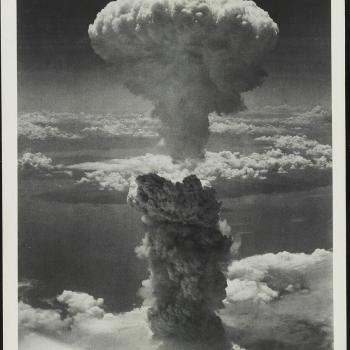
A Blast from the Past with Nuclear Chemistry
Grades
11 - 12
|
Lesson Plan
|
Standard Lesson
A Blast from the Past with Nuclear Chemistry
After researching the history and basic facts of a nuclear chemistry topic, students utilize the Web 2.0 tool Timetoast to create an electronic timeline that they use to present their research to the class.
Fashion Fun with Fossil Fuels
Grades
9 - 12
|
Lesson Plan
|
Standard Lesson
Fashion Fun with Fossil Fuels
After researching specific fossil fuel issues, students create their own clothing brands that express their opinions about the issues and then share their information and clothing line using either PowerPoint or Prezi.
Quantitative Civic Reasoning
Grades
4 - 12
|
Professional Library
|
Professional Library
Quantitative Civic Reasoning: A Guide for Centering Civic Innovation in Math and English Language Arts Classrooms

This guide explores quantitative civic reasoning in English and math classrooms.
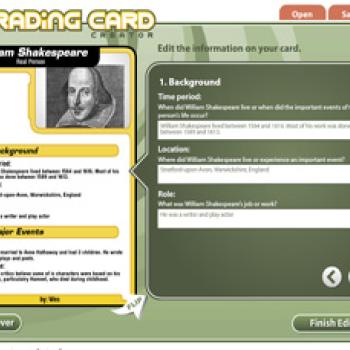
Trading Card Creator
Grades
3 - 12
|
Student Interactive
|
Organizing & Summarizing
Trading Card Creator

This tool provides a fun and useful way to explore a variety of topics such as a character in a book, a person or place from history, or even a physical object. An excellent tool to for summarizing or as a prewriting exercise for original stories.

Grades
6 - 12
|
Nonfiction Roundup

With each annual crop of new nonfiction, teens have the opportunity to discover and explore new disciplinary worlds. Tune in to hear about an array of recently-published nonfiction titles that will engage teens in learning about history, science, economics, and medicine. You'll hear about junk food and advertising, the atomic bomb and civil rights, bird watching and volcanoes – books written in a variety of formats for a variety of teen readers.

Grades
6 - 12
|
Science Books for Teens

Books about science allow readers to encounter new concepts, ask new questions, and discover what we can learn simply by paying close attention to our surroundings. You'll hear about ecology and climate change, food production, infectious disease, ancient human history, the universe, and our power as humans for both ingenuity and destruction.

Supporting Student Comprehension in Content Area Reading
Grades
Grades
6 - 12
|
Strategy Guide
Supporting Student Comprehension in Content Area Reading
In this strategy guide, you'll learn a few simple, yet powerful, techniques to encourage students to use peer talk and writing to enhance their understanding of content area texts.

Preparing Students for Success with Reading in the Content Areas
Grades
Grades
6 - 12
|
Strategy Guide
Preparing Students for Success with Reading in the Content Areas
In this strategy guide, you'll learn how to determine the level and type of support you need to provide students based on careful preparation as a content area expert.

Reading with Purpose in the Content Areas
Grades
Grades
6 - 12
|
Strategy Guide
Reading with Purpose in the Content Areas
In this strategy guide, you'll learn how to organize students and instruction to establish a sense of purpose for reading authentic texts in the content areas.
Developing Academic Vocabulary
Grades
Grades
K - 12
|
Strategy Guide Series
Developing Academic Vocabulary
In this Strategy Guide Series, you'll find creative and compatible ways to build, maintain, and extend students' vocabulary across academic disciplines.

Reading in the content areas
Grades
Grades
K - 12
|
Strategy Guide Series
Reading in the Content Areas
In this Strategy Guide Series, you'll get information and ideas about teaching reading in the different content areas.
Using Word Walls to Develop and Maintain Academic Vocabulary
Grades
Grades
K - 12
|
Strategy Guide
Using Word Walls to Develop and Maintain Academic Vocabulary
In this guide, you will learn how to use Word Walls to support vocabulary development and retention.
Using Generative Sentences to Apply Academic Vocabulary
Grades
Grades
4 - 12
|
Strategy Guide
Using Generative Sentences to Apply Academic Vocabulary
In this guide, you will learn how to use generative sentences to give students opportunities to apply their knowledge of new words in writing.
Celebrate Digital Learning Day today.
Grades
K - 12
|
Calendar Activity
|
Literacy-Related Event
Celebrate Digital Learning Day today.

Students reflect on recent learning and the role digital tools and media have played in supporting or enhancing it.

Celebrate John Venn's Birthday!
Grades
K - 12
|
Calendar Activity
|
Historical Figure & Event
Celebrate John Venn's Birthday!
Students celebrate the birth of English logician, philosopher, and creator of the Venn Diagram by building community within the classroom by comparing and contrasting likes, dislikes, and characteristics about one another.

Explore Resources by Grade

  • KindergartenK
  • 1-2
  • 3-4
  • 5-6
  • 7-8
  • 9-10
  • 11-12

RWT-logo

Powered By NCTE

Footer 1 Menu

  • About
  • Classroom Resources
  • Professional Development
  • Collections
  • Contact Us

Footer 2 Menu

  • National Council of Teachers of English
  • Contribute to RWT
  • FAQs
  • Join NCTE

Footer 3 Menu

  • Legal Notices
  • Privacy Policy
  • Promotional Materials
  • Site Demonstrations

Want to stay in touch with RWT and NCTE? Sign up here!

  • Facebook
  • Twitter
  • Instagram
  • Pinterest
  • YouTube

© NCTE 2026. All rights reserved