ReadWriteThink - Powered by NCTE
  • About
  • Classroom Resources
    • Lesson Plans
    • Teaching Comics
    • Teaching With Primary Resources
    • Calendar
    • Printouts
    • Student Interactives
  • Collections
    • Assessment
    • Authors
    • Booklists
    • Media Literacy
    • Poetry
    • Primary Sources
    • Writing
  • Professional Development
    • Strategy Guides
    • Professional Library
    • Meetings & Events
  • Join NCTE
  • Contact Us
  • About
  • Classroom Resources
    • Lesson Plans
    • Teaching Comics
    • Teaching With Primary Resources
    • Calendar
    • Printouts
    • Student Interactives
  • Collections
    • Assessment
    • Authors
    • Booklists
    • Media Literacy
    • Poetry
    • Primary Sources
    • Writing
  • Professional Development
    • Strategy Guides
    • Professional Library
    • Meetings & Events
  • Join NCTE
  • Contact Us
  • Facebook
  • Twitter
  • Instagram
  • Pinterest
  • YouTube

Breadcrumb

  1. Home

Type

  • Classroom Resources
  • Professional Development

Grades

  • 1 (9)
  • 2 (14)
  • 3 (12)
  • 4 (12)
  • 5 (11)
  • 6 (13)
  • 7 (13)
  • 8 (13)
  • 9 (7)
  • 10 (7)
  • 11 (6)
  • 12 (6)
  • K (8)

Learning Objectives

  • (-) Vocabulary (23)
  • collaboration (18)
  • Comprehension (26)
  • critical thinking (27)
  • digital literacy (18)
  • Grammar (2)
  • inquiry / research (15)
  • listening (9)
  • literary analysis (16)
  • Media literacy (11)
  • metacognition (12)
  • multicultural awareness (2)
  • multimodal literacy (22)
  • oral communication (6)
  • phonological awareness (1)
  • print awareness (9)
  • reading fluency (4)
  • reading genres (13)
  • Spelling (1)
  • text structure / story structure (8)
  • writing genres (19)
  • writing process (18)

Topics

  • (-) Mathematics
  • (-) Mobile Learning
  • arts
  • careers
  • community
  • drama
  • Family
  • fiction
  • nonfiction
  • poetry
  • science
  • seasons / holidays
  • social action
  • Sports
  • STEM
Entering History: Nikki Giovanni and Martin Luther King, Jr.
Grades
6 - 8
|
Lesson Plan
|
Standard Lesson
Entering History: Nikki Giovanni and Martin Luther King, Jr.
Nikki Giovanni's poem "The Funeral of Martin Luther King, Jr." is paired with Dr. King's "I Have a Dream" speech, taking students on a quest through time to the Civil Rights movement.
Writing Acrostic Poems with Thematically Related Texts in the Content Areas
Grades
2 - 5
|
Lesson Plan
|
Standard Lesson
Writing Acrostic Poems with Thematically Related Texts in the Content Areas
Students read thematically related texts, scaffolded from simple to complex, to help them gather necessary concept vocabulary and background knowledge in a content area. They then write acrostic poems to organize and present their learning in a creative way.
A-B-C:  It's Easy as 1-2-3 to Make Math Alphabet Books
Grades
4 - 8
|
Lesson Plan
|
Standard Lesson
A-B-C: It's Easy as 1-2-3 to Make Math Alphabet Books
Using the Alphabet Organizer app, students create alphabet books to review math terms.
Draw a Math Story: From the Concrete to the Symbolic
Grades
1 - 2
|
Lesson Plan
|
Standard Lesson
Draw a Math Story: From the Concrete to the Symbolic
Students create math stories by first drawing, then writing, and finally using math symbols to show addition or subtraction.

How Big Are <em>Martin's Big Words</em>? Thinking Big about the Future
Grades
3 - 5
|
Lesson Plan
|
Minilesson
How Big Are Martin's Big Words? Thinking Big about the Future

Inspired by the book Martin's Big Words, students explore information on Dr. King to think about his "big" words, then they write about their own "big" words and dreams.
Stapleless Book
Grades
K - 12
|
Student Interactive
|
Writing & Publishing Prose
Stapleless Book

The Stapleless Book can be used for taking notes while reading, making picture books, collecting facts, or creating vocabulary booklets . . . the possibilities are endless!

Preparing Students for Success with Reading in the Content Areas
Grades
Grades
6 - 12
|
Strategy Guide
Preparing Students for Success with Reading in the Content Areas
In this strategy guide, you'll learn how to determine the level and type of support you need to provide students based on careful preparation as a content area expert.
Developing Academic Vocabulary
Grades
Grades
K - 12
|
Strategy Guide Series
Developing Academic Vocabulary
In this Strategy Guide Series, you'll find creative and compatible ways to build, maintain, and extend students' vocabulary across academic disciplines.
Using Word Walls to Develop and Maintain Academic Vocabulary
Grades
Grades
K - 12
|
Strategy Guide
Using Word Walls to Develop and Maintain Academic Vocabulary
In this guide, you will learn how to use Word Walls to support vocabulary development and retention.
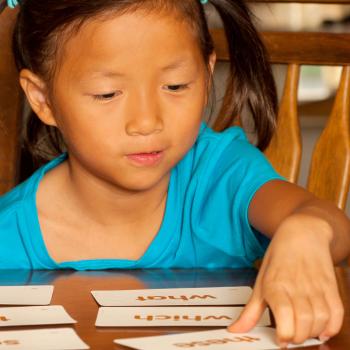
Introducing Ideas and Vocabulary with the Concept Sort
Grades
Grades
K - 8
|
Strategy Guide
Introducing Ideas and Vocabulary with the Concept Sort
A Concept Sort is a vocabulary and comprehension strategy used with students to introduce new topics and/or familiarize students with new vocabulary.
Grades
6 - 8
|
Lesson Plan
|
Standard Lesson
ABC Bookmaking Builds Vocabulary in the Content Areas
V is for vocabulary. A content area unit provides the theme for a specialized ABC book, as students select, research, define, and illustrate a word for each alphabet letter.

Going on a Shape Hunt: Integrating Math and Literacy
Grades
K - 2
|
Lesson Plan
|
Standard Lesson
Going on a Shape Hunt: Integrating Math and Literacy
Students participate in a scavenger hunt for shapes; reading, writing, and discussion of shapes encourage literacy and math skills.

Show What You Know: Read, Write and Solve Math Problems
Grades
2 - 3
|
Lesson Plan
|
Minilesson
Show What You Know: Read, Write and Solve Math Problems
Informational texts, iPads, and interactive games, oh, my! Help students journey through multimodal texts to identify and solve real-world mathematics problems using writing and apps.

Bringing Economic Vocabulary to Life Through Video Posters
Grades
2 - 5
|
Lesson Plan
|
Minilesson
Bringing Economic Vocabulary to Life Through Video Posters
Imagine if vocabulary could come alive with the click of a button! Students create video posters to demonstrate knowledge of new economics vocabulary.
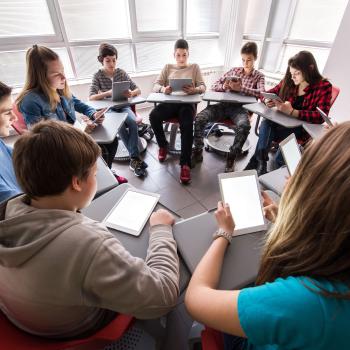
Digital Word Detectives: Building Vocabulary With e-Book Readers
Grades
2 - 6
|
Lesson Plan
|
Minilesson
Digital Word Detectives: Building Vocabulary With e-Book Readers
Students in grades 2-6 use digital dictionaries and other e-book tools to learn new vocabulary as they read e-books on digital reading devices.

Engineering the Perfect Poem by Using the Vocabulary of STEM
Grades
7 - 10
|
Lesson Plan
|
Standard Lesson
Engineering the Perfect Poem by Using the Vocabulary of STEM

Students research engineering careers and create poetry to understand the vocabulary of STEM (science, technology, engineering, and mathematics).

Going Digital: Using e-Book Readers to Enhance the Reading Experience
Grades
2 - 4
|
Lesson Plan
|
Standard Lesson
Going Digital: Using e-Book Readers to Enhance the Reading Experience
Students use various tools and features of digital readers to develop vocabulary, support comprehension, respond to text, improve fluency, and enhance the reading experience.

Combining Read-Alouds With Economics in the Primary Grades
Grades
K - 2
|
Lesson Plan
|
Standard Lesson
Combining Read-Alouds With Economics in the Primary Grades
Students learn that what you read in books can really add up when they analyze literary texts for economic concepts.
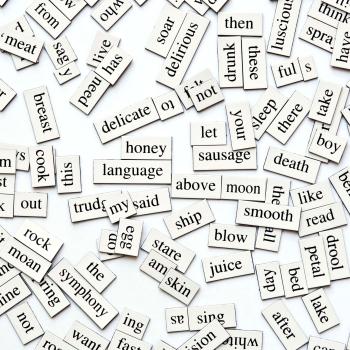
The Magnetism of Language: Parts of Speech, Poetry, and Word Play
Grades
6 - 8
|
Lesson Plan
|
Standard Lesson
The Magnetism of Language: Parts of Speech, Poetry, and Word Play
What wonderful ways words work! The parts of speech are the highlight of this lesson in which students identify parts of speech in a nonsensical poem and then create their own wild and wacky rhymes.
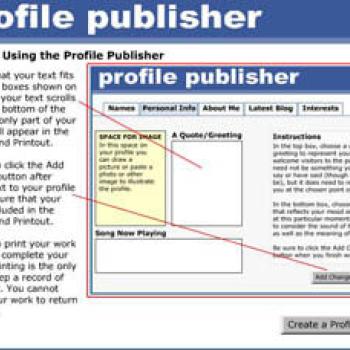
Profile Publisher
Grades
6 - 12
|
Student Interactive
|
Writing & Publishing Prose
Profile Publisher

Students use the Profile Publisher to draft online social networking profiles, yearbook profiles, and newspaper or magazine profiles for themselves, other real or fictional characters.

Pagination

  • Page 1
  • Page 2
  • Next page ››
  • Last page Last »

Explore Resources by Grade

  • KindergartenK
  • 1-2
  • 3-4
  • 5-6
  • 7-8
  • 9-10
  • 11-12

RWT-logo

Powered By NCTE

Footer 1 Menu

  • About
  • Classroom Resources
  • Professional Development
  • Collections
  • Contact Us

Footer 2 Menu

  • National Council of Teachers of English
  • Contribute to RWT
  • FAQs
  • Join NCTE

Footer 3 Menu

  • Legal Notices
  • Privacy Policy
  • Promotional Materials
  • Site Demonstrations

Want to stay in touch with RWT and NCTE? Sign up here!

  • Facebook
  • Twitter
  • Instagram
  • Pinterest
  • YouTube

© NCTE 2026. All rights reserved