The book offers a practical approach to Hurston using a range of student-centered activities for teaching Hurston's nonfiction, short stories, and the print and film versions of Their Eyes Were Watching God.
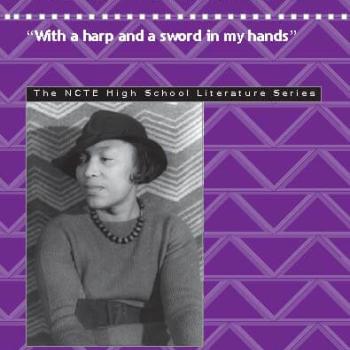
Zora Neale Hurston in the Classroom: "With a Harp and a Sword in My Hands"

Sherman Alexie in the Classroom: "This is not a silent movie. Our voices will save our lives."
Provides high school teachers with teaching strategies, classroom activities, and student samples for teaching the works of Sherman Alexie.
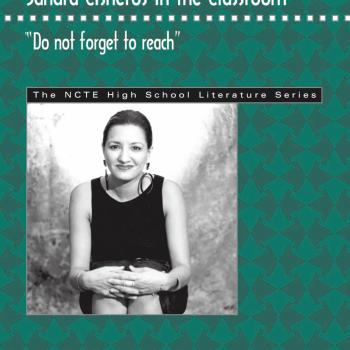
Sandra Cisneros in the Classroom: "Do not forget to reach"
The third volume in the NCTE High School Literature Series explores the joys of reading and teaching the stories and poems of noted Mexican American author Sandra Cisneros.
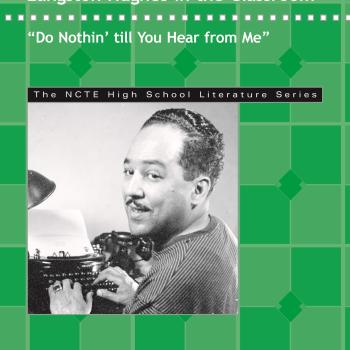
Langston Hughes in the Classroom: "Do Nothin' till You Hear from Me"
Carmaletta M. Williams provides high school teachers with background on Hughes and the Harlem Renaissance as well as help in teaching Hughes's poetry, short stories, novels, and autobiography.
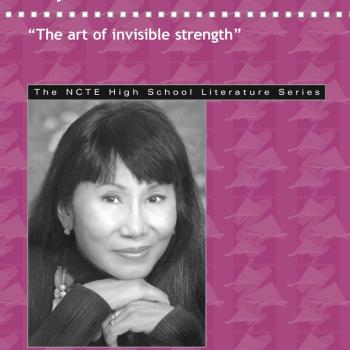
Amy Tan in the Classroom: "The art of invisible strength"
Offers high school teachers an activity-based approach to teaching the works of Amy Tan, especially The Joy Luck Club and The Opposite of Fate.
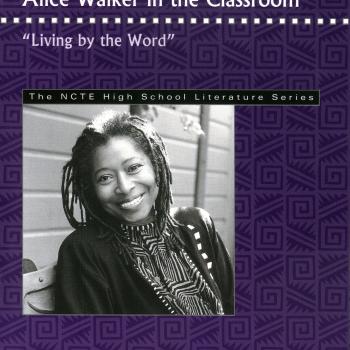
Alice Walker in the Classroom: "Living by the Word"
Carol Jago offers readers a handy guide for bringing this celebrated author's work into the classroom, including biographical information, ideas for literature circles using Walker's short stories, sample writing lessons using Walker's poems, suggestions for teaching The Color Purple, and a wealth of resources for further investigation of Alice Walker and her work.

Facilitating Participation with Silent Conversations
This guide introduces silent conversations, a collaborative learning technique that has students
thinking, sharing, and reflecting about important questions—but through writing rather than talk.
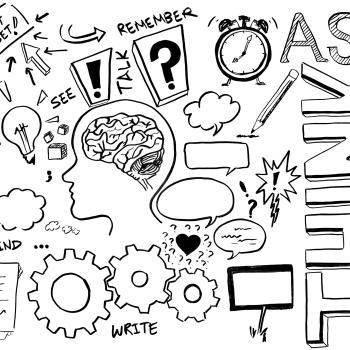
The Art of the Doodle: Writing with Imagination
Use independent, imaginative artwork and varied writing prompts to assess understanding of a given topic for a student body with differentiated needs.

ICED: The Key to Elaboration
Most students struggle when adding detail to their body paragraphs. This guide serves as a means of instruction and provides models for the students to master development.

Consensus Decision Making
This strategy guide introduces Consensus Decision Making, a method for facilitating and engaging students in a critical discussion of the central ideas of a text.

Developing Evidence-Based Arguments from Texts
This strategy guide clarifies the difference between persuasion and argumentation, stressing the connection between close reading of text to gather evidence and formation of a strong argumentative claim about text.
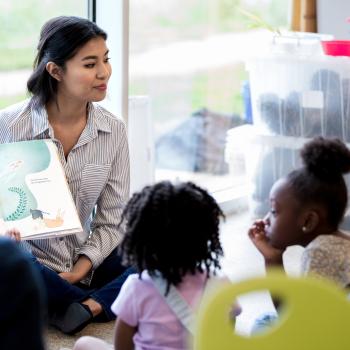
Depend on the Text! How to Create Text-Dependent Questions
Teachers need to create text-dependent questions to elicit close reading. When answering these questions, students learn to reread and think deeply about the text.

Promote Deep Thinking! How to Choose a Complex Text
Complex texts promote deep thinking and critical analysis by students. Through close reading of a complex text, students' independent reading abilities also increase.

Get Close to Think Deeply: Creating Primary-Level Close Readings
Close readings allow primary students to engage with complex texts. Through repeated reading, students build a deep understanding of the text and critical thinking skills.

Promoting Student-Directed Inquiry with the I-Search Paper
The sense of curiosity behind research writing gets lost in some school-based assignments. This Strategy Guide provides the foundation for cultivating interest and authority through I-Search writing, including publishing online.

Inquiry Charts (I-Charts)
This guide introduces I-Charts, a strategy that enables students to generate meaningful questions about a topic and organize their writing.

Power Notes
The strategy examined in this Strategy Guide teaches students an outlining technique to help them differentiate between main ideas and details in their reading and writing.
Professional Knowledge for the Teaching of Writing
With full recognition that writing is an increasingly multifaceted activity, we offer several principles that should guide effective teaching practice.

Literary Terms: A Practical Glossary
Literary Terms: A Practical Glossary provides up-to-date definitions, drawing on recent developments in literary theory and emphasizing the role of reading practices in the reproduction of literary meanings. Unlike other glossaries, it includes brief activities to help students develop a working knowledge of the concepts.
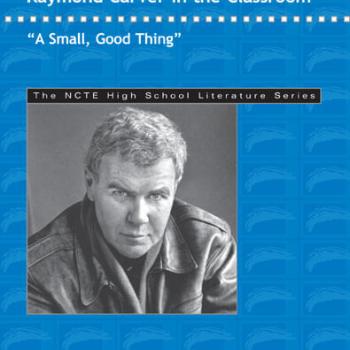
Raymond Carver in the Classroom: "A Small, Good Thing"
Rubenstein offers specific, classroom-tested strategies for teaching Raymond Carver's short stories and poems in the high school English classroom.